Education in a Time Between Worlds: Essays on the Futur…
Our world is currently undergoing major transformations…

Education | The Paper Pilot
The Paper Pilot's digital garden of thoughts on philosophy, politics, and sociology
AI, Oligarchs & The Commodification of Public Education With John Koyczek
Standardized Education | The Paper Pilot
The Paper Pilot's digital garden of thoughts on philosophy, politics, and sociology
Parent Dictated Education | The Paper Pilot
The Paper Pilot's digital garden of thoughts on philosophy, politics, and sociology
Education in a Time Between Worlds: Essays on the Futur…
Our world is currently undergoing major transformations…
Rabindranath Tagore on education - infed.org
Rabindranath Tagore on education. As one of the earliest educators to think in terms of the global village, Rabindranath Tagore’s educational model has a unique sensitivity and aptness for education within multi-racial, multi-lingual and multi-cultural situations, amidst conditions of acknowledged economic discrepancy and political imbalance. Kathleen M. O’Connell explores Rabindranath Tagore’s contribution. contents: background · ... Read more

Decentralized Education | The Paper Pilot
The Paper Pilot's digital garden of thoughts on philosophy, politics, and sociology
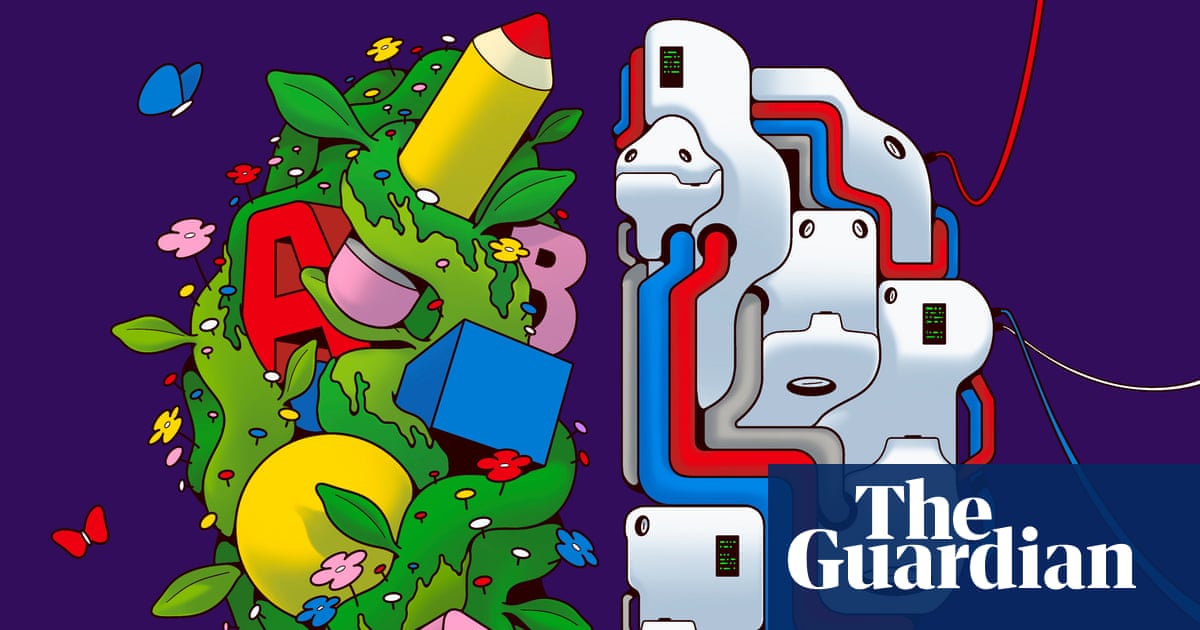
How to grow tomorrows
What if schools were not just sites for delivering education, but societies in miniature? Thousands of chances to cultivate a better future

‘I hate what AI is doing to the minds and happiness of the young’: Katherine Rundell on the view from the classroom
Education is at a crossroads, argues the author and academic. Should we embrace new technology in the name of efficiency, or is it time to fight back?
The Right-Wing War on Education
Academia: What Was "Digital Literacy"?
Short Shelf Lives Make For Bad Curricular Planning

'Nature' Retracts Paper on the Benefits of ChatGPT in Education
“What educators, parents and policy officials really needed was high quality data and evidence to help guide them. What they have had to deal with instead is some substandard research.”

Anarchism and Education
Judith Suissa Anarchism and Education A Philosophical Perspective 2006

What counts as evidence in AI & ED: Towards Science-for-Policy 3.0
Abstract Since the 1990s, there have been heated debates about how evidence should be used to guide teaching practice and education policy, and how educational research can generate robust and trustworthy evidence. This paper reviews existing debates on evidence-based education and research on the impacts of AI in education and suggests a new conceptualisation of evidence aligned with an emerging learning-oriented model of science-for-policy, which we call S4P 3.0. Existing empirical evidence on AIED suggests some positive effects, but a closer look reveals methodological and conceptual problems and leads to the conclusion that existing evidence should not be used to guide policy or practice. AI is a new type of technology that interacts with human cognition, communication, and social knowledge infrastructures, and it requires rethinking what we mean by “learning outcomes” and policy and practice-relevant evidence. A common belief that AI-supported personalisation will “revolutionise” education is historically rooted in a methodological confusion that we call the Bloomian paradox in AIED, and based on a limited view on the social functions of education.
What counts as evidence in AI & ED: Towards Science-for-Policy 3.0
Abstract Since the 1990s, there have been heated debates about how evidence should be used to guide teaching practice and education policy, and how educational research can generate robust and trustworthy evidence. This paper reviews existing debates on evidence-based education and research on the impacts of AI in education and suggests a new conceptualisation of evidence aligned with an emerging learning-oriented model of science-for-policy, which we call S4P 3.0. Existing empirical evidence on AIED suggests some positive effects, but a closer look reveals methodological and conceptual problems and leads to the conclusion that existing evidence should not be used to guide policy or practice. AI is a new type of technology that interacts with human cognition, communication, and social knowledge infrastructures, and it requires rethinking what we mean by “learning outcomes” and policy and practice-relevant evidence. A common belief that AI-supported personalisation will “revolutionise” education is historically rooted in a methodological confusion that we call the Bloomian paradox in AIED, and based on a limited view on the social functions of education.
There is something to @benjaminjriley.bsky.social 's ways educators see the "science of learning". I think the SoL is a term more popular in the US. This post could have been the same in the UK as a way educators talk about "cognitive science". buildcognitiveresonance.substack.com/p/the-science-of-learning-tax…

The Science of Learning Taxonomy
buildcognitiveresonance.substack.comCollection

Updated 17h
Links about education and how it might be more effective and not reproduce society's harmful ideas.
