Collection
to-read

Updated 7h
Collection
Updated 7h
The Violence We Call Order
Why does a broken window cause more outrage than a broken life?

Convivial Computing
In 1973, Ivan Illich published Tools for Conviviality, a book about man's relation to tools 1. Illich pleaded for a pluralism of responsibly limited tools that guarantee an individual’s right to work with independent efficiency, the development of which is "as unpredictable, creative and lively as the people who use them" (Illich, 1973) 2. He pointed to overgrowth and overproduction threatening the right to a liveable environment, which unfortunately led him to ideas on gender and population control that are highly problematic 3. His ideas are included in the Catalog because of their influence on other practices, that picked up on his ideas about limited tools and turned a blind eye to the less appealing parts of his writing.
LLMs are not like manufacturing machines - Ross Wintle
LLMs are not just machines. They are machine-building machines! This comes with way more responsibility. And understanding it may change how you use them.

Becoming a stranger in my own field
There is a difference between making scientific work more accessible and changing what institutions recognize as valuable scientific work.

How to Finance Community-Led Solutions (SSIR)
Raven Indigenous Outcomes Funds has pioneered community-driven outcomes contracts to center Indigenous communities in Canada as leaders in addressing health and social problems. They present a bold new model for outcomes purchasing. <meta property=

This is normal bad work
[This is a guest post by Sophie Huiberts, being an expanded version of a post on her own blog. This blog post was initially written in a different file format and converted using AI. — T.] Wh…

When A.I. Comes for Your Purpose in Life
In the span of just a few months, A.I. systems have solved some of the biggest outstanding problems in math — adding mathematicians to the list of those terrified of losing their job to the technology.

On the Ersatz Nobel: The Old Monetary Policy is Dying, and The New Monetary Policy Struggles to be Born
Yesterday the Nobel Prize fake Nobel Prize the Sveriges Riksbank Prize in Economic Sciences in Memory of Alfred Nobel was again awarded. For the unique and bizarre history of this prize, see the piece I wrote five years ago pointing out that this prize was a form of “central bank
The AI Cognitive Trojan Horse: How Large Language Models May...
Large language model (LLM)-based conversational AI systems present a challenge to human cognition that current frameworks for understanding misinformation and persuasion do not adequately address....

Decoding Liberation: The Promise of Free and Open Source Software
Choice Outstanding Academic Title Software is more than a set of instructions for computers: it enables (and disables) political imperatives and policies. Nowhere is the potential for radical social and political change more apparent than in the practice and movement known as

How to be a wise optimist about science and technology?
I believe the central problem of the 21st century is how civilization co-evolves with science and technology. As our understanding of the world deepens, it enables technologies that confer ever more power to both improve and damage the world. There's currently much public discussion of this in the context of artificial superintelligence (ASI). However, it's a fundamental recurring challenge, affecting areas including climate change, genetic engineering, nanotechnology, geoengineering, brain-computer interfaces, and many more. How can we best benefit from science and technology, while supplying safety sufficient to ensure a healthy, flourishing civilization?
Gamified Capitalism and 21st Century Fascism w/ Max Haiven
The Dalio fallacy – explaining bond markets
The bear market in bonds is a trend, with three fundamental causes

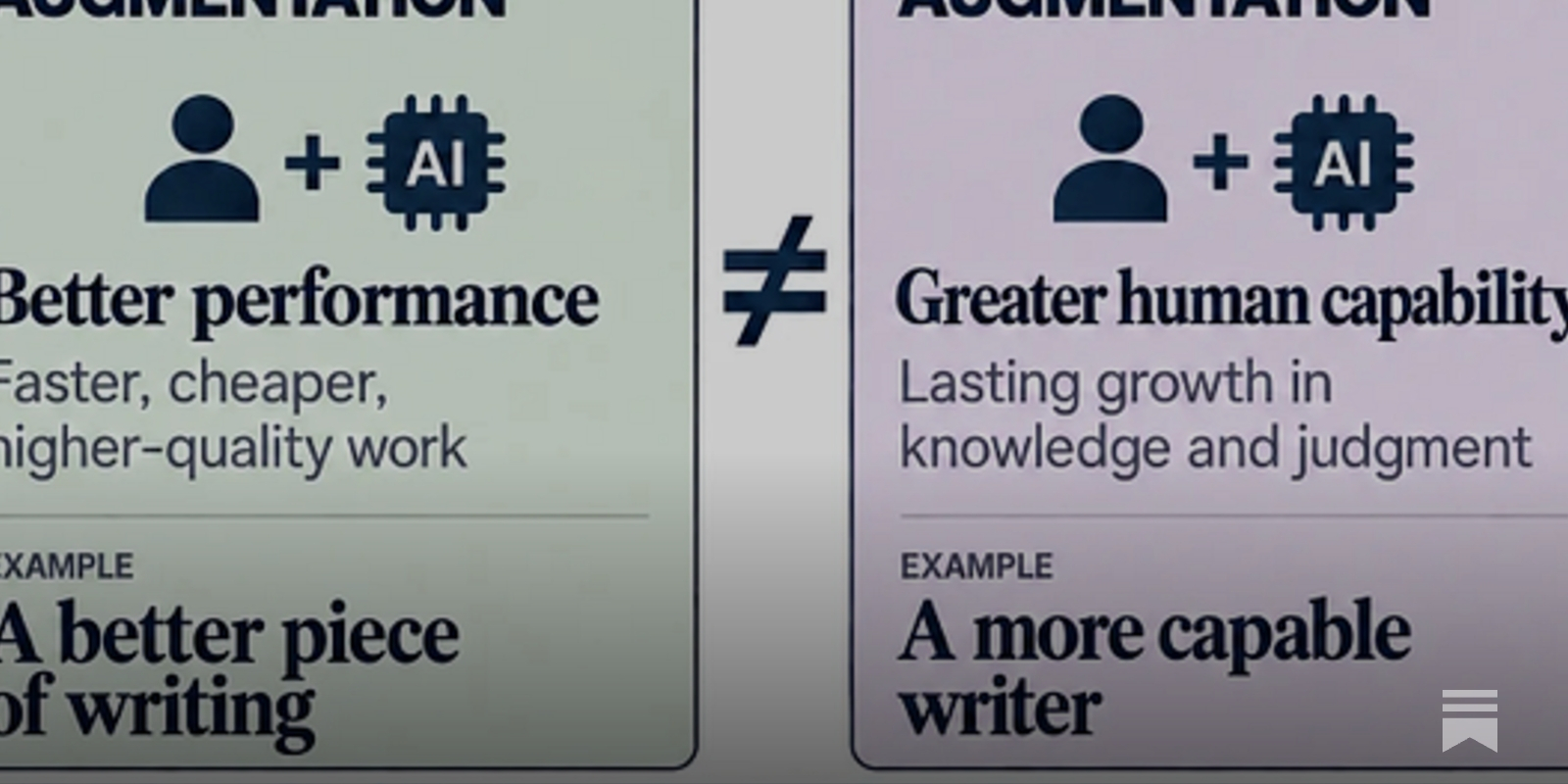
What Is Being Augmented by AI: Humans or Processes?
Why augmented performance does not necessarily mean augmented human capability?
“Two‐Eyed Seeing”: An Indigenous framework to transform fisheries research and management
Abstract Increasingly, fisheries researchers and managers seek or are compelled to “bridge” Indigenous knowledge systems with Western scientific approaches to understanding and governing fisheries. Here, we move beyond the all‐too‐common narrative about integrating or incorporating (too often used as euphemisms for assimilating) other knowledge systems into Western science, instead of building an ethic of knowledge coexistence and complementarity in knowledge generation using Two‐Eyed Seeing as a guiding framework. Two‐Eyed Seeing ( Etuaptmumk in Mi’kmaw) embraces “learning to see from one eye with the strengths of Indigenous knowledges and ways of knowing, and from the other eye with the strengths of mainstream knowledges and ways of knowing, and to use both these eyes together, for the benefit of all,” as envisaged by Elder Dr. Albert Marshall. In this paper, we examine the notion of knowledge dichotomies and imperatives for knowledge coexistence and draw parallels between Two‐Eyed Seeing and other analogous Indigenous frameworks from around the world. It is set apart from other Indigenous frameworks in its explicit action imperative—central to Two‐Eyed Seeing is the notion that knowledge transforms the holder and that the holder bears a responsibility to act on that knowledge. We explore its operationalization through three Canadian aquatic and fisheries case‐studies that co‐develop questions, document and mobilize knowledge, and co‐produce insights and decisions. We argue that Two‐Eyed Seeing provides a pathway to a plural coexistence, where time‐tested Indigenous knowledge systems can be paired with, not subsumed by, Western scientific insights for an equitable and sustainable future.

The Minimum Viable Scientific Record
The open science movement does not lack a shared vision. Decades of declarations, statements of principle, and calls to action have failed to put that vision into practice. This essay proposes a minimum viable scientific record (MVR) that would make the open science vision possible, and asks funders to make operating on it a condition of their money.


Launching the Tacit Knowledge Podcast: How the world's hardest problems really get solved
By Kumar Garg
Beyond the Artifact: Power as a Lens for Creativity Support Tools