Hyperproblems: New Ways of Doing and Communicating Science - Hyperproblems
Hyperproblems: Hyperproblems are scientific challenges whose scale, complexity, novelty and interdependence overwhelm traditional research models, requiring…
Hyperproblems: New Ways of Doing and Communicating Science - Hyperproblems
Hyperproblems: Hyperproblems are scientific challenges whose scale, complexity, novelty and interdependence overwhelm traditional research models, requiring…
Hyperproblems: New Ways of Doing and Communicating Science - Hyperproblems
Epistrons: Knowledge Artifacts for Hyperproblems - Hyperproblems
Holochain and Collective Intelligence: Avoiding a Technological Singularity
Wikipedia defines Technological Singularity, in part, as:

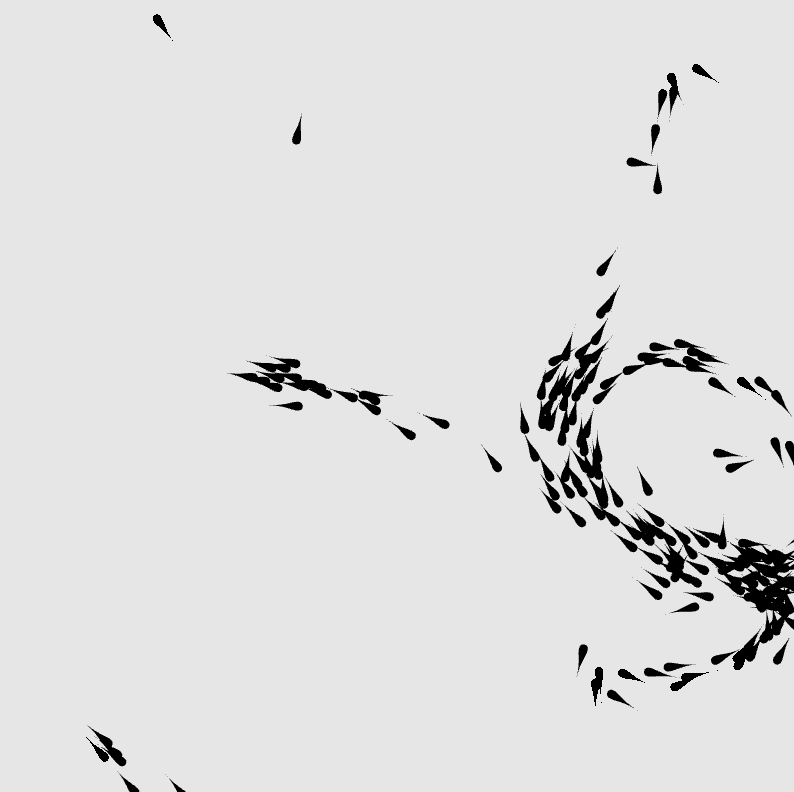
Complexity Explorables
A collection of interactive explorable explanations of complex systems in biology, physics, mathematics, social sciences, epidemiology, ecology and other fields....
Hyperproductivity: The Next Stage of AI?
A glimpse at an astonishing, exhilarating, exhausting new style of work
Infinite Researchers | AI-Powered Scientific Discovery
What happens to the speed of discovery if we have infinite researchers? Explore AI experiments accelerating breakthroughs.

AI for Research | Scite
Scite searches 280M+ scholarly articles to give you citation-backed answers and show you how every claim is supported or disputed.
A protocol for attributable modular research contribution - Matsuthoughts
I wrote this essay in response to Seemay Chou's call for essays on systemic bottlenecks to science. Structural change in scholarly communication practices i…
Reinventing Discovery: The New Era of Networked Science
In Reinventing Discovery, Michael Nielsen argues that w…

No. 022: Palomar proof registry, autonomous protein design, synthetic consensus - The Hallway Track
The Hallway Track No. 022 - How AI is affecting the practice of science
AI has supercharged scientists—but may have shrunk science
Analysis of 41 million papers finds that although AI expands individual impact, it narrows collective scientific exploration
Co-Creation: Systems Thinking Beyond the Machine
Complexity thinking is all the rage — in the arts and sciences. Yet, there are two different strands of thinking about complexity, which are often confounded. The first comes from cybernetics, focussing on control in complex situations. The second is ecological, aiming at sustainable participation in a reality beyond control. Their difference rests on a fundamental distinction: is complexity rooted in feedback regulation or collective co-creation? While feedback remains mechanistic, co-creation generates new spaces of possibilities. We need it to understand life and its evolution. And it empowers us to rewrite our future, to escape our mechanistic cage without abandoning scientific rigor. In this paper, we illustrate how we implement these powerful yet abstract principles through our artistic and philosophical practice.
The Bazaar of Scientific Knowledge | shishyko!
What if we didn't collapse all the knowledge from the scientific process into one paper?
Remarkable how over a decade ago @michaelnielsen.bsky.social pointed the way towards solving long standing issues plaguing science to this day (issues that are all the more relevant in the age of AI mediated science)

Ronen Tamari
This is why @atproto.science is so relevant rn This compilation of essays indicates that scientists are most frustrated by insufficient “community tools and resources... Essential infrastructure for sharing, maintaining and building on existing work and data is also badly underdeveloped." >
Collection
Updated 2mo
"Hyperproblems are scientific challenges whose scale, complexity, novelty and interdependence overwhelm traditional research models, requiring new forms of collective intelligence, modeling, coordination and communication." hyperproblems.com/3m5tkmhnof224