How can citizen science reduce psychological distance to science? Insights from three projects in contested environmental contexts
Citizen science (CS) is a participatory mode of knowledge production, enabling non-scientific actors to contribute to and sometimes contest scientific agendas and interpretations, making it a way to bridge science and society. This paper examines how that potential unfolds by analysing the individual perspectives of citizen scientists through the lens of Psychological Distance to Science (PSYDISC). Drawing on three case studies of contested environmental CS, we identify which contextual aspects of CS shape citizen scientists' experiences of social, spatial, temporal, or hypothetical distance to relevant science, and how these experiences may relate to trust. Our findings underscore the role of science communication as both a channel for dissemination, and as a constitutive element of participatory research; crucial for reducing psychological distance and enabling socially robust knowledge production, especially in contested, policy-relevant science settings.

Nova Scotia’s Experiment in Research That Solves Real Problems
Locally focused research investments enable coalitions of scientists and citizens to serve community needs.

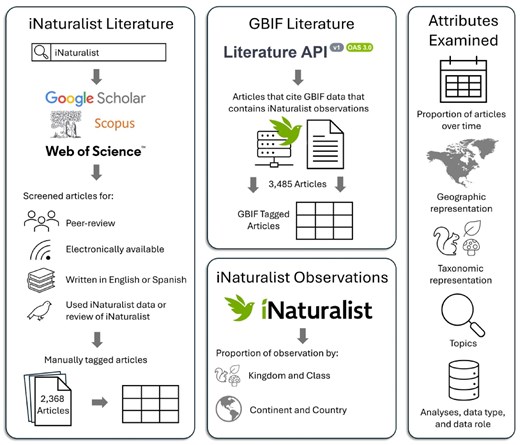
iNaturalist accelerates biodiversity research
Abstract. Participatory citizen science is expanding, with iNaturalist emerging as one of the most widely used platforms globally. However, its application

Why Do We Call It Participatory Science? | Smithsonian Environmental Research Center
Peer Production in Citizen Science: A Community-Centered Approach on the Example of Personal Science
Citizen science encompasses a wide range of practices where online collaboration for knowledge production plays a significant role. However, the study of forms of online collaboration other than crowdsourcing in citizen science has remained largely unexplored. This thesis aims to fill this gap by investigating peer production as a form of collaboration in online citizen science communities of practice. First, peer production theory was operationalized as a working model and used to analyze collaboration in citizen science case studies. This was followed by a comprehensive participatory design process for a specific use case involving the personal science community of practice. This process resulted in the creation of the “Personal Science Wiki”, an online space for consolidating community knowledge through peer production. Subsequently, a usability and card sorting study identified and resolved issues with the wiki implementation, and provided insights into mental models and content requirements regarding self-research knowledge. The lessons learned from the participatory design process were generalized as process recommendations for designing peer production solutions and knowledge management systems with communities of practice.
Practical recommendations from a multi-perspective needs and challenges assessment of citizen science games
Citizen science games are an increasingly popular form of citizen science, in which volunteer participants engage in scientific research while playing a game. Their success depends on a diverse set of stakeholders working together–scientists, volunteers, and game developers. Yet the potential needs of these stakeholder groups and their possible tensions are poorly understood. To identify these needs and possible tensions, we conducted a qualitative data analysis of two years of ethnographic research and 57 interviews with stakeholders from 10 citizen science games, following a combination of grounded theory and reflexive thematic analysis. We identify individual stakeholder needs as well as important barriers to citizen science game success. These include the ambiguous allocation of developer roles, limited resources and funding dependencies, the need for a citizen science game community, and science–game tensions. We derive recommendations for addressing these barriers.
Zooniverse
The Zooniverse is the world's largest and most popular platform for people-powered research.