Collection
Open
Citizen science/sensemaking

Updated 9d
Collection
Updated 9d
OnCo: the open, cited map of cancer: treatments, targets, trials, and what is coming
The open, cited map of oncology: every cancer, treatment, target, trial, company, institution and idea on one page each, in plain English first, with…
Mapping citizen science contributions to the UN sustainable development goals
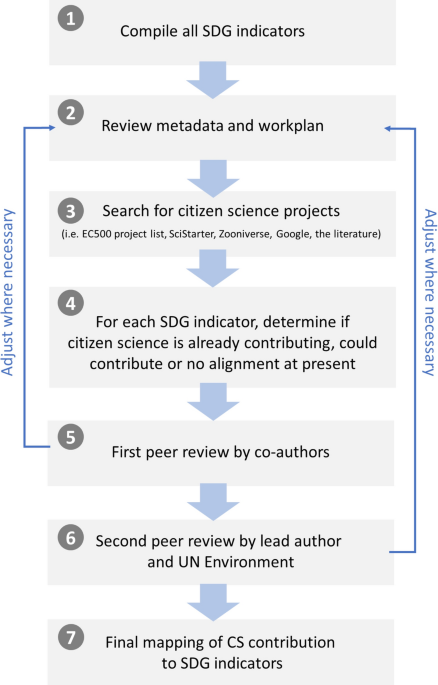
The UN Sustainable Development Goals (SDGs) are a vision for achieving a sustainable future. Reliable, timely, comprehensive, and consistent data are critical for measuring progress towards, and ultimately achieving, the SDGs. Data from citizen science represent one new source of data that could be used for SDG reporting and monitoring. However, information is still lacking regarding the current and potential contributions of citizen science to the SDG indicator framework. Through a systematic review of the metadata and work plans of the 244 SDG indicators, as well as the identification of past and ongoing citizen science initiatives that could directly or indirectly provide data for these indicators, this paper presents an overview of where citizen science is already contributing and could contribute data to the SDG indicator framework. The results demonstrate that citizen science is “already contributing” to the monitoring of 5 SDG indicators, and that citizen science “could contribute” to 76 indicators, which, together, equates to around 33%. Our analysis also shows that the greatest inputs from citizen science to the SDG framework relate to SDG 15 Life on Land, SDG 11 Sustainable Cities and Communities, SDG 3 Good Health and Wellbeing, and SDG 6 Clean Water and Sanitation. Realizing the full potential of citizen science requires demonstrating its value in the global data ecosystem, building partnerships around citizen science data to accelerate SDG progress, and leveraging investments to enhance its use and impact.
An epistemology for democratic citizen science
Abstract. More than ever, humanity relies on robust scientific knowledge of the world and our place within it. Unfortunately, our contemporary view of scie

The Public Accountability Initiative –LittleSis –
is a nonprofit public interest research organization focused on corporate and government accountability.

The Uncensored Library – Reporters without borders
I support The Uncensored Library and the fight for press freedom. #TruthFindsAWay

Journal publishes paper by video-gamers who derived scientific rules from Stanford online RNA game
Video-gamers have co-authored a paper describing a new set of rules for determining the difficulty of designing structures composed of RNA molecules.

Practical recommendations from a multi-perspective needs and challenges assessment of citizen science games
Citizen science games are an increasingly popular form of citizen science, in which volunteer participants engage in scientific research while playing a game. Their success depends on a diverse set of stakeholders working together–scientists, volunteers, and game developers. Yet the potential needs of these stakeholder groups and their possible tensions are poorly understood. To identify these needs and possible tensions, we conducted a qualitative data analysis of two years of ethnographic research and 57 interviews with stakeholders from 10 citizen science games, following a combination of grounded theory and reflexive thematic analysis. We identify individual stakeholder needs as well as important barriers to citizen science game success. These include the ambiguous allocation of developer roles, limited resources and funding dependencies, the need for a citizen science game community, and science–game tensions. We derive recommendations for addressing these barriers.
It is becoming increasingly apparent that societies must create conditions to stop being merely spectators (and exploitation objects) of digitalisation. Instead of allowing it to further concentrate wealth, influence, and surveillance, open corporate silos and simultaneously build public capacity.
