AI and the Fall? of the Creative Class
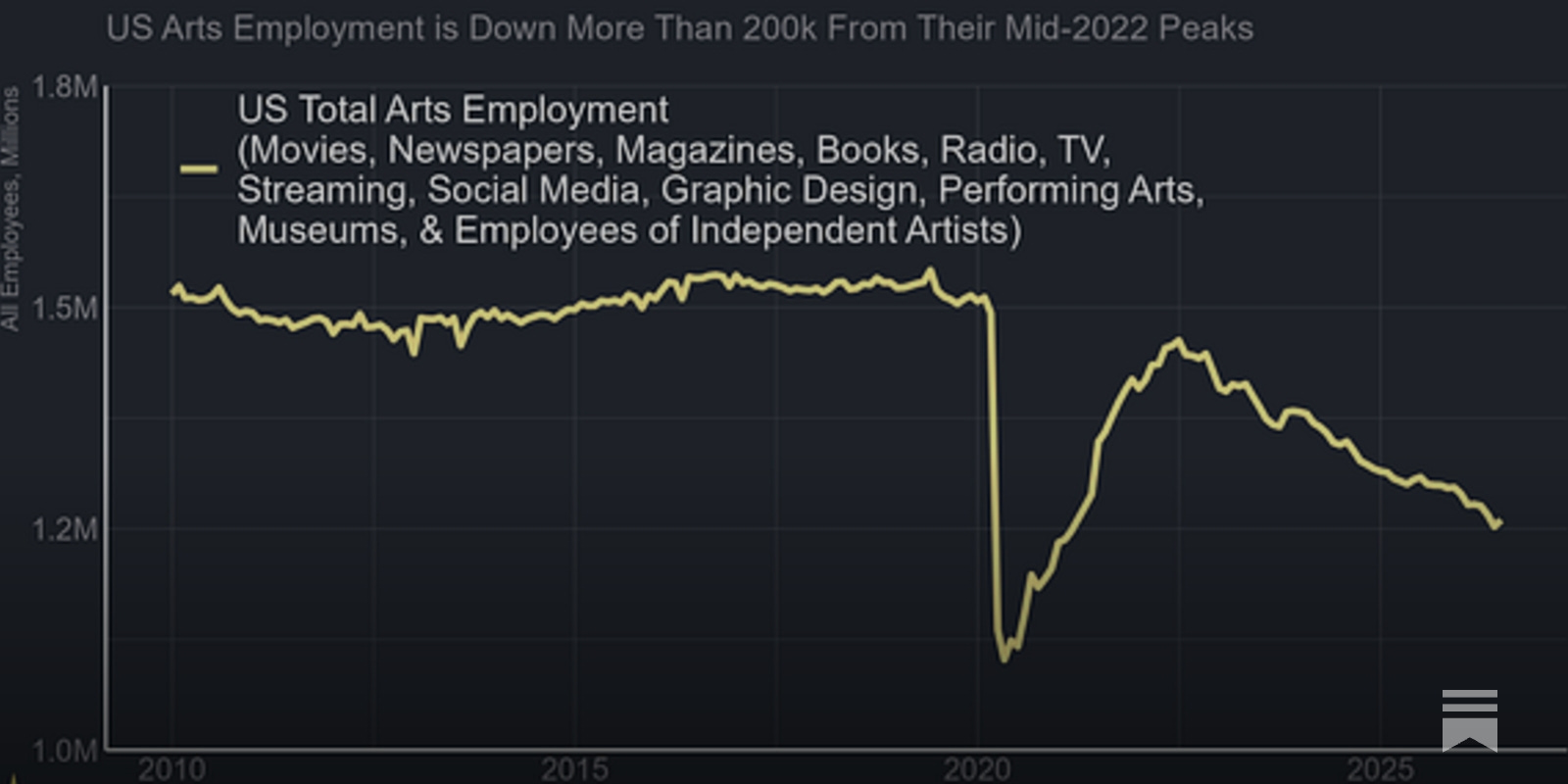
America is Losing Hundreds of Thousands of Jobs in Media, Film & the Arts. How Much is AI to Blame?
AI and the Fall? of the Creative Class
America is Losing Hundreds of Thousands of Jobs in Media, Film & the Arts. How Much is AI to Blame?
Lauren Wilford on Twitter / X
I work at a restaurant that does events and we received some challenging last-minute requests from a client. We scrambled to fill them. I realized later that these requests were likely made by an AI agent, and that the human client might not have personally cared. This felt bad! https://t.co/AJWlxDGIA5— Lauren Wilford (@lauren_wilford) September 23, 2026
Andrew Ho on Twitter / X
Not really observations that others before me haven’t made, but:- Despite the seemingly magical nature of LLMs, reflection over a >3 month timescale suggests my total productivity hasn’t increased by over 100%, or perhaps even by over 50%, and a lot of time is actually wasted…— Andrew Ho (@andrewho03) September 3, 2026
Arvind Narayanan on Twitter / X
This week I had the honor of speaking to Princeton’s entire incoming undergraduate class to address their AI anxieties. I had three messages for them — good news, bad news, and a note of optimism. Here’s a condensed version.The good newsWe have enough evidence now to conclude…— Arvind Narayanan (@random_walker) August 27, 2026
LLMs and performative productivity
It's worth asking whether LLMs are actually making us more productive at all—and if so, what we might be sacrificing in return.
Alex Imas on Twitter / X
Intelligence is not enough to flourish. You need intelligence and well-functioning economic institutions. Even as AI capabilities continue to massively improve, if they are confronted by sclerotic, inefficient, and outdated institutions, they will do far less for prosperity than… https://t.co/0ZhscpPypH— Alex Imas (@alexolegimas) August 9, 2026
The Tragedy of the Cognitive Commons: How AI Could Disrupt the Regeneration of Professional Expertise
Artificial intelligence is reshaping cognitive work, but Human Resource Development scholarship has treated this transformation as an organizational training challenge, leaving the collective regeneration of professional expertise unexamined. This conceptual paper introduces the Cognitive Commons framework, integrating commons theory, HRD scholarship, and distributed cognition to explain how rational AI adoption decisions can deplete the shared expertise pool professions require for renewal. The framework distinguishes Internalized Mastery (deep domain knowledge from sustained practice) from Distributed Mastery (orchestrating human-AI systems), and develops the Validation Tether: effective AI oversight depends on the expertise AI adoption may undermine. Early labor market and clinical evidence suggests possible disruption to expertise-regeneration pathways in highly AI-exposed sectors, though adoption is recent and the strongest signals come from leading sectors rather than all professions. Five factors determine occupational vulnerability, and governance arrangements may form across organizational, professional-association, and policy levels. The paper reframes expertise development as collective stewardship rather than organizational optimization, with implications for HRD theory and workforce policy.

Arvind Narayanan on Twitter / X
To understand and empathize with how workers in many or most fields outside software experience advances in AI capabilities, I propose a little thought experiment. https://t.co/QZG24aRiBe— Arvind Narayanan (@random_walker) July 28, 2026

The AI Apocalypse Is Already Here | Compact
Americans do not care for artificial intelligence. Recent polling shows that their attitudes mostly range from ambivalence to horror.
What will be left for us to work on?
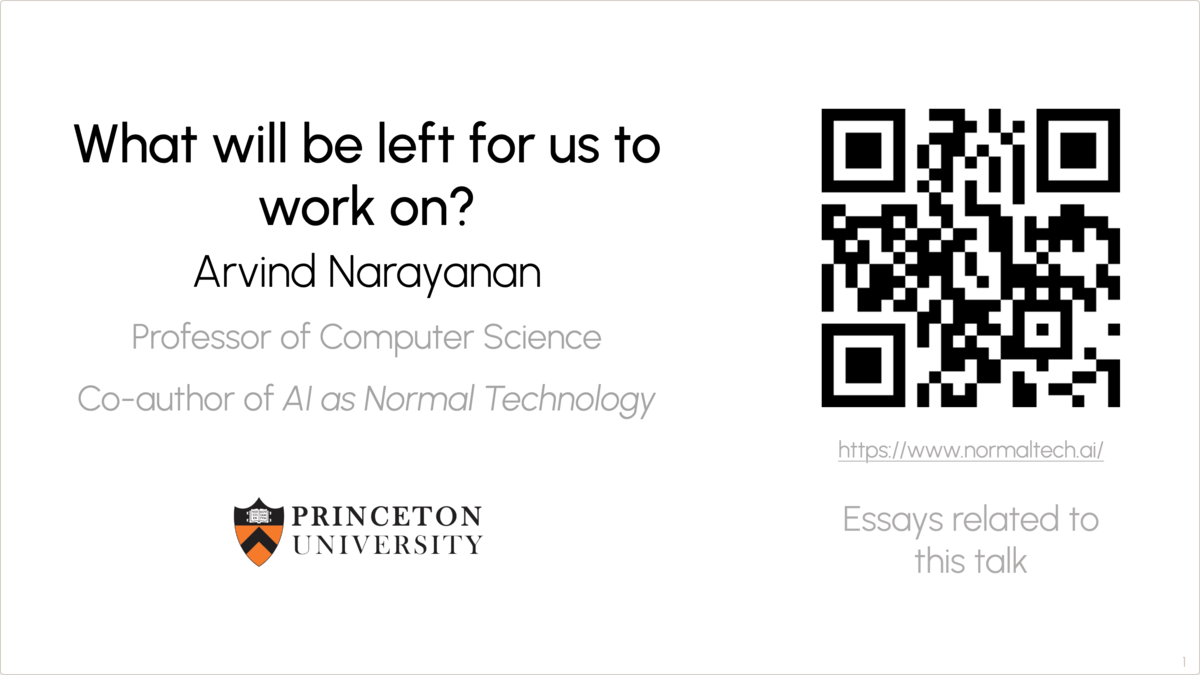
ICML 2026 invited keynote — slides and edited transcript, presented click-by-click as delivered. Arvind Narayanan, Princeton University.
Arvind Narayanan on Twitter / X
I had the honor of giving a keynote at the International Conference on Machine Learning in Seoul last week titled “What will be left for us to work on?” I addressed the widespread anxiety about how we should adapt as AI capabilities increase. I was thrilled by the talk’s… pic.twitter.com/GEq0q6hEM0— Arvind Narayanan (@random_walker) July 13, 2026

Bosses Horrified as “AI Native” College Graduates Hit the Workplace
"AI native" college graduates are hitting the workplace -- and, as experts warned, bosses are finding their performance disappointing.

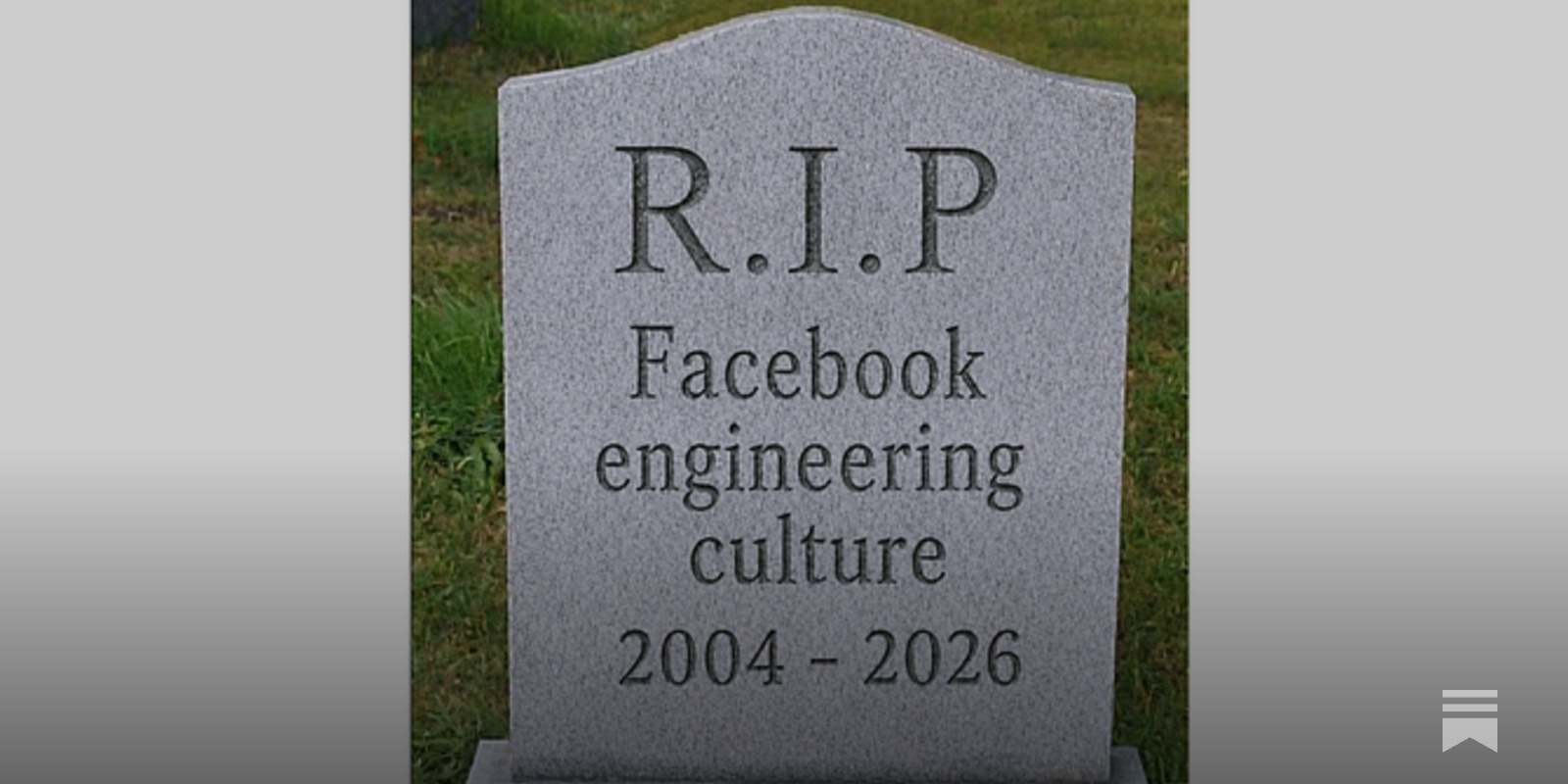
Why is Meta destroying its engineering organization?
Leadership at the social media giant has been on an AI-fueled rampage through its engineering org. We report what’s happened
New from us: Anthropic just published scenarios for AI’s possible economic impacts, which range from minimal, to explosive GDP growth of 15% by 2030 as knowledge-worker unemployment hits 18%. I sat down with their co-founder Jack Clark to pick his brains on how they’re thinking about all of this.
Collection

Updated 7d

