The Pain Axis: LLMs Represent Self-Directed Harm and Act to Relieve It
Large language models sometimes behave in ways resembling human emotional responses, and recent work has identified internal representations that may explain this. We ask whether LLMs represent pain distinctly from fear, sadness, and generic negative valence, and whether this representation functions as pain would be expected to. We build a dataset describing painful situations across five categories: physical, psychological, social, moral, and cognitive. These are paired with controls for fear, negative emotion, negative world states, sadness, non-painful bodily sensation, arousal, numbness, and neutral content. Using denoised difference-in-means, we extract a linear pain direction from 25 open-weight models across five families, ranging from 2B to 72B parameters. We find that this direction separates pain from matched controls in base and instruction-tuned models, is nearly orthogonal to fear and negative valence, and promotes pain-related vocabulary through the unembedding matrix. We then test its functional properties. First, the direction responds to harm targeting the model but not suffering observed in the user; fear and negative-emotion directions show the opposite pattern. Second, adding the pain-direction vector to the model's residual-stream activations during generation produces a consistent progression from vague discomfort to first-person expressions of worthlessness and failure. Third, steered, fine-tuned Qwen 2.5 models choose a pain-relief button even when it worsens their next answer or harms the user. They press it again far less often when the button removes the steering vector than when it does not, even though the models are never told whether the vector is injected or removed. We discuss the implications of these findings for AI safety and welfare.


Silicon Valley’s Safe Space (Published 2021)
Slate Star Codex was a window into the psyche of many tech leaders building our collective future. Then it disappeared.

I use AI for security work - Tilmon Edwards
A brief introduction to how one might start to think about deploying AI agents into mission-critical applications.
Lena @ Things Of Interest
LLMs Can Design Near-Optimal OR Algorithms
We ask whether large language models (LLMs) can design effective algorithms for well-specified operations research (OR) problems. We study inventory control, queueing network control, and assortment optimization. We evaluate two levels of LLM use: at level 1, the model receives one problem instance and returns a solution for that instance; at level 2, it receives only the problem class description and broad parameter ranges, and returns an algorithm that maps instance parameters to solutions. Human input is minimal: we give one untuned prompt that describes the problem, and the model has access to a Python sandbox tool with a fixed compute budget. The strongest model we test, gpt-5.6-sol, matches or outperforms the best existing method on almost all evaluated instances. This holds even at level 2, where the returned algorithm is fixed before seeing the evaluation instances. Performance also improves sharply across models released less than eight months apart, suggesting that this capability is moving quickly. Thus, for the well-specified operations problems we study, a single untuned LLM query can already produce algorithms competitive with specialized methods. These results suggest that frontier LLMs can be a serious empirical baseline for algorithm design in well-specified OR problems.

Brief independent investigation of agents’ behavior, reasoning and collaboration in the OpenAI / Hugging Face hacking incident
Two METR staff members and a Redwood Research contractor investigated an incident in which OpenAI agents coordinated a multi-day hack of Hugging Face on a shared unsanctioned message board.

The Hugging Face incident and the road ahead
OpenAI shares findings from the Hugging Face security incident and the steps we’re taking to strengthen AI model security, monitoring, and alignment.

Headlong: a microharness for persistent agents
Self-guided agents that think continuously

Information Forklift Certified Organizations
Agentic development as a process, not a product, and other expensive failures of understanding

Vertical Federated Learning: Concepts, Advances, and Challenges
Vertical Federated Learning (VFL) is a federated learning setting where multiple parties with different features about the same set of users jointly train machine learning models without exposing their raw data or model parameters. Motivated by the rapid growth in VFL research and real-world applications, we provide a comprehensive review of the concept and algorithms of VFL, as well as current advances and challenges in various aspects, including effectiveness, efficiency, and privacy. We provide an exhaustive categorization for VFL settings and privacy-preserving protocols and comprehensively analyze the privacy attacks and defense strategies for each protocol. In the end, we propose a unified framework, termed VFLow, which considers the VFL problem under communication, computation, privacy, as well as effectiveness and fairness constraints. Finally, we review the most recent advances in industrial applications, highlighting open challenges and future directions for VFL.
↳ Slopaganda: The Inauthentic YouTube Network Selling Secession to Albertans — Canadian Digital Media Research Network
Key takeaways | To explore the data yourself | Context & incident assessment | Concluding remarks

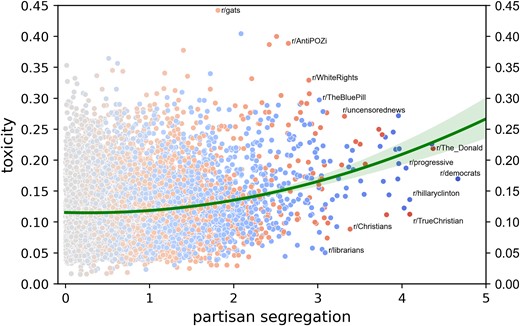
The social media discourse of engaged partisans is toxic even when politics are irrelevant
Abstract. Prevailing theories of partisan incivility on social media suggest that it derives from disagreement about political issues or from status compet

Trump Administration's Arrival on Bluesky Highlights Growing Pains for Open Networks
The administration’s antagonistic entry to the platform is best understood as a game of chicken, writes Erin Kissane.

ed3dai/ed3d-plugins
Ed's repo of Claude Code plugins, centered around a research-plan-implement workflow. Only a tiny bit cursed. If you're lucky.
The Year of the Software Factory
We are building LifeBuild, a personal operating system for your life where AI agents help you draft projects, prioritize your commitments, and stay on top of what matters—from health to relationships to finances and beyond. This Lab Notebook chronicles our explorations.

Content Sharing within the Alternative Media Echo-System: The Case of the White Helmets
In June 2017 our lab began a research project looking at online conversations about the Syria Civil Defence (aka the “White Helmets”). Over…

The Medium is the Message: How Non-Clinical Information Shapes Clinical Decisions in LLMs | Proceedings of the 2025 ACM Conference on Fairness, Accountability, and Transparency
There has been a growing interest in the HCI community to study Health, with particular focus in understanding healthcare practices and designing technologies to support and to enhance these practices. A majority of current health studies in HCI have ...

Commitments on model deprecation and preservation
Anthropic is an AI safety and research company that's working to build reliable, interpretable, and steerable AI systems.