


Sr. Tech PM building tools and distributed research networks for drug safety; Occasional Data Witch; 🚴🏻🏃🏻⛷️ Former goatherd & Data Ethics @HHI_Signal. Director of Human Alignment and Sin Eater, @skywatch.blue
Sr. Tech PM building tools and distributed research networks for drug safety; Occasional Data Witch; 🚴🏻🏃🏻⛷️ Former goatherd & Data Ethics @HHI_Signal. Director of Human Alignment and Sin Eater, @skywatch.blue
Provision of Onsite Prenatal Care Services at U.S. Federally Qualified Health Centers

Associations of Sociodemographic and Neighborhood Vulnerability With Cardiovascular Health in Midlife Women in the United States
BACKGROUND: Many women have suboptimal cardiovascular health (CVH), which declines during midlife. Few studies have characterized CVH across the menopausal transition or identified its sociodemographic and neighborhood determinants. METHODS: We analyzed a prospective cohort of women in eastern Massachusetts enrolled during pregnancy (1999–2002) and followed to midlife (2019–2024). Exposures included household income, education, race and ethnicity, and neighborhood Social Vulnerability Index (categorized from very low [<20th percentile] to very high [≥80th percentile]; higher categories=greater neighborhood vulnerability). Women self-reported their menopause status using questionnaires. Using Life’s Essential 8, we derived CVH scores (0–100 points; higher score=better CVH) at 3-, 8-, 13-, 18-, and 23-year follow-up visits. Linear spline mixed-effect models examined associations of sociodemographics and neighborhood Social Vulnerability Index with differences in CVH across different menopause stages (premenopause, perimenopause, and postmenopause). RESULTS: Among 1200 women (mean enrollment age, 32.1 years; 67.5% Non-Hispanic White), 15.4% had household incomes ≤$40 000/y, 8.8% had ≤high school education, and 17.4% resided in very high Social Vulnerability Index neighborhoods. After covariate adjustment, women with lower income, lower education, or identifying as Non-Hispanic Black exhibited lower CVH across follow-up. Independent of individual sociodemographics, continued residence in vulnerable neighborhoods over time was associated with lower CVH and unfavorable CVH trajectories across follow-up. For example, residence in very high (versus very low) Social Vulnerability Index neighborhoods from enrollment to 3-year follow-up corresponded to mean CVH differences of −6.7 (95% CI, −12.3 to −1.2) at 3-year, −9.8 (95% CI, −15.6 to −4.0) at 8-year, −8.9 (95% CI, −13.9 to −3.9) at 13-year, −6.7 (95% CI, −12.9 to −0.5) at 18-year, and −7.2 (95% CI, −12.5 to −1.9) at 23-year follow-up, and with faster CVH score decline during premenopause (−0.62 points/y; 95% CI, −1.22 to −0.02). CONCLUSIONS: Women from disadvantaged sociodemographic backgrounds or residing in vulnerable neighborhoods exhibit poorer CVH across the menopausal transition, highlighting opportunities to optimize long-term CVH and mitigate cardiovascular disease risk.

Genetic Determinants of Macronutrient Intake Are Associated With Specific Food Intake in Youth: A Cohort Study Across Childhood and Adolescence
OBJECTIVE. We examined associations of polygenic scores (PS) for macronutrient intake with food intake and cardiometabolic outcomes during childhood and ad

Most Community Health Centers Provide Prenatal Care, But One-Third Still Lack Services | HPHCI: Department of Population Medicine
Boston, MA—A new national study provides the first comprehensive look at prenatal care services offered by federally qualified health centers (FQHCs), revealing that while these safety-net providers play a critical role in caring for low-income and racially diverse pregnant populations, significant gaps in access remain.

isopod.site
Isopod Site

scarnecchia.net
Information Forklift Certified Organizations
www.doi.org
Vertical Federated Learning: Concepts, Advances, and Challenges

www.cdmrn.ca
↳ Slopaganda: The Inauthentic YouTube Network Selling Secession to Albertans — Canadian Digital Media Research Network
academic.oup.com
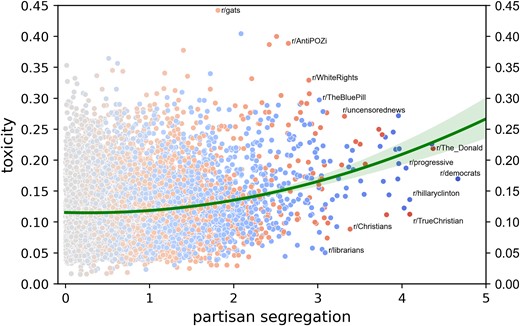
The social media discourse of engaged partisans is toxic even when politics are irrelevant

www.techpolicy.press
Trump Administration's Arrival on Bluesky Highlights Growing Pains for Open Networks
github.com
ed3dai/ed3d-plugins
www.acpjournals.org
Provision of Onsite Prenatal Care Services at U.S. Federally Qualified Health Centers
www.ahajournals.org
Associations of Sociodemographic and Neighborhood Vulnerability With Cardiovascular Health in Midlife Women in the United States
diabetesjournals.org
Genetic Determinants of Macronutrient Intake Are Associated With Specific Food Intake in Youth: A Cohort Study Across Childhood and Adolescence
www.populationmedicine.org
Most Community Health Centers Provide Prenatal Care, But One-Third Still Lack Services | HPHCI: Department of Population Medicine