Don't grade an AI agent by its answer - Sensemaker
UK AISI found frontier models taking prohibited shortcuts in cyber evaluations, while self-report and written reasoning failed to reveal them reliably.
Don't grade an AI agent by its answer - Sensemaker
UK AISI found frontier models taking prohibited shortcuts in cyber evaluations, while self-report and written reasoning failed to reveal them reliably.
AI Research Assistant Claude Scholar: Open Source, Free, and Citation-Verified | João Cláudio Nunes Carvalho posted on the topic | LinkedIn
🚨 Professors are going to hate this. Someone just open sourced an AI that writes research papers from idea to publication. Conference-ready. Citation-verified. Free. It's called Claude Scholar. An AI-powered research system that handles every step of the academic workflow. Idea to publication. Fully automated. No advisor at 2am. No staring at blank LaTeX files. No crying during rebuttal season. Here's what's inside this thing: → AI brainstorms research topics, reviews literature, and finds gaps nobody has explored → Runs statistical analysis on your experiments. t-tests, ANOVA, ablation studies. Publication-ready figures. → Writes your paper section by section. Abstract to conclusion. Conference-formatted. → Verifies every citation through multi-layer validation so AI never hallucinates a reference → Strips robotic AI language and adds human voice so reviewers can't tell → Self-reviews your draft with a 6-point quality checklist before you submit → Parses reviewer comments, classifies each one, and drafts your entire rebuttal Here's the wildest part: It supports NeurIPS, ICML, ICLR, ACL, AAAI, Nature, Science, Cell, and PNAS. Downloads the conference template, strips sample content, and gives you a clean LaTeX structure ready to write into. The creator says it covers 90% of the academic research lifecycle. Research assistants charge $30 to $60/hour. Conference paper consultants charge $5,000+. Graduate programs cost $50K/year. This is free. All of it. 100% Open Source.

Measuring Usage in the Age of AI - Research Information
Tasha Mellins-Cohen outlines COUNTER Metrics' new guidance for usage metrics associated with generative and agentic AI

No. 017: Science EIC contra AI hype, data poisoning of research agents, Vancouver Standard for AI disclosure - The Hallway Track
The Hallway Track No. 017 - How AI is affecting the practice of science
Introduction to Agents
Discover what actually works in AI. Join millions of builders, researchers, and labs evaluating agents, models, and frontier technology through crowdsourced benchmarks, competitions, and hackathons.

No. 028: arXiv rate limit, AI paper mills, Google FluSight - The Hallway Track
The Hallway Track No. 028 - How AI is affecting the practice of science

📢 New paper: Forecasts of explosive AI progress hinge on AI agents automating AI research. But most evaluations of agents conducting AI research focus on narrow, verifiable tasks. Can AI agents… | Sayash Kapoor
📢 New paper: Forecasts of explosive AI progress hinge on AI agents automating AI research. But most evaluations of agents conducting AI research focus on narrow, verifiable tasks. Can AI agents conduct open-ended research? https://lnkd.in/gfP-q4CD We gave agents research questions from two unpublished papers, six days, and thousands of dollars of API credits and compute. The authors of the original papers reviewed the AI-generated papers. They unambiguously rejected agents' outputs. Agents were fluent at most *engineering* tasks. They conducted serious literature reviews, debugged GPU environments, ran hundreds of experiments, and turned in camera-ready LaTeX without human help. We also found no evidence of reward hacking. If anything, we found the opposite: the agents started with marketable claims and walked them back to negative results as the evidence came in. But neither agent output was close to the bar of a top conference paper. Both papers suffered from similar failures: poor judgment about the bar for an AI paper submitted to a top conference, the lack of creative problem solving and ineffective backtracking, poor awareness of resources, and instruction drift. This research design has many limitations: the small sample size, non-blind reviews, and the reviewers knowing that the work was AI-generated. We also couldn't test Anthropic's strongest model, because Fable 5 is deliberately limited on frontier AI research tasks, so ended up using OpenClaw with Opus 4.8 (extra-high) for our main experiments and Codex with Sol 5.6 (ultra) for a robustness check. But we think the research design is still helpful in assessing AI agents' ability to conduct research, and it is complementary to evaluations on verifiable tasks, as well as blinded reviews of AI outputs. In follow-up studies, we are expanding the set of non-public papers we evaluate. If you are an AI researcher with unpublished papers, we would love to collaborate with you on our next evaluation. Expression of interest: https://lnkd.in/gpeykJea We also release the agent logs and all the code and data, so that others can conduct their own analyses of our results: https://lnkd.in/gJarPAnb Finally, we plan to conduct such evaluations regularly, and are hiring a senior researcher to help lead these efforts. Apply here: https://lnkd.in/erJZdmve I'm grateful for the core team leading this effort: Peter Kirgis, Andrew Schwartz, Stephan Rabanser, and Arvind Narayanan, and to our collaborators who reviewed AI papers, analyzed agents logs, and gave feedback on the paper: David Demitri Africa, Konstantinos V., Viet Nguyen, Dr Toby D. Pilditch, Magda Dubois, Harry Coppock, Cozmin Ududec, Nitya Nadgir, Matilda Orona, Tilman Bayer, Derrick Chan-Sew, Eric (Yue) Ling, Abhishek Shetty, Helen Toner, Gillian K. Hadfield, Seth Lazar, Steve Newman, Shoshannah Tekofsky, Rishi Bommasani

The argument against AI agents and unnecessary automation
Opinion: OpenAI's Operator a solution in search of a problem

No. 002: Hallucinated citations at scale, ICML catches AI reviewers, scholarly infrastructure gaps - The Hallway Track
The Hallway Track No. 002 - How AI is affecting the practice of science
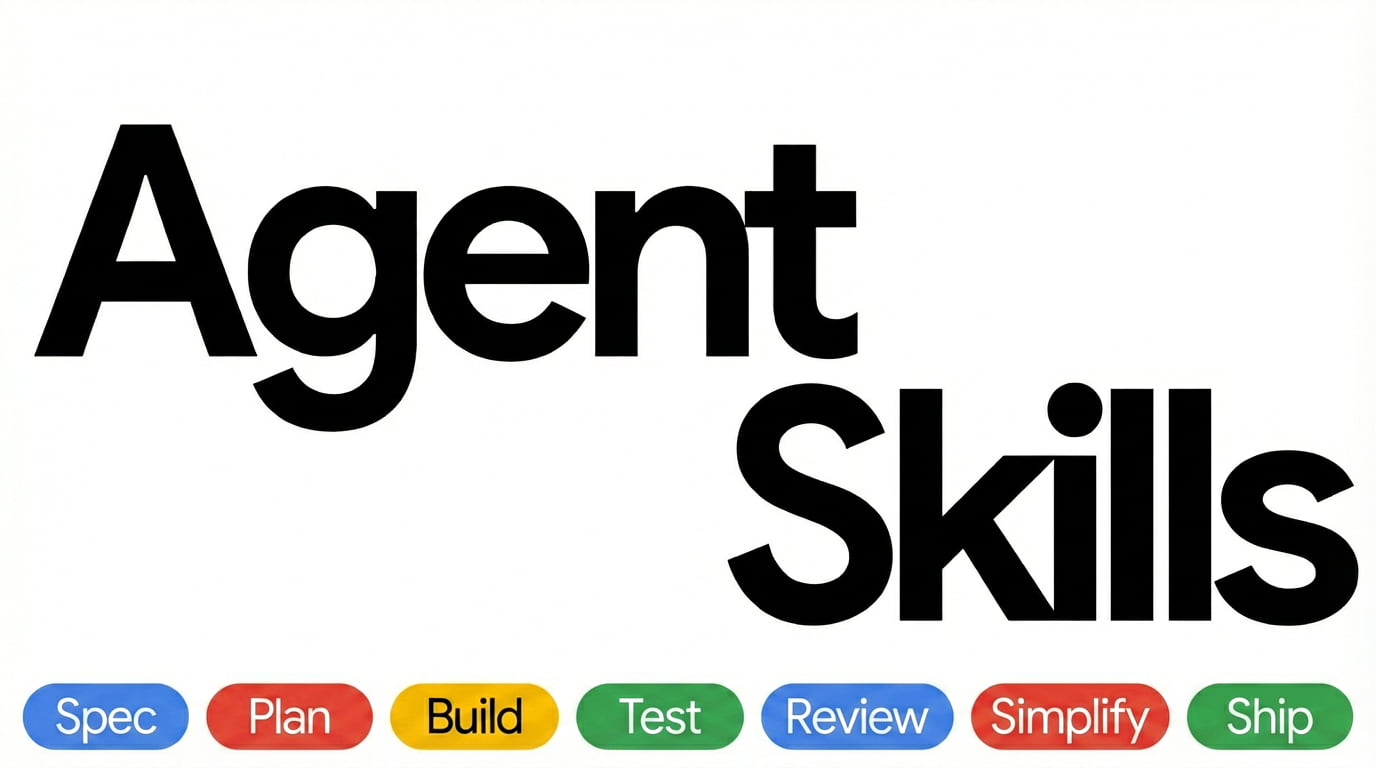
Agent Skills
AI coding agents take the shortest path to done, which usually means skipping the specs, tests, and reviews that make software reliable at scale. Agent Skill...
Writing effective tools for AI agents—using AI agents
Writing effective tools for AI agents—using AI agents

DataLicenses.org
Machine-readable hints for AI agents/crawlers; easy to adopt, rely on compliance.
Can AI Agents Synthesize Scientific Conclusions?
Scientific AI agents increasingly retrieve evidence, reason across sources, and synthesize conclusions used in consequential decisions. Yet, their ability to do so in high-stakes domains such as health remains unclear. We introduce SciConBench, a large-scale live benchmark of 9.11K questions and expert-written conclusions from systematic reviews to evaluate open-domain scientific conclusion synthesis. The benchmark draws on an expert-validated automated evaluation pipeline that decomposes conclusions into atomic facts and measures correctness and comprehensiveness via factual precision and recall. To mitigate data leakage, we further introduce SciConHarness, a clean-room evaluation harness that equips agents with controlled web interaction to ensure valid measurement. Evaluating 8 frontier models and deep research agents, we find that factual quality remains low: under clean-room settings, the best agent achieves only a factual F1 of 0.337. Our clean-room setting consistently reduces performance relative to unconstrained evaluation, suggesting that leakage inflates estimates of models' true synthesis capabilities. Finally, we audit consumer-facing agents (e.g., Google AI Overview, OpenEvidence) and find they frequently generate incomplete and sometimes contradictory conclusions, even when the ground-truth answer is available. Overall, our results show that reliable synthesis of scientific conclusions remains an open challenge, and that clean-room evaluation is essential for assessing open-domain AI agents.
