Google DeepMind Is Hiring a 'Post-AGI' Research Scientist
Google is preparing for a future with AGI, ASI, and machine consciousness.

Google DeepMind Is Hiring a 'Post-AGI' Research Scientist
Google is preparing for a future with AGI, ASI, and machine consciousness.
Putting sign language AI into users’ hands
Introducing sign-language-to-text (SL2T), our breakthrough model powering new sign language features for Deaf and hard of hearing users.

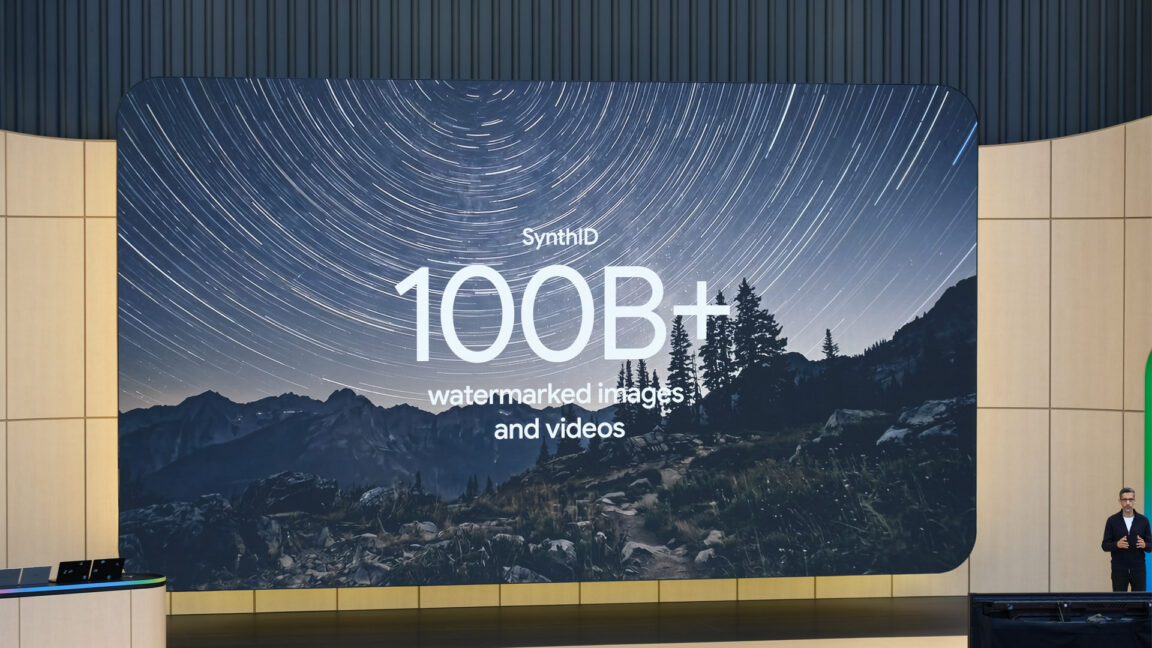
Google made a watermark for AI images that you can’t edit out
For now, SynthID works only in Google’s ecosystem — but it could someday be all over the internet

The next chapter of our AI momentum
Today, Google and Alphabet CEO Sundar Pichai shared some changes with Google DeepMind teams.

Google Bard is Switching To a More 'Capable' Language Model, CEO Confirms - Slashdot
People haven't exactly been impressed in the short time since Google released its "experimental conversational AI service" Bard. Coming up against OpenAI's ChatGPT and Microsoft's Bing Chat (also powered by OpenAI's GPT-4) users have found its responses to not be as knowledgeable or detailed as its ...

Gemini 1.5: Google's new AI model already has a major update
Google unveils Gemini 1.5, enhancing AI with superior performance and multimodal capabilities, after Gemini 1.0 Ultra's debut.
Shaping the future of AI interaction by reimagining the mouse pointer
Google DeepMind is transforming the mouse pointer into a context-aware AI partner. Move beyond the friction of traditional prompting with intuitive AI collaboration in Chrome and beyond.

Google Open-Sources Live Transcribe's Speech Engine - Slashdot
Friday Google open-sourced "the speech engine that powers its Android speech recognition transcription tool Live Transcribe," reports Venture Beat: The company hopes doing so will let any developer deliver captions for long-form conversations. The source code is available now on GitHub. Google re...
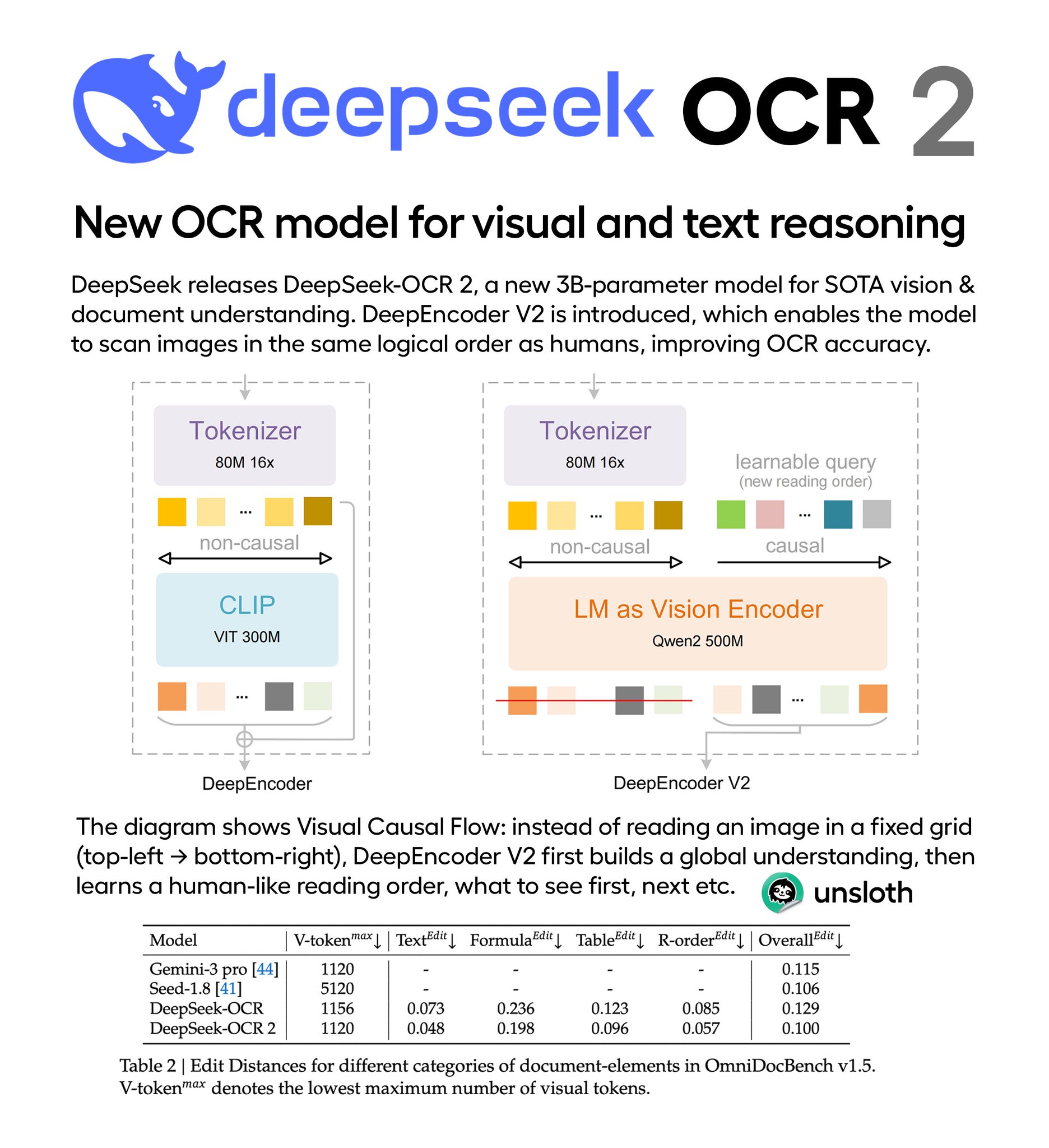
Unsloth AI on Twitter / X
DeepSeek releases DeepSeek-OCR 2. 🐋The new 3B model achieves SOTA visual, document and OCR understanding.DeepEncoder V2 is introduced which enables the model scan images in same logical order as humans, boosting OCR accuracy.Instead of traditional vision LLMs which read an… pic.twitter.com/9WYaSGD7XU— Unsloth AI (@UnslothAI) January 27, 2026
The Great A.I. Awakening (Published 2016)
How Google used artificial intelligence to transform Google Translate, one of its more popular services — and how machine learning is poised to reinvent computing itself.

Google Partners With AI Startup Replit to Take on Microsoft’s GitHub Copilot
Replit’s software development tool will use Google artificial intelligence language models to better write code

Google's AI translation tool seems to have invented its own language | World Economic Forum
Google's Neural Machine Translation system appears to have created its own language.

Google intros Gemini 2.0 with a focus on AI agents
Google has released the first version of Gemini 2.0, its next-generation large language model, and the focus is on AI agents that will do work on your behalf.

DeepL AI Platform: Translation, Voice & API
Explore our AI suite and get more done: Translate speech, text, and media, or integrate the DeepL API.
Identifying AI-generated images with SynthID
Today, in partnership with Google Cloud, we’re beta launching SynthID, a new tool for watermarking and identifying AI-generated images. It’s being released to a limited number of Vertex AI customers using Imagen, one of our latest text-to-image models that uses input text to create photorealistic images. This technology embeds a digital watermark directly into the pixels of an image, making it imperceptible to the human eye, but detectable for identification. While generative AI can unlock huge creative potential, it also presents new risks, like creators spreading false information — both intentionally or unintentionally. Being able to identify AI-generated content is critical to empowering people with knowledge of when they’re interacting with generated media, and for helping prevent the spread of misinformation.

Google's SynthID AI watermarking tech is being adopted by OpenAI, Nvidia, and more
AI content is getting good, but SynthID might be able to help tell truth from fiction.