AI research speeds up. Monitoring gets harder. - Sensemaker
OpenAI says coding agents now run 3.1 days for every human research day, while its chief scientist warns the lab’s main monitoring method is weakening.
AI research speeds up. Monitoring gets harder. - Sensemaker
OpenAI says coding agents now run 3.1 days for every human research day, while its chief scientist warns the lab’s main monitoring method is weakening.
Research acceleration: The view inside OpenAI
Inside OpenAI, coding agents are reshaping AI research. Explore early data on agent usage, experiment velocity, task complexity, and research acceleration.

OpenAI News
Stay up to speed on the rapid advancement of AI technology and the benefits it offers to humanity.
OpenAI News
Stay up to speed on the rapid advancement of AI technology and the benefits it offers to humanity.
Deep Research, information vs. insight, and the nature of science
What AI will accelerate in the scientific process, what it cannot do, and how we can prepare for new manners of scientific investigation.
No. 028: arXiv rate limit, AI paper mills, Google FluSight - The Hallway Track
The Hallway Track No. 028 - How AI is affecting the practice of science
Open source was not ready for AI-speed contributions
AI did not create the maintainer burden problem in open source. It accelerated it. Contributors are being amplified, but maintainers are still the verification bottleneck.

Open source was not ready for AI-speed contributions
AI did not create the maintainer burden problem in open source. It accelerated it. Contributors are being amplified, but maintainers are still the verification bottleneck.
Measuring the Impact of Early-2025 AI on Experienced Open-Source Developer Productivity
We conduct a randomized controlled trial to understand how early-2025 AI tools affect the productivity of experienced open-source developers working on their own repositories. Surprisingly, we find that when developers use AI tools, they take 19% longer than without—AI makes them slower.

Where does the rigor go? Research software and the future of trustworthy science.
Generative AI now makes it dramatically easier to produce something that looks like research: analysis code, figures, literature reviews, even whole pap…
Evaluating chain-of-thought monitorability
OpenAI introduces a new framework and evaluation suite for chain-of-thought monitorability, covering 13 evaluations across 24 environments. Our findings show that monitoring a model’s internal reasoning is far more effective than monitoring outputs alone, offering a promising path toward scalable control as AI systems grow more capable.
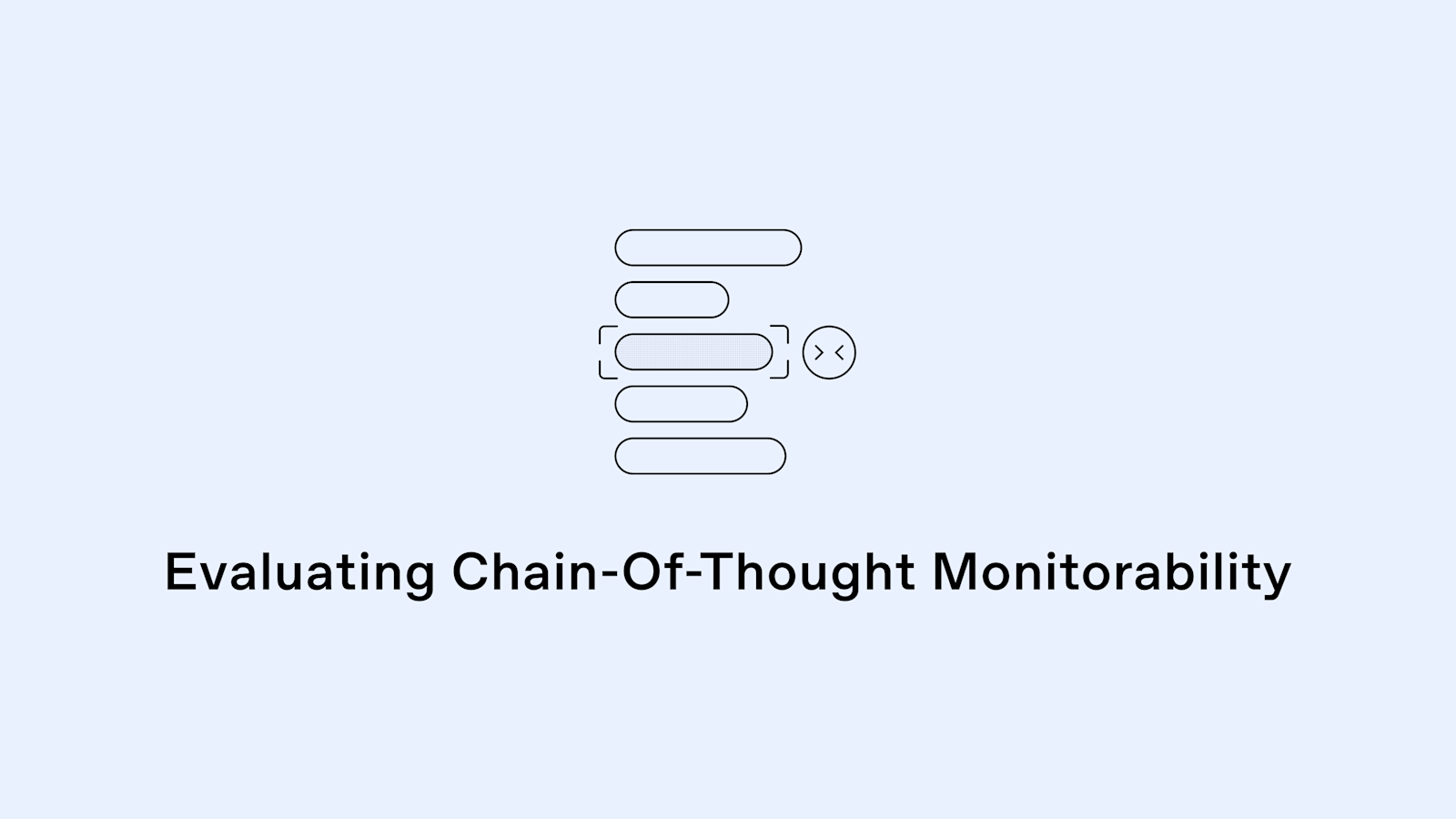
AI Is Slowing Down
If you liked this piece, you should subscribe to my premium newsletter. It’s $70 a year, or $7 a month, and in return you get a weekly newsletter that’s usually anywhere from 5,000 to 18,000 words, including vast, detailed analyses of NVIDIA, Anthropic and OpenAI’s

Measuring the Impact of Early-2025 AI on Experienced Open-Source...
Despite widespread adoption, the impact of AI tools on software development in the wild remains understudied. We conduct a randomized controlled trial (RCT) to understand how AI tools at the...

OpenAI launches new AI model for life sciences research
Researchers are drowning in data. AI could help.
Peer review is facing a death spiral, and AI production tools are speeding it up. AI-assisted reviewing is necessary and should be open. We built OpenAIReview: open AI reviewing for everyone, for the cost of a coffee. openaireview.github.io/blog.html 🧵

AI-assisted Reviewing is Necessary and Should be Open
openaireview.github.io