Into: dev, ops, open source, open web, security, privacy, community. Doing what I can to make it all a bit better. Engineering @ Zapier. Community @devict.org seth.computer
Into: dev, ops, open source, open web, security, privacy, community. Doing what I can to make it all a bit better. Engineering @ Zapier. Community @devict.org seth.computer
🧠 We Need Smart People Who Give a Shit • VioletPixel
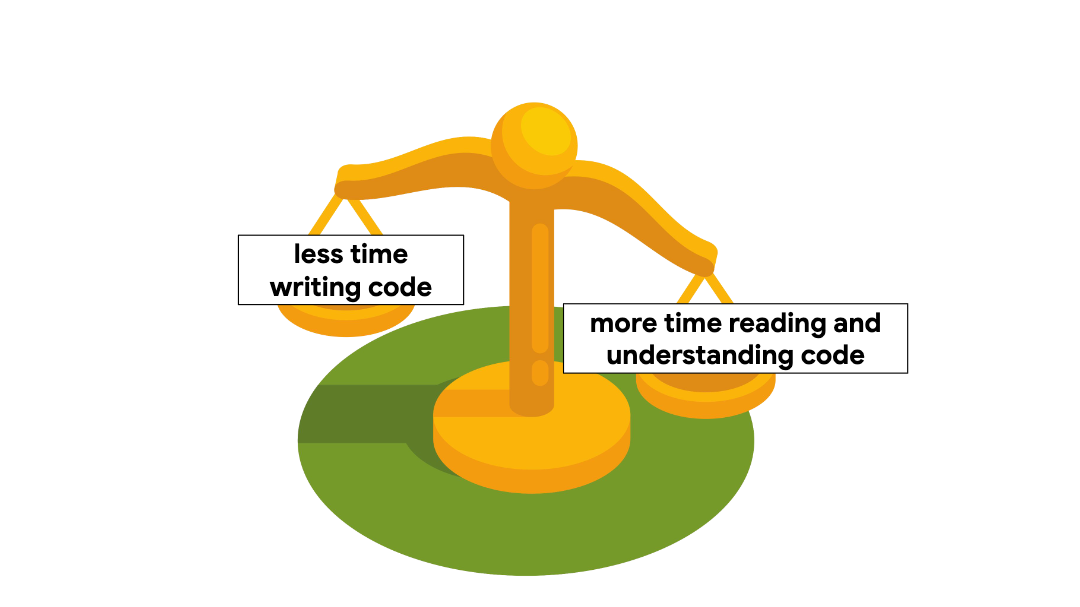
Design for Understandability
This is a talk I gave at Google’s internal Code Health Summit in November of 2025. I’m sharing it here in the hopes that it sparks further learning and discussion. Abstract In a world where LLMs generate much of our code, understanding that code is more important than ever. But with a system as large … Continue reading Design for Understandability

Let Me Let You Own Your Data
Why do I have to choose between my web app respecting people’s privacy and it, like… having basic functionality?

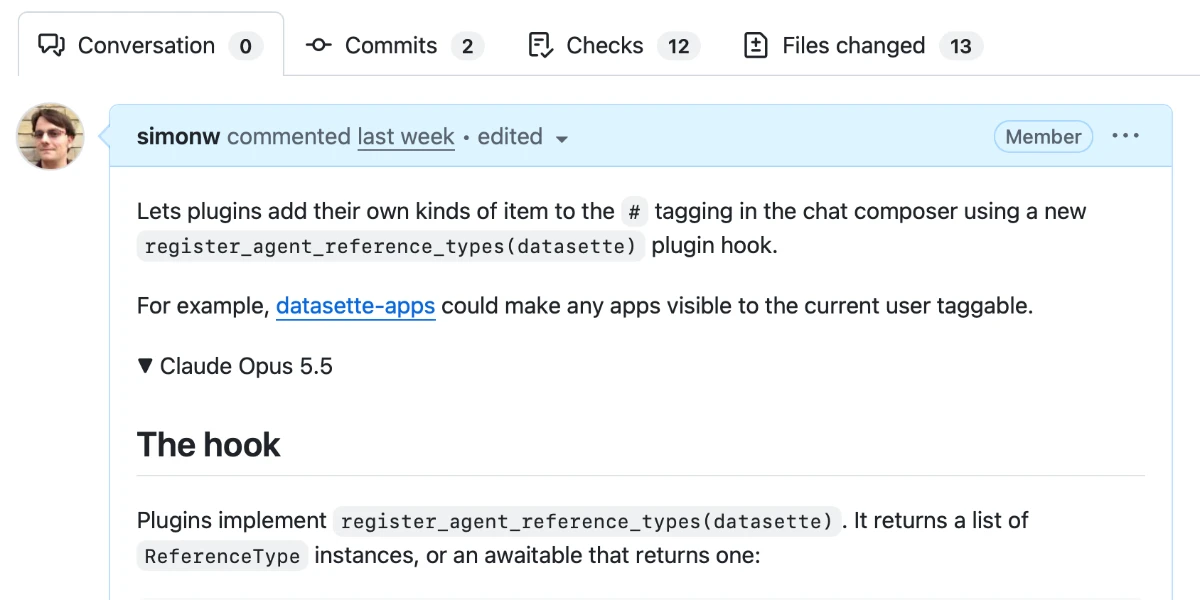
Hide your slop PR descriptions behind <details><summary>
Most of the changes I make to my projects these days come in the form of PRs opened for me by Claude Code or Codex. The PR is my unit …
Self-reinforcing quality / adopting verification pattern
After implementing the small-change pattern, Imprint Engineering’s next focus in improving our development loop has been implementing a verification loop for our software development. This is an increasingly common pattern, particularly popularized by poteto’s pstack, but you’ll find similar ideas emerging in other places as well, e.g. Niko Matsakis’ post on the correctness ratchet, among others. This captures some of the confusion I’ve seen in our initial rollout, and the particulars of how we are implementing the approach.

Program!
You have been surrounded by programmed media your entire life. But it has never been this powerful, or this dangerous to ignore. Defend your mind. Build alternatives together. Program, or be programmed.

The End of Software Engineering:How AI Agents Are Fundamentally Restructuring the Software Paradigm
For over half a century, software engineering has operated on a foundational premise: human engineers decompose problems, encode decision logic into static code, and manually adapt that code as requirements evolve. This paper argues that the emergence of AI agents – systems where large language models serve as the primary reasoning engine, dynamically generating and discarding code as an instrumental resource – constitutes not an incremental improvement but a fundamental restructuring of the software paradigm. Drawing on first-principles analysis of complexity scaling, we formalize the distinction between traditional software (where code is the carrier of decision logic) and agentic systems (where code is ephemeral tooling for an LLM-driven reasoning loop). We trace the historical arc from licensed software to SaaS to what we term Agent-as-a-Service (AaaS), showing that each shift transferred additional complexity away from end-users. We introduce the concept of Agentic Engineering as an emergent discipline – distinct from software engineering in its core object of study, control model, and human role. Through analysis of recent benchmark evidence including SWE-bench Verified, EvoClaw, and LangChain’s multi-agent coordination studies, we demonstrate both the transformative potential of the agentic paradigm and its current limitations. We conclude with a four-stage roadmap toward self-evolving agent ecosystems and concrete recommendations for practitioners navigating this transition.

AI Isn't Replacing SREs. It's Deskilling Them.
When AI handles 95% of your incident response, do you get worse at handling the 5% that actually matters?

ETOOMANYTHINGS? Run Fewer Agents - exe.dev blog
Spinning up more agents to hide latency wrecks your attention. Fix the human-agent loop instead.

Confessions of an Unrepentant Slop Snob
A framework for thinking about when AI involvement is additive or a violation

Lyrics to the blogpost about AI and atproto - Paul's Leaflets
Just a normal set of lyrics to a normal blogpost
500+ Billion Tokens Later: Letting AI Agents Decompile A First-Person Shooter
During the last 3 months, I spent some of my time and tokens decompiling a popular first-person shooter. The goal was not to reach a simple proof-of-concept state. Instead, we really wanted an accurate, stable and feature-complete recreation of the game. The avid reader of my blog might have noticed that I had previously written two posts that have since been removed. Everyone else might now be wondering which game I am talking about. To both of you I can only say that corporate America was here to ruin our fun.