Collection
Zotero - Broadening Data Science bibliography

Updated 2d
Generated from a Zotero collection. hdsr.mitpress.mit.edu/pub/tke5kviu/
Collection
Updated 2d
Generated from a Zotero collection. hdsr.mitpress.mit.edu/pub/tke5kviu/
Open science meets orange skies: K-12 educators’ engagement with computational notebooks to explore scientific events with human impacts
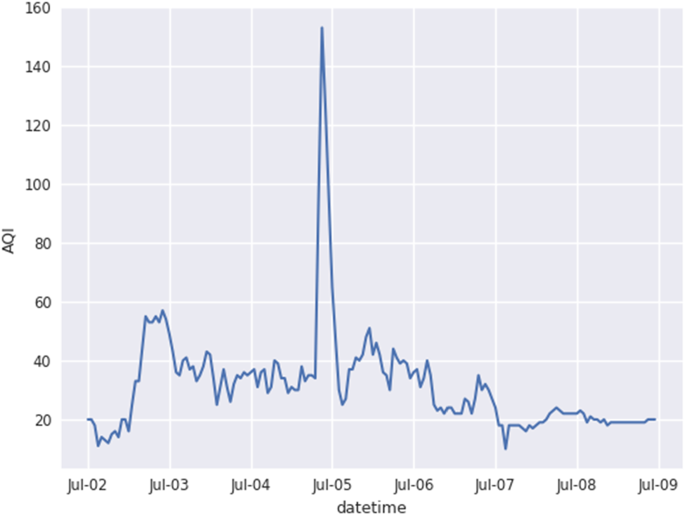
Computational notebooks are becoming a popular method to introduce mathematics, data, and scientific computing concepts to secondary students. Advocates argue computational notebooks encourage transparency and reproducibility in student work and can enable more personalized investigations of publicly available civic and scientific datasets. However, little is known about how teachers navigate these complex artifacts, let alone how they might support their students in doing so. In this paper, we investigate six pre-service and two in-service K-12 teachers’ sensemaking during a structured clinical think-aloud interview as they engaged with a computational notebook that examines disruptions in local air quality. The notebook presented a common event (annual fireworks) and an extreme event that impacted human health, during which the skies above the greater metropolitan San Francisco Bay region in California, USA turned orange due to wildfire pollution (“Orange Skies Day”, Sept 9, 2020). We examine the ideas that participants engaged as they interacted with the notebooks, and identify three ways in which they interacted with code in the notebook: to make sense of the scientific phenomenon (all participants), to make sense of the available data (6 out of 8 participants), and/or integrate these two dimensions (4 out of 8 participants). We present examples of each of these three forms of sensemaking, highlight their similarities and distinguishing features, and discuss implications for teacher education.
JupyterLite Officially Joins Project Jupyter!
We are thrilled to announce that JupyterLite is now an official part of Project Jupyter. This milestone marks a significant step forward for interactive computing in the browser and strengthens JupyterLite’s role within the Jupyter ecosystem.
Introducing notebook.link: The Future of Notebook Sharing
Reimagining how you share, collaborate, and run Jupyter notebooks — all in your browser.

Keynote: Bridging Gaps with Code: Transforming K12 Education with Jupyter Everywhere - I. Martinez
Developing Competencies for the Future of Data and Computing: The Role of K-12
Skills in computing and data are critical for students to thrive in a data-driven world. While efforts to expand learning in these areas have grown, opportunities to participate are unevenly distributed and lack coherence across grades and subjects. Our new report identifies seven shared competencies for data and computing and how they align with existing STEM standards and classroom practice. Through addressing curriculum, teacher preparation, professional learning, technology access, assessment, and system-level coordination, the report calls for sustained, coordinated action to ensure that all students have meaningful opportunities to develop literacy in data and computing.

Knowledge Creating Communities for teacher professional learning about data literacy
Data literacy is increasingly important to enable school-aged learners to make sense of a data-rich world. Educating teachers about how to develop their learners’ data literacy is of high priority. This paper presents qualitative analysis of the development of confidence and competence in teaching data literacy among teachers who are members of two Knowledge Creating Communities (KCC) encompassing 42 schools. Successful factors of the KCC were peer discussion and reflection on practice within a supportive environment, respect and reciprocity between teachers and university staff; input from experts in data, and access to high-quality educational resources including pre-prepared datasets.
Mathematics Course Frameworks | UT Dana Center
Innovative design principles and student learning outcomesAs part of the Charles A. Dana Center’s mission to reshape math education to meet students’ needs in our rapidly changing world, we have developed three new fourth-year math course frameworks. The design principles and student learning outcomes are intended to help educators develop engaging, rigorous courses for math pathways that extend from high school through higher education and into the workforce.

CanCode
CanCode funds not-for-profit organizations that support youth, especially underrepresented youth, in developing digital skills including coding and artificial intelligence knowledge.
Data Scientist: The Sexiest Job of the 21st Century
Back in the 1990s, computer engineer and Wall Street “quant” were the hot occupations in business. Today data scientists are the hires firms are competing to make. As companies wrestle with unprecedented volumes and types of information, demand for these experts has raced well ahead of supply. Indeed, Greylock Partners, the VC firm that backed Facebook and LinkedIn, is so worried about the shortage of data scientists that it has a recruiting team dedicated to channeling them to the businesses in its portfolio. Data scientists are the key to realizing the opportunities presented by big data. They bring structure to it, find compelling patterns in it, and advise executives on the implications for products, processes, and decisions. They find the story buried in the data and communicate it. And they don’t just deliver reports: They get at the questions at the heart of problems and devise creative approaches to them. One data scientist who was studying a fraud problem, for example, realized it was analogous to a type of DNA sequencing problem. Bringing those disparate worlds together, he crafted a solution that dramatically reduced fraud losses. In this article, Harvard Business School’s Davenport and Greylock’s Patil take a deep dive on what organizations need to know about data scientists: where to look for them, how to attract and develop them, and how to spot a great one.

Understanding the Data in K-12 Data Science · Issue 6.2, Spring 2024
Our increasingly data-driven world is amplifying the need for everyone to develop foundational data literacy skills. In response, a growing number of K-12 data science curricula are being designed to introduce all students to data. These curricula define what data science is at the high school level and directly shape how students are introduced to and understand the discipline. Ensuring these curricula are effective, engaging, and, most critically, equitable is of paramount importance. This article presents a qualitative analysis of four curricula, focusing on the data used to introduce learners to the field of data science. The analysis uses a series of analytical lenses to evaluate the 296 distinct data sets used across the curricula and identifies trends and best practices in data set selection. The analysis includes using data collected from high school students about their interests and experiences with data to understand if and how contemporary data science curricula are tapping into students’ lived experiences to situate data science learning experiences. The findings show that the curricula use relatively recent and small data sets covering a range of topics and that learner involvement in data set selection is limited. Further, the analysis reveals gaps between the data sets used and students' self-reported interests. This work highlights the importance of data set selection, especially as it relates to supporting learners from historically excluded populations in technology fields. Finally, this article provides practical implications to assess existing curricula and advances our understanding of how to situate the field of data science in the interests, ideas, and values of today’s students.

Easy-to-Use Cloud Computing for Teaching Data Science
One of the biggest hurdles of teaching data science and programming techniques to beginners is simply getting started with the technology. With multiple versions of the same coding language availab...

Jupyter Everywhere
Jupyter for teaching, sharing, and exploring — everywhere.
Doing Data Science on the Shoulders of Giants: The Value of Open Source Software for the Data Science Community · Issue 2.2, Spring 2020
Open source software is ubiquitous throughout data science, and enables the work of nearly every data scientist in some way or another. Open source projects, however, are disproportionately maintained by a small number of individuals, some of whom are institutionally supported, but many of whom do this maintenance on a purely volunteer basis. The health of the data science ecosystem depends on the support of open source projects, on an individual and institutional level.

Callysto – Cybera
Cybera and the Pacific Institute for Mathematical Sciences (PIMS) are participating in the new national CanCode program. This two-year program supports initiatives that aid coding and digital skills development among Canadian youth, from grade 5-12.
Retour en images sur la 10e soirée des Trophées CTO 2023 !
Laissez-nous votre numéro de téléphone et nous vous rappellerons.
EduBlocks
EduBlocks is a free tool by Anaconda that helps anyone learn how to code with text-based languages like Python or HTML using a familiar drag-and-drop blocks system
