Collection
Internet Ecosystem UX Researcher in a Box

Updated 6mo
Recommendations and resources for a social web ecosystem researcher
Collection
Updated 6mo
Recommendations and resources for a social web ecosystem researcher
Wardley map
A Wardley map is a map for business strategy.[1] Components are positioned within a value chain and anchored by the user need, with movement described by an evolution axis.[2] Wardley maps are named after Simon Wardley who created the technique at Fotango in 2005 having created the evolutionary framing the previous year.[3][4] The technique was further developed within Canonical UK between 2008 and 2010[5][independent source needed] and components of mapping can be found in the "Better for Less" paper published in 2010.[6]
The Elements of Content Strategy by Erin Kissane - Read Online
Read The Elements of Content Strategy by Erin Kissane online. Explore content strategy’s roots, and quickly learn not only how it’s done, but how you can do it well.

Twelve Emerging Best practices for Adding UX Work to Agile Development
How experienced UX practitioners have adapted to work happily in Agile environments
The Fractal Organization
The world of management is in crisis - the old remedies no longer work and organizations are failing at an increasing rate. Although many talk of 'joined up thinking', few offer practical guidance on how to achieve this in organizations. <b><i>The Fractal Organization</i></b> sets down the practical implications of a well tested systemic approach to building organizations that are capable of surviving and flourishing in these turbulent times. <p>"An excellent read…Many organizations fail at the mercy of their own ignorance. The author has done an excellent job in making ‘the science of effective organization’ accessible to management, providing them with a new knowledge to deal with the uncertainties that the markets place upon them."<br /><b>Stephen J. Brewis, Business Architect, British Telecom</b></p> <p>"...one of the most interesting, thorough and rigorous guides to management that I have ever read, … introduces new insights in every chapter… carries a credibility which acts as a counterbalance to the sometimes difficult message which he conveys which is that a lot of mainstream management practice is at best ineffective and at worst downright destructive. I would recommend this book to anyone interested in management or systems thinking."<br /><b>Penny Marrington</b>, <b>Course Chair, Systems Group, Open University</b></p> <p>"In my opinion this book manages to present sound academic theory that is relevant and helpful to the practitioner in the business. I experienced several A-HA moments."<br /><b>Pauline Marsh, Strategy Director, CS&S International, BAE SYSTEMS</b></p> <p>"The insights of the Viable System Model have been open only to a select few for much too long. Hoverstadt has gone furthest in bringing these ideas to a wider audience…Management books have too often been serious but not practical, or practical but not serious. This book is both brilliantly serious and practical, and often entertaining too."<br /><b>Professor Peter Kawalak, Manchester Business School</b></p> <p>"Integrates mainstream management ideas with the systems ideas underpinning the VSM, and flows and reads well. As a starting point for developing understanding of the VSM in today's world this book improves greatly on all books that have gone before, I would certainly recommend it to colleagues, clients, and students."<br /><b>Dr. Robin Asby, Course Chair, Communication and Systems, Open University</b></p>
Ambiguity, legibility, and working in the open – ambiguiti.es
Evolving Design Language in the AI Era: From Good to Great
Explore how the AI era reshapes design language, emphasizing objective critique over subjective opinions for successful outcomes.

Home - Multisolving Institute
Multisolving: one action, many benefits We help people overcome barriers to multisolving. Multisolving is a growing movement around the world. When people work together across sectors to address multiple problems with one policy or investment, they are multisolving.A good example is how walkable cities help reduce emissions from transportation, provide equitable access to mobility, create […]


Nurturing Our Humanity: How Domination and Partnership Shape Our Brains, Lives, and Future - The Center for Partnership Systems
By Riane Eisler and Douglas P. Fry Nurturing Our Humanity: How Domination and Partnership Shape Our Brains, Lives, and Future, by Riane Eisler and Douglas P. Fry, holds the key to a clear perspective on our personal and social options in today’s world, showing how to structure our environments – from family and gender relations […]

Imagination — Ruha Benjamin
Race After Technology (Polity) cuts through tech-industry hype to understand how emerging technologies can reinforce white supremacy and deepen social inequity. Benjamin argues that automation has the potential to hide, speed, and even deepen discrimination, while appearing neutral and even benevole

Mental Models and User Experience Design
What users believe they know about a user interface impacts how they use it. Mismatched mental models are common, especially with designs that try something new.

We Need To Rewild The Internet
The internet has become an extractive and fragile monoculture. But we can revitalize it using lessons learned by ecologists.

Personas — Adlin, Inc.
I’ve been thinking about and working with personas for nearly 25 years. My early work focused on the Persona Lifecycle: how to prepare for, create, introduce, use, and then measure the impact of data-driven personas. In 2005, I realized that while creating personas from data should work, data alone can’t change deeply-held opinions. This is when I stopped using data to create personas and started developing a tool that I now call “alignment personas.” Through my Executive Alignment Workshops, I can help you and your team gain alignment, develop strong personas and use them effectively to create great products.
Writing Is Designing By Michael J. Metts & Andy Welfle
Discover how words shape UX with Writing Is Designing. Learn to craft clear, human-centered content for apps, chatbots, and software interfaces.

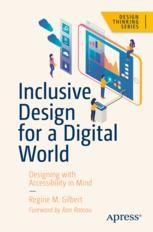
Inclusive Design for a Digital World
In this book, readers will learn the Web Content Accessibility Guidelines (WCAG) 2.1 requirements, emerging technologies such as VR and AR, best practices for web development, and implementation of inclusive design. Begin understanding the immense opportunities in designing for accessibility.
Design for Real Life
You can't always predict who will use your products, or what emotional state they'll be in when they do. But by identifying stress cases and designing with compassion, you'll create experiences that support more of your users, more of the time.
How to Make Sense of Any Mess
Information Architecture for Everybody. Based on a book by Information Architect, Abby Covert.
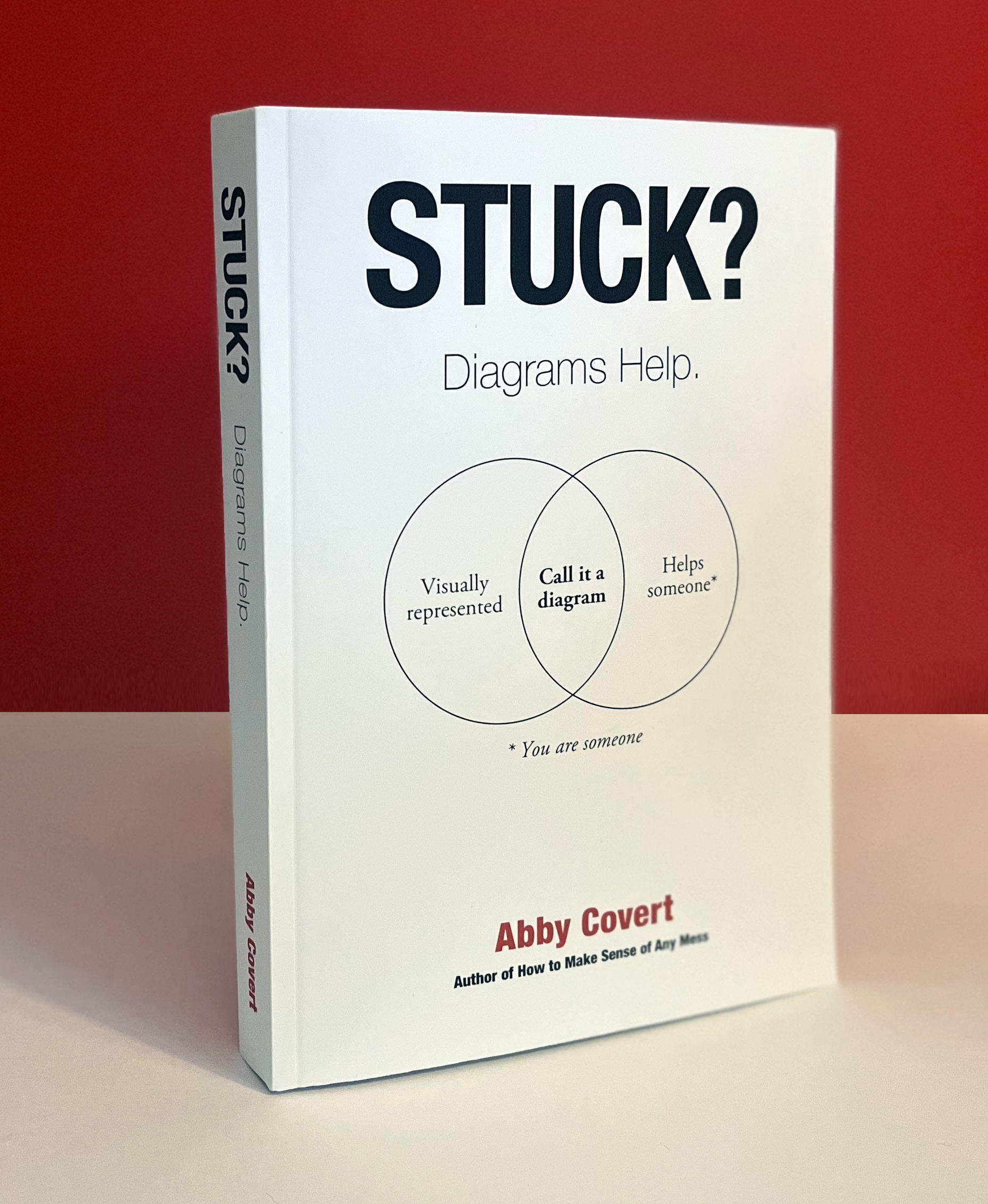
Stuck? Diagrams help. - Abby Covert, Information Architect
Stuck? Diagrams help. When was the last time you felt stuck? Maybe it was because of a decision you were struggling to make, a complex topic you were
Content Design, second edition - Paperback and eBook bundle
We work with organisations, big and small, to transform their content and help them succeed.
