Do we actually need to write research papers at all?
If we are going to lean on the creativity and the cross-domain thinking of human researchers, then surely that should be where the human time goes.

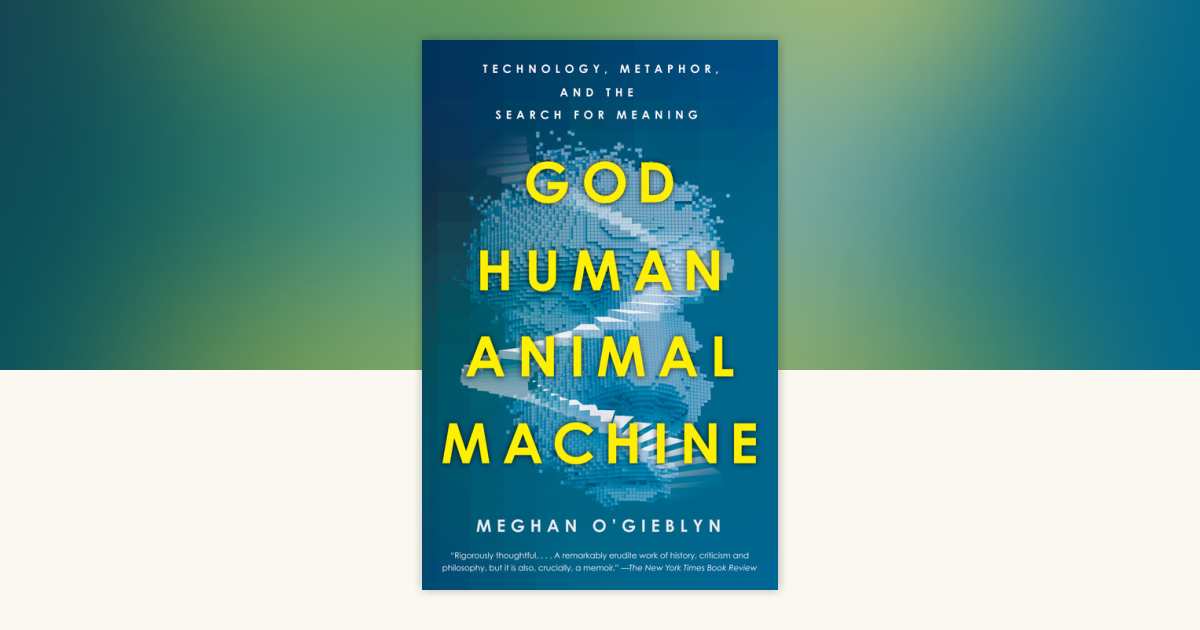
God, Human, Animal, Machine by Meghan O'Gieblyn: 9780525562719 | PenguinRandomHouse.com: Books
A strikingly original exploration of what it might mean to be authentically human in the age of artificial intelligence, from the author of the critically-acclaimed Interior States. • "At...
AI Tools for Trust: Community Notes, Rhetoric Detection & More
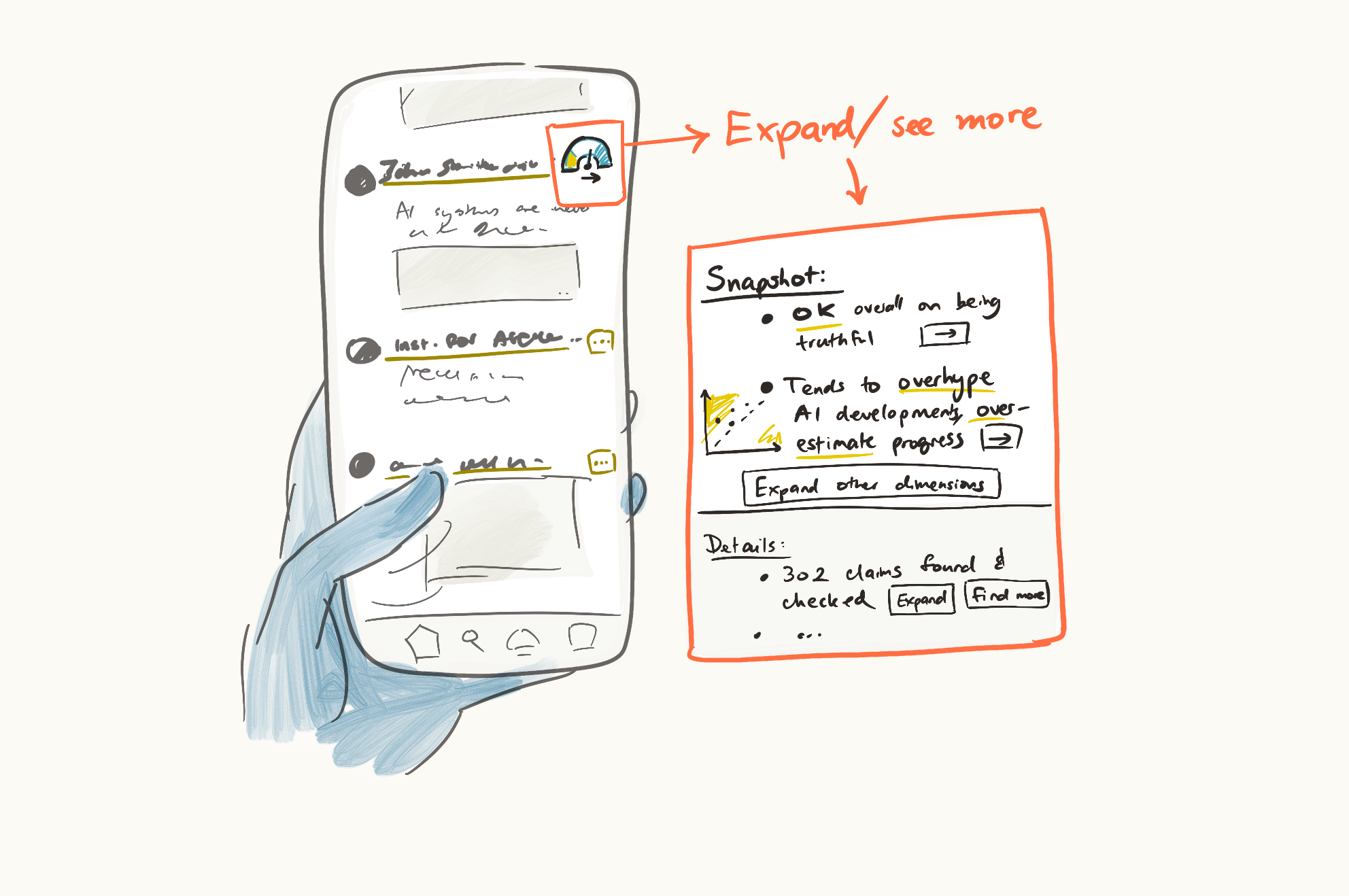
Five AI technologies to combat misinformation: community notes, rhetoric detection, reliability tracking, epistemic evals, and provenance tracing.
Can generative artificial intelligence be considered a cognitive subject? An analytic analysis
This paper examines whether contemporary generative artificial intelligence (GAI), especially large language models (LLMs), can be regarded as a “cognitive subject” in the epistemic sense relevant to the production and endorsement of knowledge claims. GAI systems increasingly participate in writing, research, and decision-making workflows and can display striking competence in information processing and task-directed problem solving. Yet, the thesis that GAI is a cognitive subject is stronger than the observation that GAI contributes as a cognitive tool. Therefore, we propose an explicit set of necessary and sufficient conditions for cognitive subjecthood and evaluate each condition in light of recent philosophical and empirical scholarship. The analysis supports a two-part conclusion: (i) present-day GAI can reasonably be described as a cognitively significant contributor to knowledge production, but (ii) it does not satisfy the conditions for cognitive subjecthood, largely because robust intentionality, metacognitive self-representation, and consciousness-related indicator properties are not established.
What Libraries Actually Do – Libraries as Epistemic Institutions
One of the biggest challenges for libraries telling their story is that the library means something different depending on who’s in the room. For a student, it’s a place to study and a staff full of people who want them to succeed. For a faculty member, it might be the invisible infrastructure that delivers electronic articles or the subject liaison who visits their class each year. For a graduate student, it’s often something more: a research partner, a data collaborator, a guide through the methodological expectations of a discipline. And that’s before accounting for the larger information environment that those users are already swimming in, where disciplines publish at high rates; trade publications and newsletters and Substacks produce sense-making content daily; and social media, messaging apps, and community channels add still more. The information environment is a flood around us, and the library is one stream of that flow.
Epistemic Infrastructure: Building Shared Truth in an Era of Disaggregation
The Construct of Collective Perception

Building Epistemically Healthier Platforms
When thinking about designing social media platforms, we often focus on factors such as usability, functionality, aesthetics, ethics, and so forth. Epistemic considerations have rarely been given the same level of attention in design discussions. This paper aims to rectify this neglect. We begin by arguing that there are epistemic norms that govern environments, including social media environments. Next, we provide a framework for applying these norms to the question of platform design. We then apply this framework to the real-world case of long-form informational content platforms. We argue that many current long-form informational content platforms are epistemically unhealthy. The good news? We provide concrete advice on how to take steps toward improving their health! Specifically, we argue that they should change how they verify and authenticate content creators and how this information is displayed to content consumers. We conclude by connecting this guidance to broader issues about the epistemic health of platforms.

The Dark Forest Anthology of the Internet
A book about how to survive on the internet. It’s about the cozy web, the dark web, the dark forest, the clear net, the dark net, and a new social world emerging around us. This is the Dark Forest Anthology of the Internet.
There is no fresh air: A problem with the concept of echo chambers
Standardly, echo chambers are thought to be structures that we should avoid. Agents should keep away from them, to be able to assess a fuller range of evidence and avoid having their confidence in that information manipulated. This paper argues against that standard view. Not only can echo chambers be neutral or good for us, but the existing definitions apply so widely that such chambers are unavoidable. We are all in large numbers of echo chambers at any time – they can be found not just on social media or in political groups, but in almost every social or epistemic group we could categorise ourselves into. Because we are finite and fallible, we cannot escape them and need to exist in them just to get by. The concept, then, does not actually capture something as structurally problematic as the paradigmatic cases would suggest. Our way of using the term in social epistemology needs to change.

Trapped in the Loop: How Epistemic Closure Is Rewiring Reality - Revelatory · Relentless · Rectification · Redemptive
In a time when truth is fragmented and headlines are filtered through ideological lenses, a silent epidemic is taking hold: epistemic closure. While the term

Free Speech on the Internet: The Crisis of Epistemic Authority
Abstract. Much of our knowledge of the world comes not from direct sensory experience, but from reliance on epistemic authorities: individuals or institutions that tell us what we ought to believe. For example, what most of us believe about natural selection, climate change, or the Holocaust comes from our reliance on epistemic authorities (scientists, historians). Sustaining epistemic authority depends, crucially, on social institutions that inculcate reliable second-order norms about whom to believe about what. The traditional media were crucial, in the age of mass democracy, with promulgating and sustaining such norms. The internet has obliterated the intermediaries who made that possible, and, in the process, undermined the epistemic standing of actual experts. This essay considers some possible changes to existing free speech doctrine to remedy the epistemological crisis brought about by the internet.