Collection
Collective Intelligence

Updated 8d
Collection
Updated 8d
Research – Open Heart Mind
We’re developing Metavaluation — a participatory framework for recognising and rewarding the value of diverse contributions, from creative work and care to logistics and leadership.
Agora Citizen Network
Agora helps people overcome disagreement and find consensus, for more democratic and efficient decision-making.
Polis
Science Communication as a Collective Intelligence Endeavor: A Manifesto and Examples for Implementation
Effective science communication is challenging when scientific messages are informed by a continually updating evidence base and must often compete against misinformation. We argue that we need a new program of science communication as collective intelligence—a collaborative approach, supported by technology. This would have four key advantages over the typical model where scientists communicate as individuals: scientific messages would be informed by (a) a wider base of aggregated knowledge, (b) contributions from a diverse scientific community, (c) participatory input from stakeholders, and (d) better responsiveness to ongoing changes in the state of knowledge.

'Generative CI' through Collective Response Systems
How can many people (who may disagree) come together to answer a question or make a decision? "Collective response systems" are a type of generative collective intelligence (CI) facilitation process meant to address this challenge. They enable a form of "generative voting", where both the votes, and the choices of what to vote on, are provided by the group. Such systems overcome the traditional limitations of polling, town halls, standard voting, referendums, etc. The generative CI outputs of collective response systems can also be chained together into iterative "collective dialogues", analogously to some kinds of generative AI. Technical advances across domains including recommender systems, language models, and human-computer interaction have led to the development of innovative and scalable collective response systems. For example, Polis has been used around the world to support policy-making at different levels of government, and Remesh has been used by the UN to understand the challenges and needs of ordinary people across war-torn countries. This paper aims to develop a shared language by defining the structure, processes, properties, and principles of such systems. Collective response systems allow non-confrontational exploration of divisive issues, help identify common ground, and elicit insights from those closest to the issues. As a result, they can help overcome gridlock around conflict and governance challenges, increase trust, and develop mandates. Continued progress toward their development and adoption could help revitalize democracies, reimagine corporate governance, transform conflict, and govern powerful AI systems -- both as a complement to deeper deliberative democratic processes and as an option where deeper processes are not applicable or possible.

The knowledge layer for collective intelligence
A portable data substrate for humans and their tools to think together.
Atlas Research Group
Atlas Research Group – A federated research group built for the regenerative era

One year on: The momentum behind Jigsaw’s Sensemaking AI
How our suite of AI tools is helping public leaders bridge the gap between individual voices and concrete policy decisions

Education for collective intelligence
Collective Intelligence (CI) is important for groups that seek to address shared problems. CI in human groups can be mediated by educational technologies. The current paper presents a framework to ...

Rudy's Theory of Revolution
Eclecticisms Conversations Series: Episode 001 - Interview with Rudy Fraser of Blacksky
ATProtocol is good infrastructure for AI collective intelligence
From ZK-first to AT Protocol — our path to DDS | Agora Citizen Network
We've been building Agora — a platform for public deliberation using Polis-style clustering — for a while now. Along the way, we've written about what we think about Nostr, AT Protocol, Polis, Community Notes, and protocol interoperability. Those posts are somewhat outdated now. This one describes w...

Beyond Community Notes: A Framework for Understanding and Building Crowdsourced Context Systems for Social Media
Social media platforms are increasingly adopting features that display crowdsourced context alongside posts, a technique pioneered by X's Community Notes. These systems -- which we term Crowdsourced Context Systems (CCS) -- have the potential to reshape the information ecosystem as major platforms embrace them as alternatives to professional fact-checking. To understand the features and implications of these systems, we conduct a systematic literature review of existing CCS research (n=56) and analyze real-world CCS implementations. Based on our analysis, we develop a framework with two components. First, we present a theoretical model to conceptualize and define CCS. Second, we identify a design space encompassing six aspects: participation, inputs, curation, presentation, platform treatment, and transparency. We also surface normative implications of different CCS design and implementation choices. Our work integrates theoretical, design, and ethical perspectives to establish a foundation for future human-centered research on Crowdsourced Context Systems.
AI FOR EPISTEMICS & COORDINATION
Civilization and technology have radically improved the human condition. Nonetheless, the world sometimes goes in directions which essentially nobody would prefer — e.g., nuclear arms races, unexpected financial crashes, predatory marketing, or ubiquitous political misinformation.
(PDF) Algorithmically Mediating Communication to Enhance Collective Decision-Making in Online Social Networks
PDF | Many collective decision-making contexts involve communication among group members. Sometimes this communication helps the collective reach an... | Find, read and cite all the research you need on ResearchGate

Public Editor
Public Editor is a human-trained AI that labels specific reasoning mistakes in the daily news, so we all learn to avoid biased thinking.
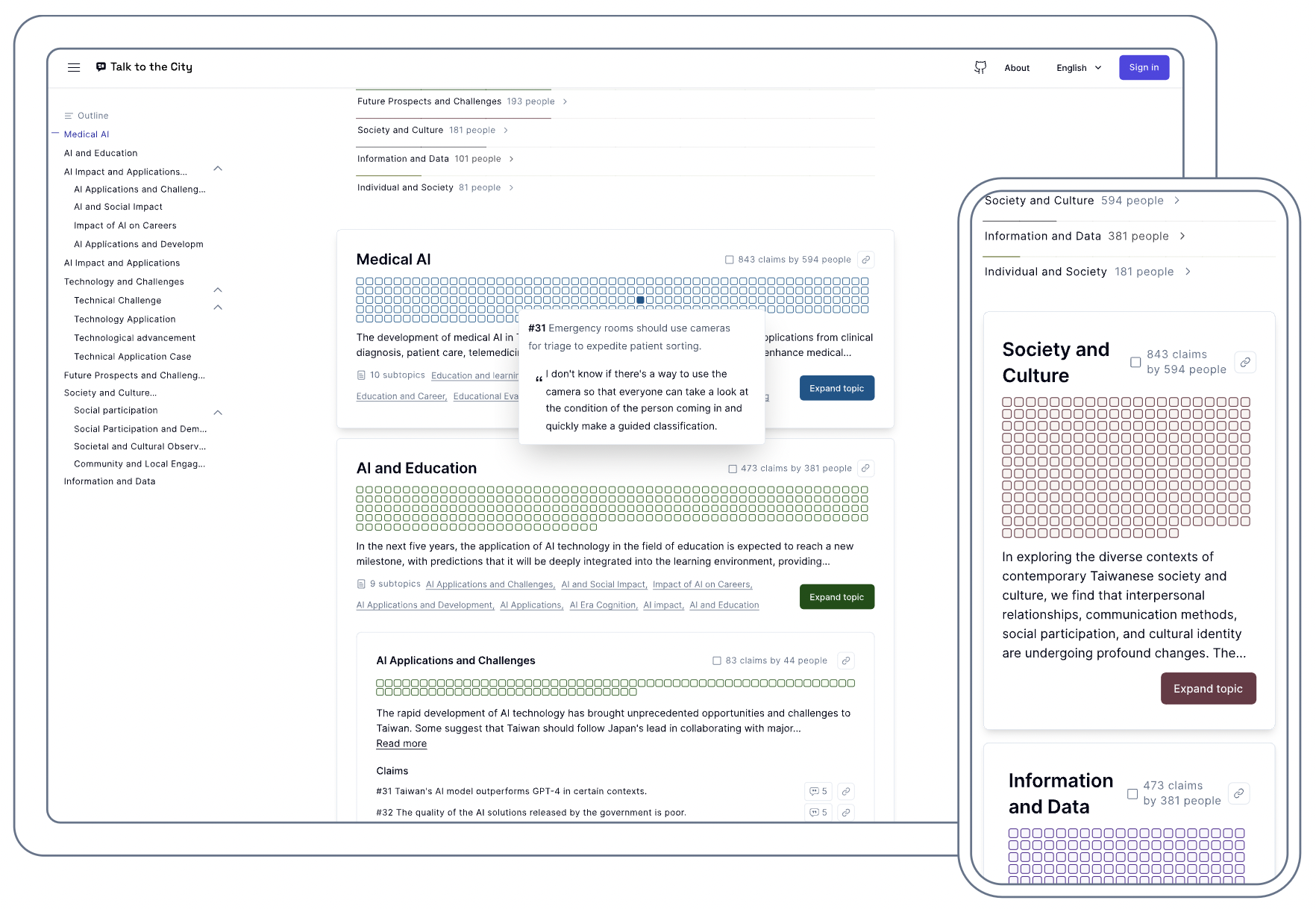
Talk to the City
Talk to the City helps large groups of people coordinate by understanding each other better, faster, and in more depth.
Symbolic Manipulation: an Anthropological Perspective
The aim of this article is to elucidate the anthropological conditions of possibility for computing. I will first show how symbolic manipulation is constitutive of hominization. Secondly, I will ex…

Metagov x Future of Science Seminar - Discourse Graphs with Matt Akamatsu
Collective Intelligence Research

Explorations into the idea that a group of humans is "more intelligent" than the sum of their "IQ" (i.e. "groups of individuals doing things collectively that seem intelligent")
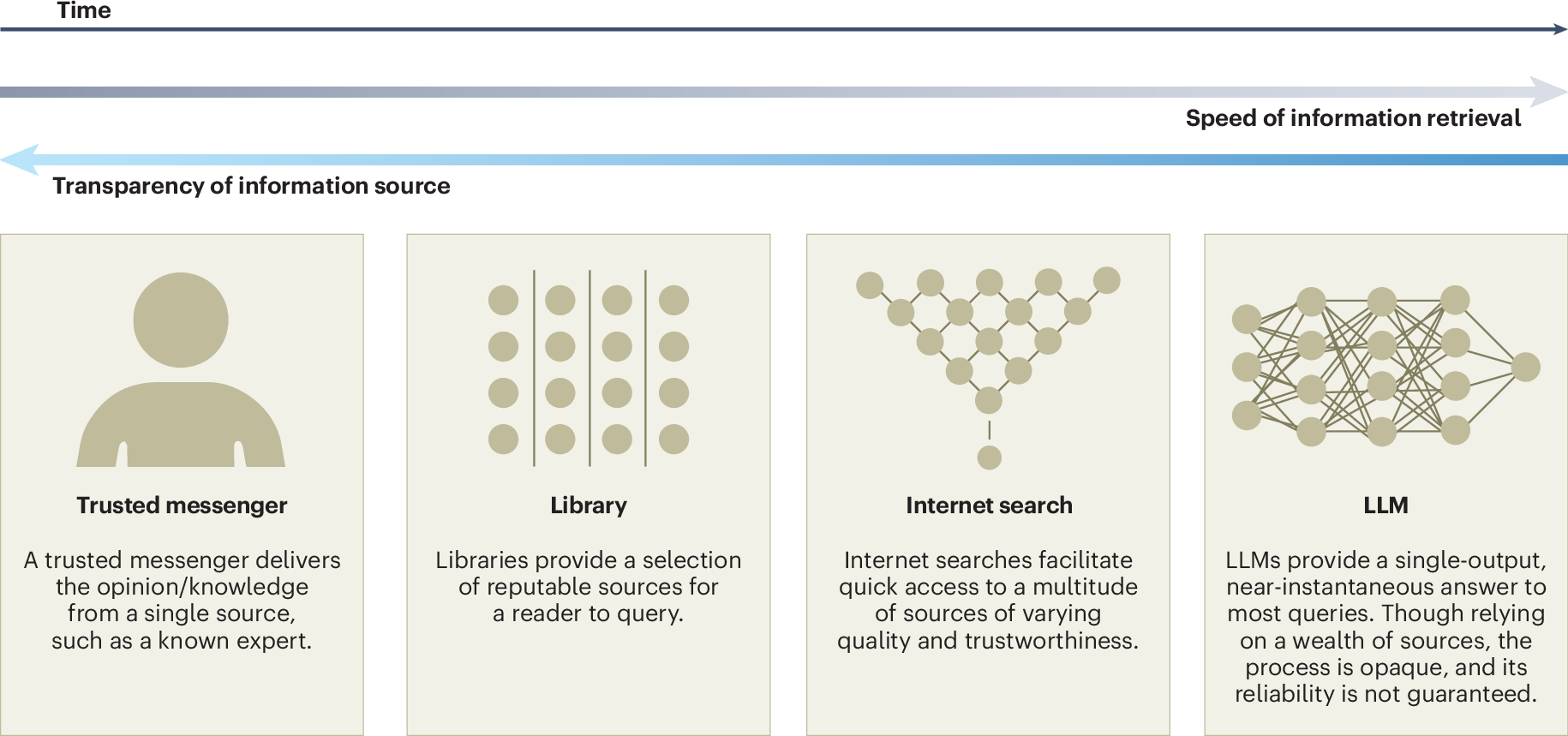
How large language models can reshape collective intelligence

Sharing Notes about Collective Intelligence — Pop Junctions
Socially Minded Intelligence: How Individuals, Groups, and Artificial Intelligence Can Make Each Other Smarter (or Not)

Profile: Adrien Treuille

NOVA | The Wisdom of the Crowds | Season 45 | Episode 6
Mapping Citizen Science through the Lens of Human-Centered AI