Collection
to read

Updated 4mo
Collection
Updated 4mo
Why we're bullish on loops
WTF are loops, why is everyone arguing about them, and why do they actually matter?

Humanity’s Endgame
A new history of societal collapse by an expert in existential risk argues that our globalized society is edging toward the precipice.

Keynote: Towards Modular Open Science with @row1.ca and @matsulab.com - ATmosphereConf 2026
Imperialist appropriation in the world economy: Drain from the global South through unequal exchange, 1990–2015
Unequal exchange theory posits that economic growth in the “advanced economies” of the global North relies on a large net appropriation of resources and labour from the global South, extracted through price differentials in international trade. Past attempts to estimate the scale and value of this drain have faced a number of conceptual and empirical limitations, and have been unable to capture the upstream resources and labour embodied in traded goods. Here we use environmental input-output data and footprint analysis to quantify the physical scale of net appropriation from the South in terms of embodied resources and labour over the period 1990 to 2015. We then represent the value of appropriated resources in terms of prevailing market prices. Our results show that in 2015 the North net appropriated from the South 12 billion tons of embodied raw material equivalents, 822 million hectares of embodied land, 21 exajoules of embodied energy, and 188 million person-years of embodied labour, worth $10.8 trillion in Northern prices – enough to end extreme poverty 70 times over. Over the whole period, drain from the South totalled $242 trillion (constant 2010 USD). This drain represents a significant windfall for the global North, equivalent to a quarter of Northern GDP. For comparison, we also report drain in global average prices. Using this method, we find that the South’s losses due to unequal exchange outstrip their total aid receipts over the period by a factor of 30. Our analysis confirms that unequal exchange is a significant driver of global inequality, uneven development, and ecological breakdown.
Can Agentic AI Coding Tools Finally End Copyright For Software While Re-Inventing Open Source?
Most of the discussions about the impact of the latest generative AI systems on copyright have centered on text, images and video. That’s no surprise, since writers, artists and film-makers feel ve…

Fascintern Media
We are facing a coordinated international fascist movement that works with explicit backing from Moscow, Washington, and tech monopolies, and is propagating itself through its own media apparatus. Yet people who claim to side with democracy keep doing work to support Fascintern media because they misunderstand how it works. This needs to change.

Collective action strategies in the age of AI w/ Nick Vincent from Data Leverage
Podcast Episode · The Blockchain Socialist · March 4 · 1h 3m

From Attention to Intention - The Open Garden
Exploring business models for atproto and the open social web
Metascience for whom? A question as old as science.
Before we fix science, we need to ask who built it!
The AI Transformation will kill the start-up as we know it.
AI will reshape our institutions and ultimately kill the start-up as we know it. Business 3.0 and new structures like the RCO is a response - shifting business to a living systems paradigm.

The Missing Middle of Open Source
Why serious, maintainer-driven projects struggle to sustain themselves—and what it will take to fix it.
Embodied AI: China’s Big Bet on Smart Robots
Beijing believes that true AI dominance will come from systems capable of autonomous operation in the physical world—AI-powered robotics, or embodied AI.

China's Artificial General Intelligence | Center for Security and Emerging Technology
Recent op-eds comparing the United States’ and China’s artificial intelligence (AI) programs fault the former for its focus on artificial general intelligence (AGI) while praising China for its success in applying AI throughout the whole of society. These op-eds overlook an important point: although China is outpacing the United States in diffusing AI across its society, China has by no means de-emphasized its state-sponsored pursuit of AGI.

Why did capitalism begin in the West?
Culture, class, and the origins of capitalist development
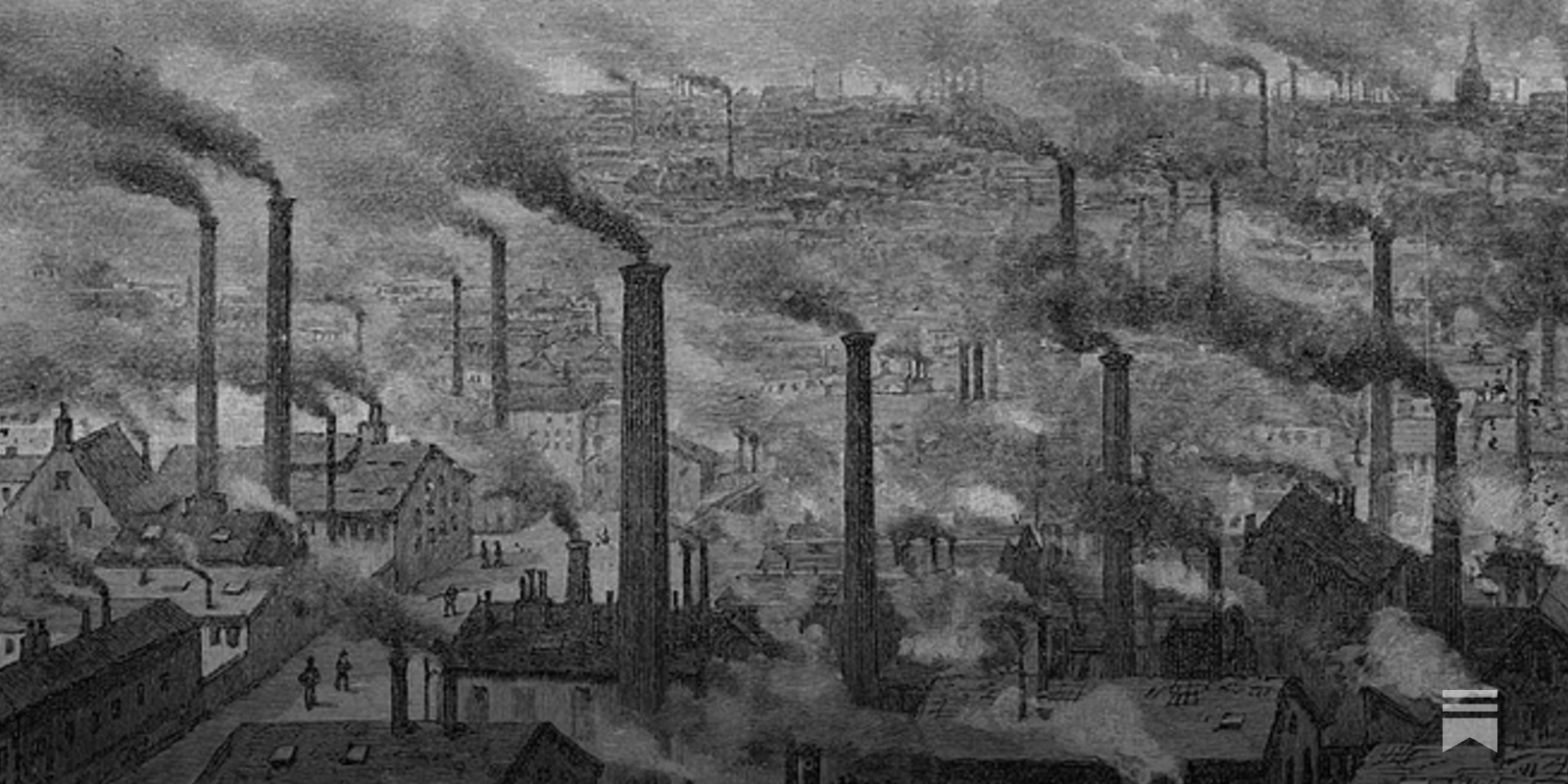
Knowledge infrastructures for the Anthropocene - Paul N Edwards, 2017
The technosphere metabolizes not only energy and materials, but information and knowledge as well. This article first examines the history of knowledge about la...

There Never Was a West
David Graeber There Never Was a West Or, Democracy Emerges From the Spaces In Between 2007 From the collection “Possibilities: Essays on Hierarchy,...

Does OpenID need to be hard?
Prompted by posts by Randy Reddig and Tony Stubblebine and a conversation with Elliott Kember, I wanted to address, yet again, the big fat stinking elephant in the room: OpenID usability and the pa…

A/B/U Review System - ORI Onboarding
This is the rating system we use at ORI. Given a piece of information, rate it according to the following rubric:
Don’t change the subject
Many creatives know this phenomenon: They start a new project on a promising topic with excitement, but when they can’t come up with an original idea instantly — they lose interest. They come to th…
Hyperproblems: New Ways of Doing and Communicating Science - Hyperproblems