Collection
Why Cosmik Network?

Updated 3d
context for the underlying motives, ideas and assumptions for building the Cosmik Network
Collection
Updated 3d
context for the underlying motives, ideas and assumptions for building the Cosmik Network
Attention and the Relevance Problem
ABSTRACT The relevance problem is the problem of how cognitive systems can be sensitive to what is relevant despite relevance being holistic, open‐ended, and context‐sensitive. The problem has typically been applied to higher‐order cognitive processes. In this paper, I argue that there is a hitherto unrecognized relevance problem for perceptual attention. This problem becomes apparent when considering the functions of attention: attention must not only support ongoing task performance but also remain sensitive to opportunities for task switching, latent learning, and context checking. Existing treatments of the relevance problem have largely focused on its task‐relative form: given a task, what is relevant? I argue that attention faces a more general problem that includes sensitivity to factors relevant to other interests and to cues indicating that another activity may be worth pursuing. For such features of the environment to stand out as salient, salience cannot be determined solely by bottom‐up factors and a limited set of occurrent top‐down factors, such as current goals and intentions. Rather, it must reflect the wider (if not the entire) range of an agent's latent interests in a context‐sensitive way. This motivational unencapsulation of attention poses a challenge for both contemporary accounts of attention and suggests that passive attention is much more intelligent than commonly thought.
The Web Needs a Context Layer Built on a Shared Protocol
Making context a shared protocol, rather than a platform feature, would let readers see competing perspectives anywhere on the web, argue Mallory Knodel, Evan Friedman, and Brad Friedman.

Coordination Tech in Science: Letters, Journals, and Whatever Comes Next | shishyko!
To modernize our scientific infrastructure, we need new contextualization and coordination technologies that decouple trust from legacy branding — shifting from gatekeeping on write to algorithmic contextualization on read.
The strain on scientific publishing
Scientists are increasingly overwhelmed by the volume of articles being published. Total articles indexed in Scopus and Web of Science have grown exponentially in recent years; in 2022 the article total was approximately ~47% higher than in 2016, which has outpaced the limited growth - if any - in the number of practising scientists. Thus, publication workload per scientist (writing, reviewing, editing) has increased dramatically. We define this problem as the strain on scientific publishing. To analyse this strain, we present five data-driven metrics showing publisher growth, processing times, and citation behaviours. We draw these data from web scrapes, requests for data from publishers, and material that is freely available through publisher websites. Our findings are based on millions of papers produced by leading academic publishers. We find specific groups have disproportionately grown in their articles published per year, contributing to this strain. Some publishers enabled this growth by adopting a strategy of hosting special issues, which publish articles with reduced turnaround times. Given pressures on researchers to publish or perish to be competitive for funding applications, this strain was likely amplified by these offers to publish more articles. We also observed widespread year-over-year inflation of journal impact factors coinciding with this strain, which risks confusing quality signals. Such exponential growth cannot be sustained. The metrics we define here should enable this evolving conversation to reach actionable solutions to address the strain on scientific publishing.

Introducing CAIROS: Collective Augmented Intelligence for Research and Open Science - Cosmik Labs
New year, new initiatives!

We May Be Entering A Second Axial Age
The transition from small hunter-gatherer societies into complex civilizations gave rise to the first Axial Age. Today, the planetary polycrisis of climate chaos, mass migration, increasing warfare and transformative AI represents a rupture of comparable magnitude.

From Social Network to Sense Making
From Feeds to Trails
To design the future of social media, rethink the interface before the algorithm.
Agentic AI and the next intelligence explosion
For decades, the artificial intelligence (AI) “singularity” has been heralded as a single, titanic mind bootstrapping itself to godlike intelligence, consolidating all cognition into a cold silicon point. But this vision is almost certainly wrong in its most fundamental assumption. If AI development follows the path of previous major evolutionary transitions or “intelligence explosions,” our current step-change in computational intelligence will be plural, social, and deeply entangled with its forebears (us!).

Garden and the Stream - thoughts
Revisiting a prescient 2015 keynote called The Garden and the Stream and analyzing where the AT protocol fits in the web
Reforming the products and processes of the IPCC to enhance its relevance
The Intergovernmental Panel on Climate Change (IPCC) assesses the scientific knowledge on climate change at five to seven year intervals. Exponential growth of the scientific literature has increased the workload for participants and the length of assessment reports. This paper proposes changes to the IPCC’s products and processes to enable it to better meet the needs of its audiences while reducing the growing burden imposed on authors and other participants.

Playbooks — Renaissance Philanthropy – A brighter future for all through science, technology, and innovation
Christopher Alexander’s A Pattern Language defines 253 methods for constructing beautiful and practical designs at every scale, from cities to rooms.

Chasing RATs: Tracing Reading for and as Creative Activity
Creativity research has privileged making over the interpretive labor that precedes and shapes it. We introduce Reading Activity Traces (RATs), a proposal that treats reading -- broadly defined to include navigating, interpreting, and curating media across interconnected sources -- as creative activity both for future artifacts and as a form of creation in its own right. By tracing trajectories of traversal, association, and reflection as inspectable artifacts, RATs render visible the creative work that algorithmic feeds and AI summarization increasingly compress and automate away. We illustrate this through WikiRAT, a speculative instantiation on Wikipedia, and open new ground for reflective practice, reader modeling, collective sensemaking, and understanding what is lost when human interpretation is automated -- towards designing intelligent tools that preserve it.
Rebuilding the Architecture of Science
Science built the modern world. It’s time to rebuild the world of science.
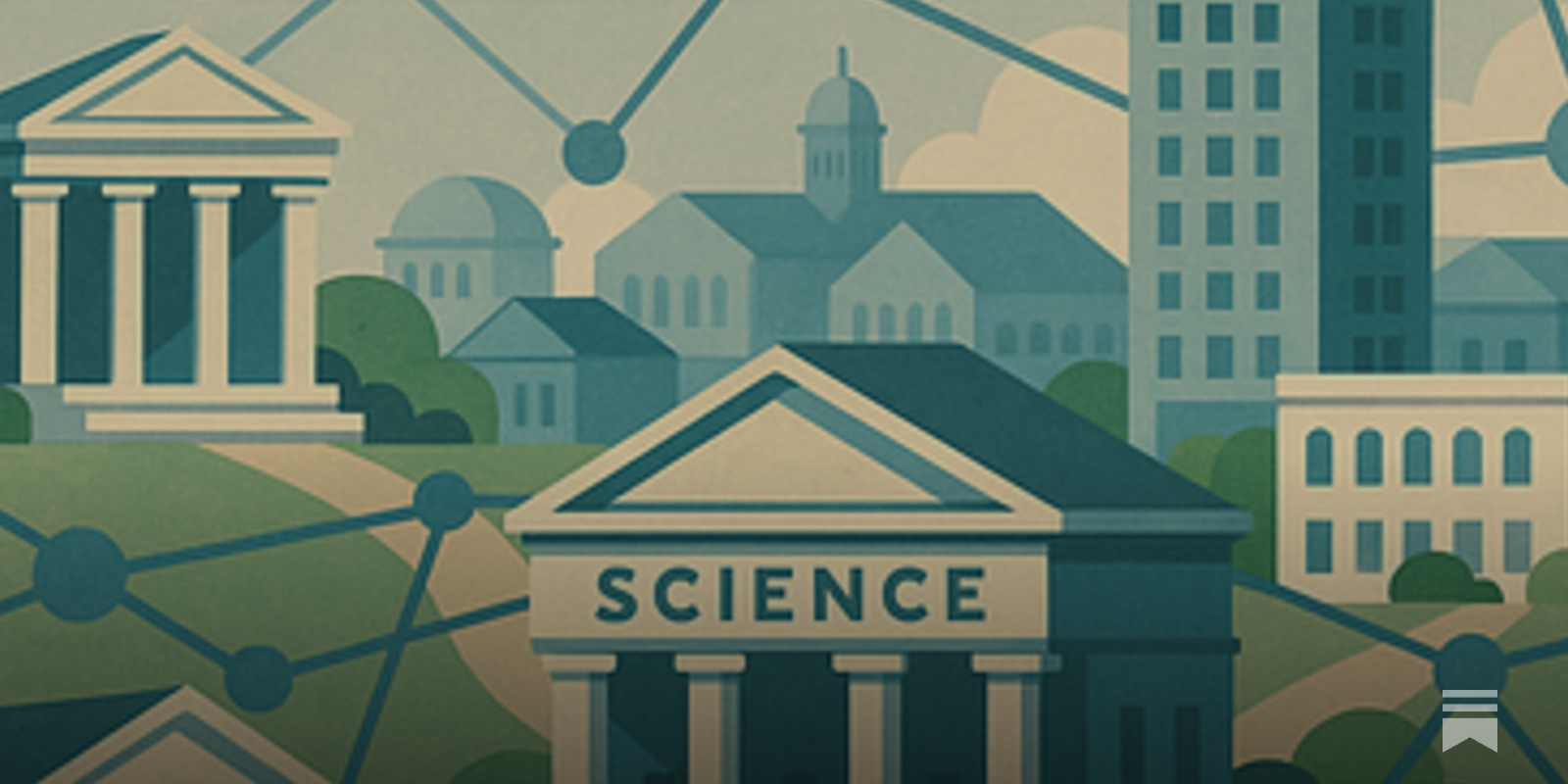
Unlocking a Million Times More Data for AI | IFP
How a new ARPANET-style program could solve the data accessibility problem

Brett Scott (@brettscott)
Marshall McLuhan is famous for his observation that the form of a communication technology can shape our mind and society The age of the printed book, for example, carried with it a particular way of being. Regardless of the differing content of different books, all books required a particular mindset in which a thread is followed from the beginning to the end through an arc I feel the age of social media is like the age of a ripped up book, as if we were surrounded by torn shards and shreds of paper floating like confetti around us. We grab for them, hoping for some tiny insight, but not having any way of knowing where it fits in the overarching narrative This note is one such shard. You can toss it away now

Networked Research Labs

MOSAIC
Modular Open Science, AI & Collective Intelligence (mosaic-program.org)
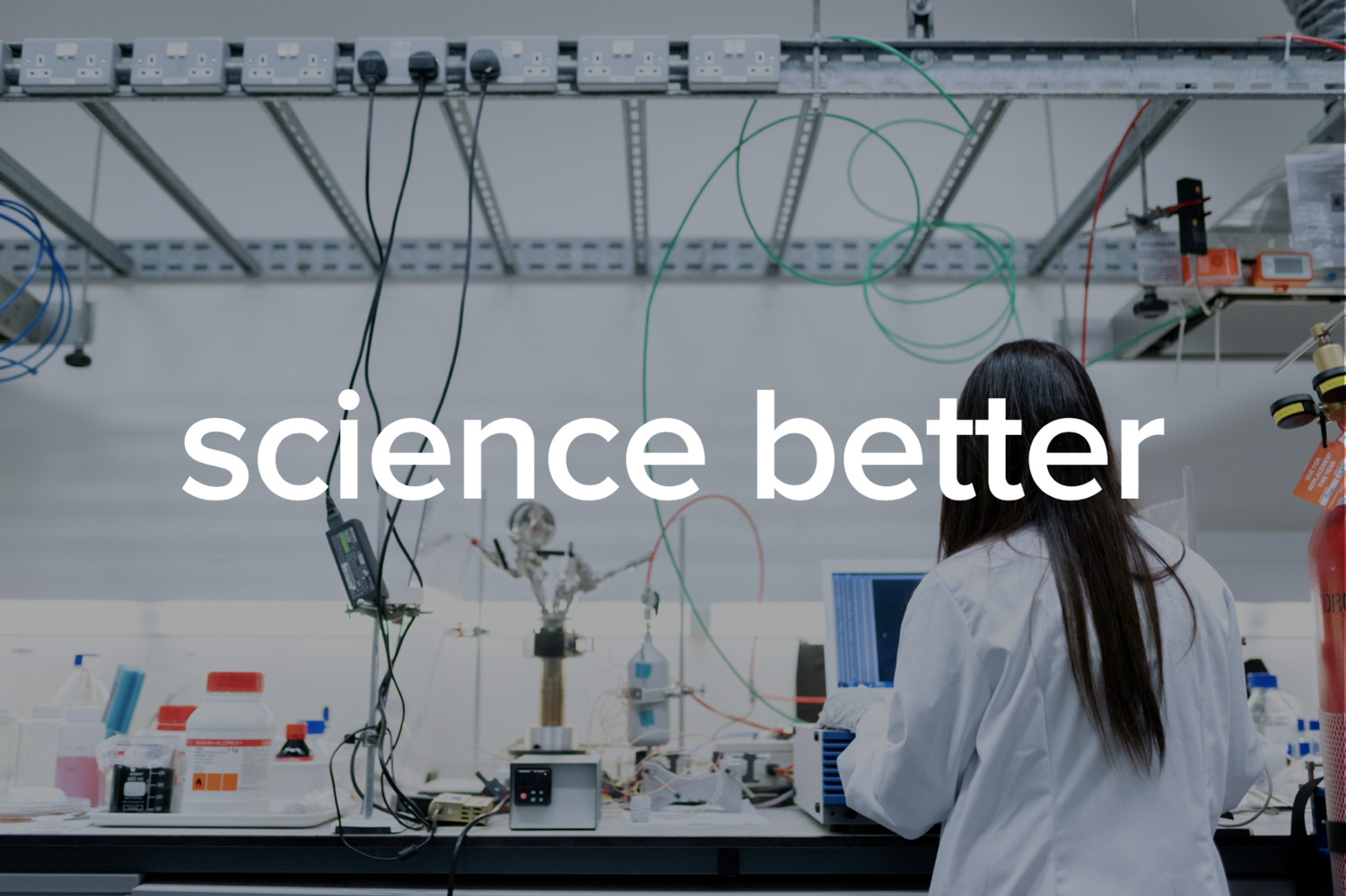
Improving scientific mentorship with "Open Labs" — science better
Federating friendly spaces - Roomy
modular research multi-agent slack-like environment demo
Buzz! 🐝
Genspace
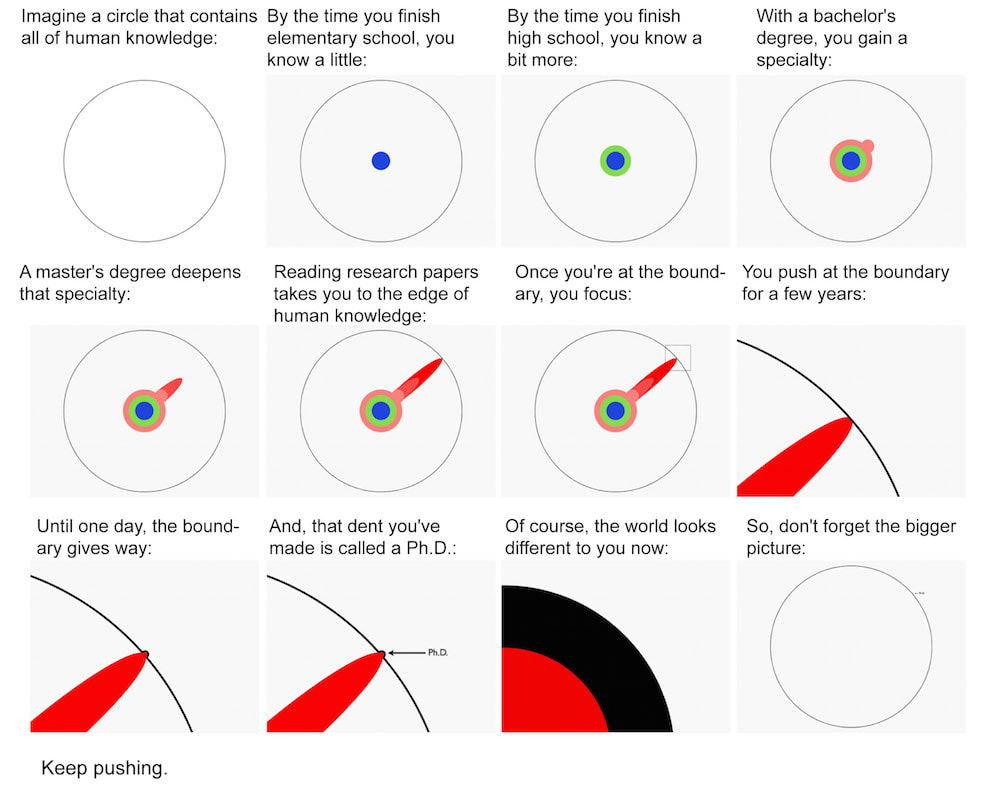
On open-science research labs on discord, and getting more people.
Humans are Missing from AI Coding Agent Research
ci.acm.org

Reinventing Discovery

Human learning is an understudied but promising lever for boosting human–AI synergy

AI for science needs reasoning, not just data
MOSAIC — Modular Open Science, AI & Collective Intelligence
