Collection
Modular research

Updated 6d
Collection
Updated 6d
The Trace and the Artifact | shishyko!
Our system of research is going through a phase transition. What exactly is wrong, and are there resilience engineering lessons from other systems we can borrow?
The new way we’ll do science
Papers should become human-readable views over a graph of data, tools, results, and certificates.

Science: A New Golden Age
President Trump seeks to lay the foundations for a new Golden Age of American Innovation. The Trump administration is working to revitalize the national science enterprise, to secure U.S. leadership in emerging technologies against foreign rivals, and to ensure that all of America’s citizens will benefit from new scientific breakthroughs and technological transformations. The President understands the American story as one of ambition, discovery, and invention, of pioneers who forever seek new frontiers for exploration, particularly now in science and technology.

Plan S
Plan S is an initiative for open-access science publishing launched in 2018[1][2] by "cOAlition S",[3] a consortium of national research agencies and funders from twelve European countries. The plan requires scientists and researchers who benefit from state-funded research organisations and institutions to publish their work in open repositories or in journals that are available to all by 2021.[4] The "S" stands for "shock".[5]
San Francisco Declaration on Research Assessment
The San Francisco Declaration on Research Assessment (DORA) is a statement that denounces the practice of correlating the journal impact factor to the merits of a specific scientist's contributions. Also according to this statement, this practice creates biases and inaccuracies when appraising scientific research. It also states that the impact factor is not to be used as a substitute "measure of the quality of individual research articles, or in hiring, promotion, or funding decisions".

Leiden Manifesto for Research Metrics
The Leiden Manifesto for Research Metrics (also known as the Leiden Manifesto) is a 22 April 2015 published comment in Nature that includes a list of "ten principles to guide research evaluation".[1] It was formulated by public policy professor Diana Hicks, scientometrics professor Paul Wouters, and their colleagues at the 19th International Conference on Science and Technology Indicators, held between 3–5 September 2014 in Leiden, The Netherlands.[2]
Open Evaluation: A Vision for Entirely Transparent Post-Publication Peer Review and Rating for Science
The two major functions of a scientific publishing system are to provide access to and evaluation of scientific papers. While open access (OA) is becoming a reality, open evaluation (OE), the other side of coin, has received less attention. Evaluation steers the attention of the scientific community and thus the very course of science. It also influences the use of scientific findings in public policy. The current system of scientific publishing provides only journal prestige as an indication of the quality of new papers and relies on a non-transparent and noisy pre-publication peer review process, which delays publication by many months on average. Here I propose an OE system, in which papers are evaluated post-publication in an ongoing fashion by means of open peer review and rating. Through signed ratings and reviews, scientists steer the attention of their field and build their reputation. Reviewers are motivated to be objective, because low-quality or self-serving signed evaluations will negatively impact their reputation. A core feature of this proposal is a division of powers between the accumulation of evaluative evidence and the analysis of this evidence by paper evaluation functions (PEFs). PEFs can be freely defined by individuals or groups (e.g. scientific societies) and provide a plurality of perspectives on the scientific literature. Simple PEFs will use averages of ratings, weighting reviewers (e.g. by H-factor) and rating scales (e.g. by relevance to a decision process) in different ways. Complex PEFs will use advanced statistical techniques to infer the quality of a paper. Papers with initially promising ratings will be more deeply evaluated. The continual refinement of PEFs in response to attempts by individuals to influence evaluations in their own favor will make the system ungameable. OA and OE together have the power to revolutionize scientific publishing and usher in a new culture of transparency, constructive criticism, and collaboration.

Introducing the Elicit API - Elicit
Search our 138M+ papers and generate Reports using our API.
Science that Compounds: The Need for A New Substrate for Research in the Age of AI
This paper is a perspective from Lightcone Research, an open-source initiative building tooling for scientific research in the age of agentic AI.
Frontiers in Open Science
Home | DORA
DORA is a global initiative that campaigns for and supports improving ways we assess research and researchers. We encourage all individuals and organizations to sign DORA and join the movement.

Are Scientific Papers Bad?
Scientific articles are becoming more interactive & reproducible
science-live-platform/zotero at main · ScienceLiveHub/science-live-platform
Science Live Platform - Transform research into connected knowledge - ScienceLiveHub/science-live-platform
Lead UX designer, @mikemorrison.bsky.social also studies interface design for scientists. He used @curvenote.com SCMS to host his own journal, Science UX: real DOIs, Google Scholar indexing, + more, published in one command. Same platform for a single researcher or a large publisher. Here's how 🎥

Why I Started My Own Scientific Journal with the Curvenote SCMS
www.youtube.comEthics and etiquette of informal peer review

Serendipitous finds about people discussing the ethics and etiquette of conducting informal peer review Generated from a Zotero collection. Will tidy up later
Discourse Graphs

And related concepts
Networked Research Labs
Modular Reviews

Getting ready for CSF WG with this.

Why the Stockholm Declaration will never work

The associations of social media attention, visibility, disinformation and retraction initiators with time to retraction: a Cox regression analysis

Does this mean that Psych Science should retract the Cuddy et al. p-curve paper on power posing in which the authors declare "no conflict of…
Consider seniority of authors when criticizing published work?
Consider seniority of authors when criticizing published work?

British Educational Research Association: - receive complaint from me about a dodgy special issue - investigate, agree it’s dodgy - take all…
MOSAIC
Modular Open Science, AI & Collective Intelligence (mosaic-program.org)

Language Access in Healthcare — Discourse Graph
Reason Commons | Reason Commons — Issue Trees & Logical Thinking Process

Issue-based information system

Logial Thinking Process (LTP) / Issue Tree App and Exploration - Issue Trees & Logical Thinking Process
LinkedClaims — Decentralized Verifiable Claims on ATProto

Where Should Science Go Next
Trail of Crumbs
Ronen Tamari (@ronentk.me)

I can't stop thinking about this essay: akamatsu.leaflet.pub/3mkwouogdzs2j If so much of research is going to come from large companies…
OSF
A New Paradigm for Scientific Publishing, Peer Review, and Impact Assessment

UK Horizons: FRC — Renaissance Philanthropy – A brighter future for all through science, technology, and innovation

Humans are Missing from AI Coding Agent Research
ci.acm.org

Reinventing Discovery

Human learning is an understudied but promising lever for boosting human–AI synergy

AI for science needs reasoning, not just data
MOSAIC — Modular Open Science, AI & Collective Intelligence
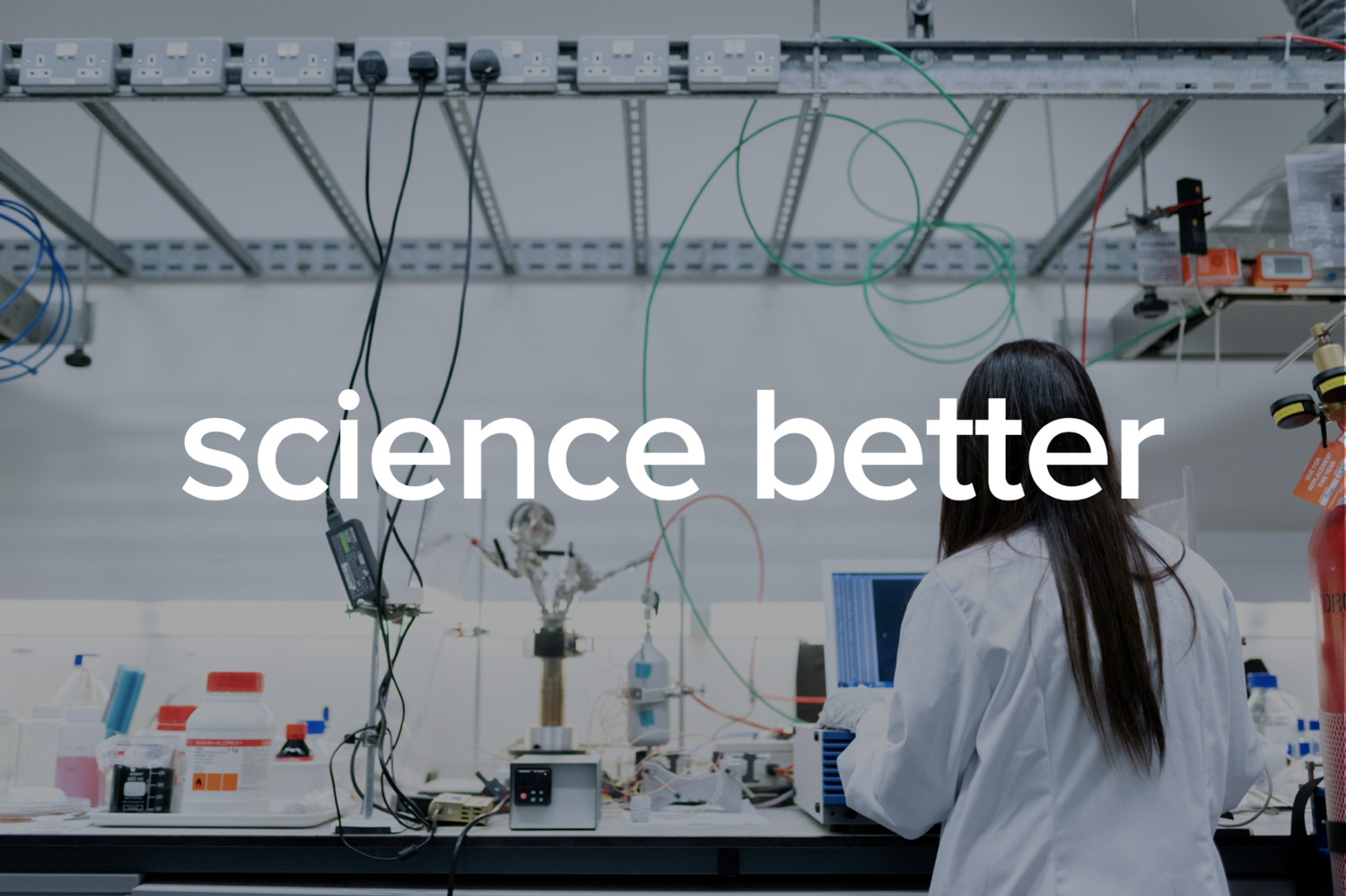
Improving scientific mentorship with "Open Labs" — science better
Federating friendly spaces - Roomy
modular research multi-agent slack-like environment demo
Buzz! 🐝
Genspace
On open-science research labs on discord, and getting more people.
