Collection
friction is good

Updated 2mo
how friction and struggle help grow, learn, create, develop.
Collection
Updated 2mo
how friction and struggle help grow, learn, create, develop.
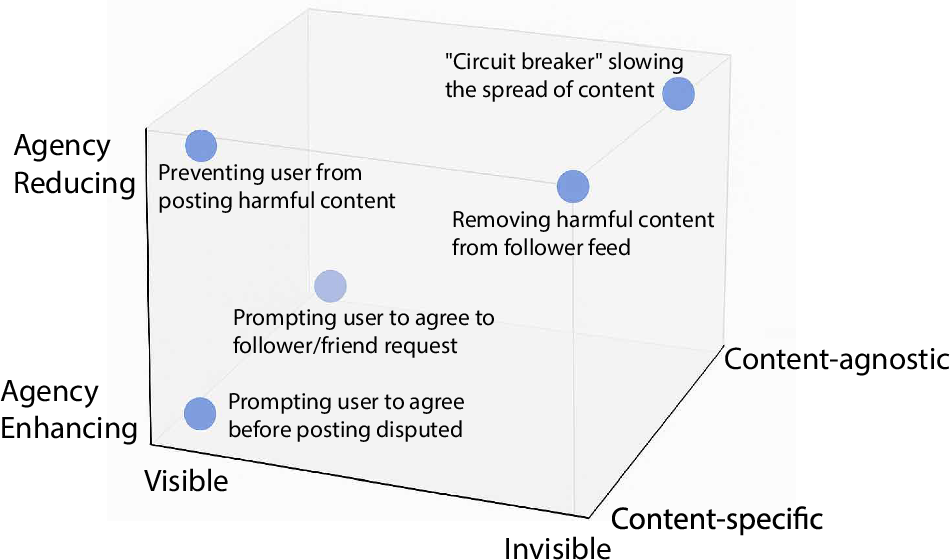
The case against efficiency: friction in social media
Social media platforms frequently prioritize efficiency to maximize ad revenue and user engagement, often sacrificing deliberation, trust, and reflective, purposeful cognitive engagement in the process. This manuscript examines the potential of friction—design choices that intentionally slow user interactions—as an alternate approach. We present a case against efficiency as the dominant paradigm on social media and advocate for a complex systems approach to understanding and analyzing friction. Drawing from interdisciplinary literature, real-world examples, and industry experiments, we highlight the potential for friction to mitigate issues like polarization, disinformation, and toxic content without resorting to censorship. We propose a state space representation of friction to establish a multidimensional framework and language for analyzing the diverse forms and functions through which friction can be implemented. Additionally, we propose several experimental designs to examine the impact of friction on system dynamics, user behavior, and information ecosystems, each designed with complex systems solutions and perspectives in mind. Our case against efficiency underscores the critical role of friction in shaping digital spaces, challenging the relentless pursuit of efficiency and exploring the potential of thoughtful slowing.
Writing by Hand is Good for your Brain - Here's how to do it
Because I am known to write using a fountain pen on paper, a number of people have pointed me to this post and its underlying research. I won’t rehash what is said in those sources, but the gist of it is that when you write things down by hand you’re recruiting more of your brain, which is a good thing.
AI Coding will Prevent Expertise | Lars Faye
The need for ongoing friction in long-term skill formation.

Cognitive Surrender
Cognitive offloading is delegating to the AI and still owning the answer. Cognitive surrender is when the AI's output quietly becomes your output and there i...
AI Dry July: Aborted
Reflections on trying to go a month without AI. I made it two weeks (sort of). 5.2k words, 23 minutes reading time.

Japanese web design: weird, but it works. Here's why
The Shape of Friction · Matthias Ott
Web design engineer, UX designer, teacher, and speaker – helping teams build websites and digital products with a focus on CSS, accessibility, and performance.

How to Train Your Brain to Crave Doing Hard Things
Close to the Metal — Real Life
The value of reintroducing friction into our interactions with computers

The Friction I Don't Want to Lose
I love learning. And while the friction of solving new problems is increasingly traded for speed, the experience gained by overcoming that friction is as important as ever.
The solution might be cancelling my AI subscription
A.I. Should Elevate Your Thinking, Not Replace It - Blog - Koshy John
Read about the hidden divide between self-inflicted irrelevance and real engineering leverage.

Our interfaces have lost their senses
We programmed them by punching cards, plugging in wires, and flipping switches. Programmers walked among banks of switches and cables, physically choreographing their logic. Being on a computer used to be a full-body experience.