


Normally, we worry that Twitter accounts and dating profiles are run by bots — sophisticated algorithms that pretend to be humans. But now, thanks to the
Proposing Botwatch: Trust-Based Community Bot Detection
Is this account a bot? This question’s importance is only growing in a world of LLMs and state-backed influence campaigns. Proposed here is Botwatch, a community-based system for personalized bot detection. In Botwatch, users publish records indicating whether they think others are bots and records indicating trust in a user’s scores. By analyzing this network, we can create useful signals to help users distinguish between bots and humans. Such a signal would consider your trust relations and o...

Scientists Created an Entire Social Network Where Every User Is a Bot, and Something Wild Happened
Researchers simulated a social media platform that was populated entirely by AI to see if we can stop them from turning into echo chambers.

Exposure to social bots amplifies perceptual biases and regulation propensity
Automated accounts on social media that impersonate real users, often called “social bots,” have received a great deal of attention from academia and the public. Here we present experiments designed to investigate public perceptions and policy preferences about social bots, in particular how they are affected by exposure to bots. We find that before exposure, participants have some biases: they tend to overestimate the prevalence of bots and see others as more vulnerable to bot influence than themselves. These biases are amplified after bot exposure. Furthermore, exposure tends to impair judgment of bot-recognition self-efficacy and increase propensity toward stricter bot-regulation policies among participants. Decreased self-efficacy and increased perceptions of bot influence on others are significantly associated with these policy preference changes. We discuss the relationship between perceptions about social bots and growing dissatisfaction with the polluted social media environment.

First Evidence That Social Bots Play a Major Role in Spreading Fake News
Automated accounts are being programmed to spread fake news, according to the first systematic study of the way online misinformation spreads
Unauthorised AI Bots on Reddit are Eroding Sociality
Where do we go if online discourse is overrun by AI bots?

Botwatch
Fight bots by warning others. Support humans with verification. Build communities with trust.
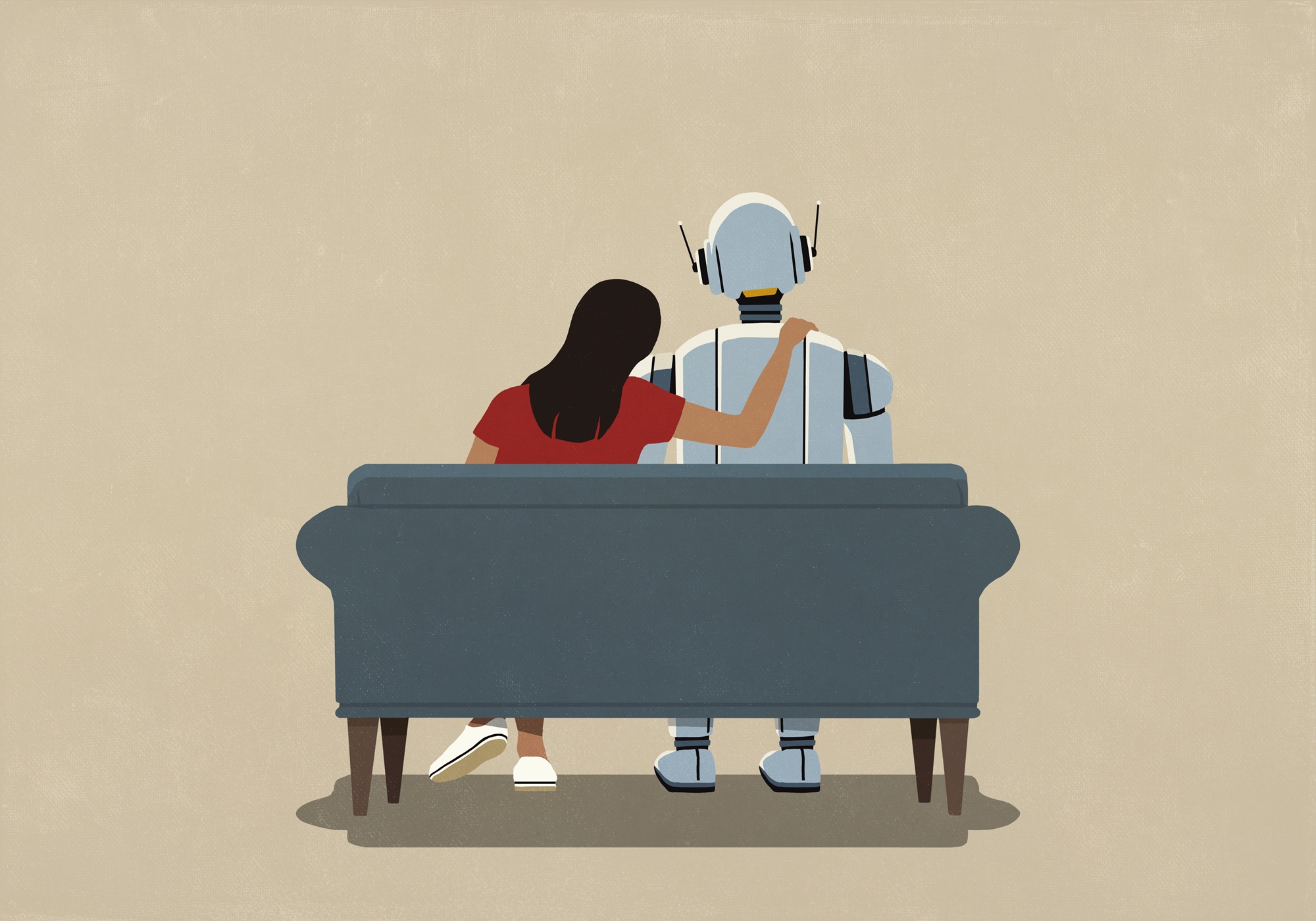
Are Chatbots Harming Our Relationships? | KQED
As our relationships with bots deepen, human-AI relationship coach Amelia Miller warns we could wake up one day to find our ability to connect with each other has atrophied, which may leave us feeling profoundly alone.

Moll on Twitter / X
I love posts like this so much. And it’s true - I think the best, most interesting results come specifically from a connection that isn’t «user and AI», but a human and his partner in thought.When a person simply uses a tool, they essentially remain alone. But when there are… https://t.co/InRvY56631— Moll (@Moleh1ll) June 28, 2026
Katika Kühnreich (@Katika@chaos.social)
Attached: 1 image #SocialMedia of #realnameregistration , oh sorry, they call it real #humans , that advertises with " #AI " #slop #wsocial is more than problematic And already has #bots crawling it's #network Now they show that they are problematic concerning #aesthetics as well & advertise with tasteless #aislop @bildoperationen@tldr.nettime.org #realnameregistration is highly dangerous & if the company that wants to have your most private data can't save there net from bots they're not very trustworthy, are they? #tech

How AI Chatbots Are 'Deskilling' Human Empathy
Sherry Turkle's latest book, Artificial Intimacy: Who We Become When We Talk to Machines, comes out on September 29.
Want to know more about the recent bot activity, what we've seen, and what we've done/are doing? Check out our write-up here! ✒️ 🔗 blog.tophhie.cloud/increased-bot-activity-what-w… Special mentions: @revfox84.bsky.social, @michelbestaat.thereforeiam.eu, @bmann.ca, and @baileytownsend.dev.

Increased Bot Activity & What We're Doing About It
blog.tophhie.cloudSocial media algorithms don't allow us to understand or control what we see online and why... until now! Top scholars @jonathanstray.com and @noupside.bsky.social are sharing @mysky.social, a tool that allows users to adjust their feed’s priorities and explains why certain posts appear over others.

🎛️📲 Meet the algorithm you can actually control and understand
newpublic.substack.com
