


Advancing media through exploration and experimentation.
XBOX Labs | Let’s play with what’s next
Explore, experiment, and create what's next in play.

Search – MIT Media Lab
The MIT Media Lab is an interdisciplinary research lab that encourages the unconventional mixing and matching of seemingly disparate research areas.

Search – MIT Media Lab
The MIT Media Lab is an interdisciplinary research lab that encourages the unconventional mixing and matching of seemingly disparate research areas.
Search – MIT Media Lab
The MIT Media Lab is an interdisciplinary research lab that encourages the unconventional mixing and matching of seemingly disparate research areas.
My 4-Stage System for Learning Anything New - Forte Labs
Discover the systematic approach that turns curiosity into expertise through immersion, building, mentorship, and community.

PRISM: Capturing the Invisible Art of Scientific Practice
A New Tool for Recording and Scaling Laboratory Expertise

Knight Media Forum 2026
Midjourney
An independent research lab exploring new mediums of thought and expanding the imaginative powers of the human species.
metaBUS – explore science
Person Overview ‹ Mitchel Resnick – MIT Media Lab
Mitchel Resnick, LEGO Papert Professor of Learning Research at the MIT Media Lab, develops new technologies and activities to engage people (particularly child…
How we built our multi-agent research system
On the the engineering challenges and lessons learned from building Claude's Research system

How we built our multi-agent research system
On the the engineering challenges and lessons learned from building Claude's Research system
Experiments are the Best Kind of Transparency
Luke Thorburn, Jonathan Stray, Priyanjana Bengani sketch what a regulatory framework for allowing platform experimentation could look like.

Agentic Laboratories of the Future: Towards World Models for Scientific Discovery
Scientific discovery is fundamentally a problem-solving process involving distributed intelligence. Human intuition, computational reasoning, and experimental execution are distributed across people, instruments, and software systems, limiting the speed and scale of discovery. Although automation, high-throughput experimentation, foundation models, and cloud infrastructure have accelerated individual stages of the scientific workflow, they have not unified the discovery process. We hypothesize that the next generation of laboratories will be agentic: environments in which scientists, AI systems, and robotic platforms operate as collaborative discovery partners, with humans contributing the parts of discovery that remain hardest to make explicit: asking the right questions and holding provisional mechanistic models of how a system works. The key missing layer is an agentic harnessing layer that continuously integrates hypothesis, literature-derived evidence, experimental data, uncertainty, and experimental state into a shared “laboratory world model”—a dynamic representation of the scientific system and its evolving context. By maintaining and updating this lab world model, the agentic harnessing layer enables coordinated decision-making, adaptive planning, and increasingly autonomous scientific workflows across humans and machines. A central challenge is that much of the scientific research process remains inaccessible to machines, including tacit knowledge, human observations, adaptive decision-making, and evolving experimental context. Advances in multimodal AI and immersive interfaces may help bridge this gap, allowing humans, agents, and robotic systems to collaborate seamlessly in scientific discovery rather than simply automating isolated tasks. Agentic laboratories could provide a new architecture for science, integrating human, artificial, and physical intelligence into a unified discovery system.

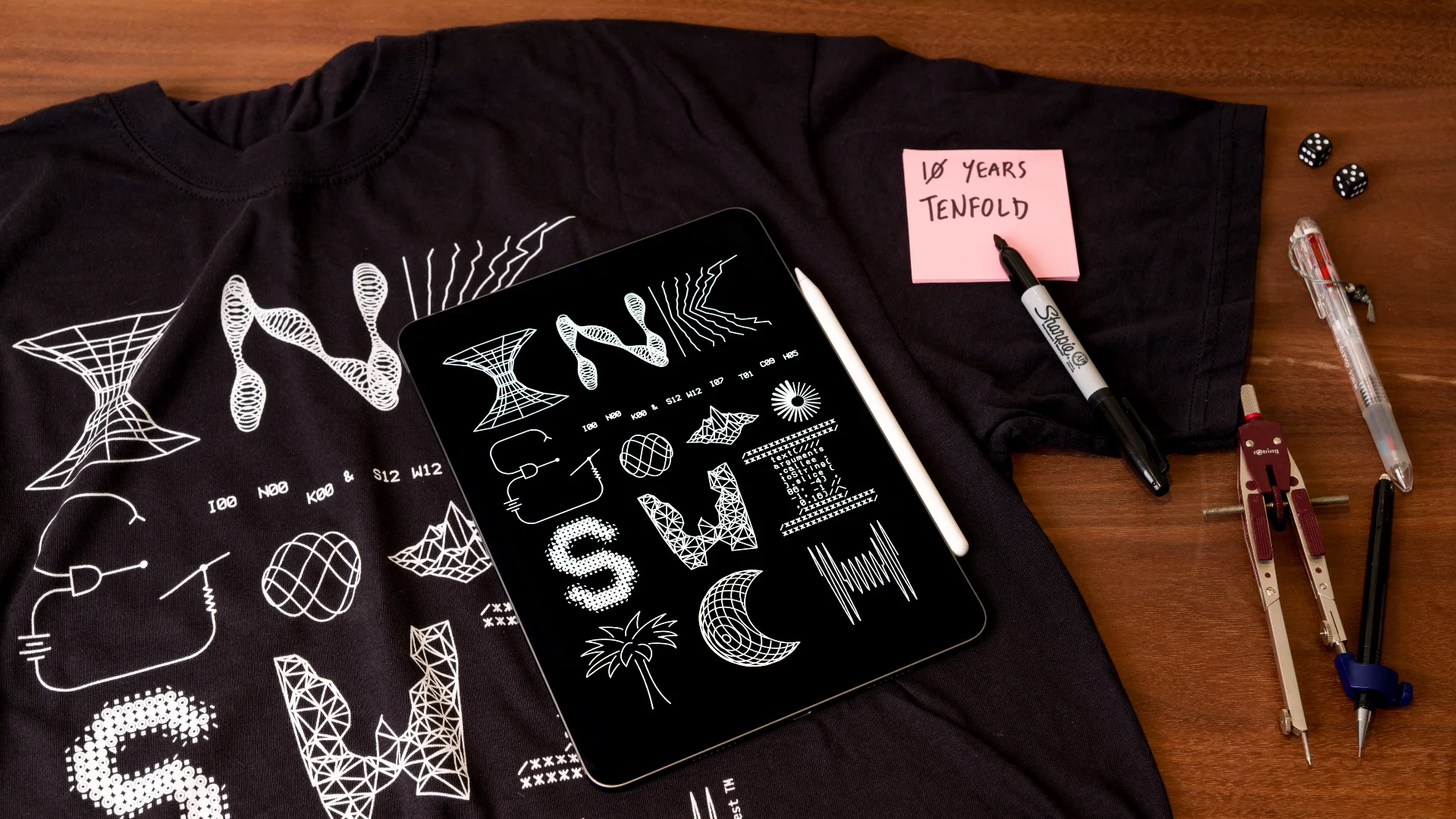
Ink & Switch
An independent research lab exploring the future of tools for thought.
Science in the Digital Era

How does scientific research adapt to digital media and automated information processing? What are the opportunities, what are the risks?
Leibniz book
Konrad Hinsen's blog
Konrad Hinsen's blog
Konrad Hinsen's blog
Konrad Hinsen's blog
Konrad Hinsen's blog