Collection
Science in the Digital Era

Updated 21d
How does scientific research adapt to digital media and automated information processing? What are the opportunities, what are the risks?
Collection
Updated 21d
How does scientific research adapt to digital media and automated information processing? What are the opportunities, what are the risks?
Leibniz book
If you are reading this on the Web (at https://leibniz.khinsen.net/), you are missing out on the dynamic and interactive features of this book. Get the full version by installing Leibniz on your computer.
Konrad Hinsen's blog
How can we document software and computational analyses in such a way that others can convince themselves of their validity, and build on them for their own work? The question has been around for many years, and a number of attempts have been made to provide partial answers. This post provides a brief review and describes my own tentative answer, inviting you to play with it.
Konrad Hinsen's blog
At the recent SciCodes Symposium, I brought up the question of reviewing research software during the panel discussion. One panelist then raised the question of why we should review research software. I found this question surprising at first, but I do agree that it deserves an answer. Here is mine.
Konrad Hinsen's blog
A much cited essay by Bret Victor, "Explorable Explanations", argues for supporting and encouraging active reading in communicating ideas. Explanatory text should thus be complemented by interactive visualizations and computational demonstrations, allowing the reader to actively engage with the ideas. If you haven't read Victor's essay yet, please do so now, and then come back here. It's not very long. What I am going to discuss is a variation on Victor's proposal, and I won't repeat his well-presented arguments.
Konrad Hinsen's blog
By now, most scientists have probably seen figures, tables, and even entire journal articles made by so-called "generative AI", containing more or less subtle mistakes or inconsistencies. What I haven't seen yet, but expect to see soon, is the scientific equivalent of deepfakes: made-up results that come with made-up code that reproduces them. This is likely to become a new challenge for reproducible research.
Konrad Hinsen's blog
The advent of AI agents based on large language models (LLMs) has put the idea of automating the intellectual and cognitive work of researchers on the table. A lively, sometimes even heated discussion is already going on. A frequently missing piece in this debate is the question why we, individually and as a society, actually do science. I will examine this question first, and then consider what it implies for introducing automation into science.
Konrad Hinsen's blog
Convivial technology was defined by Ivan Illich in his 1973 book "Tools for conviviality" as technology that supports a convivial society, which is a society that strives to grant each of its members as much agency as is possible without infringing on other members' agency. Conviviality is thus about equality, about the absence of dominance relations. Convivial technology is shaped by its users according to their needs, rather than being controlled by entities such as companies or governments, which then derive power over the user base by exercising control.
Konrad Hinsen's blog
Knowledge refinement is the ever ongoing process in science (and beyond it) that shepherds knowledge from lab notebooks into journal articles and then on to review articles, monographs, reference handbooks, university textbooks, and finally professional domain expertise and school education for a wider public. It has been going on for a few centuries, but we hardly talk about it. In fact, I made up the term because I couldn't find an established one. Computational knowledge has not yet found its place in the knowledge refinement process. Why not? And what can we do to make it happen?
Redressing the Balance: A Yin-Yang Perspective on Information Technology
Information is an essential aspect of how we interact with the world around us. We acquire information and then integrate it to build knowledge, understanding, and trust, which in turn serve in preparing actions. Information technology (IT) is supposed to support all these phases of information processing. But does it? An assessment of IT through the yin-yang lens from Chinese philosophy shows that over the last decades, support for the yin processes of building knowledge, understanding, and trust has been neglected, the focus of most research and development having been on the yang processes of acting. IT shares this imbalance with other aspects of Western and globalized culture. I discuss possible directions for re-establishing a yin-yang balance in IT, as a small contribution to redressing the balance in the world at large.

Improving Science That Uses Code
Abstract. As code is now an inextricable part of science it should be supported by competent Software Engineering, analogously to statistical claims being
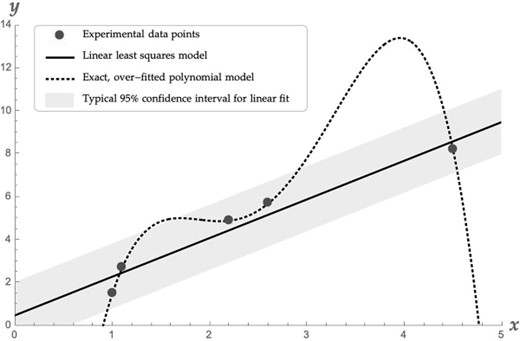
Establishing trust in automated reasoning - MetaROR
Since its beginnings in the 1940s, automated reasoning by computers has become a tool of ever growing importance in scientific research. So far, the rules underlying automated reasoning have mainly been formulated by humans, in the form of program source code. Rules derived from large amounts of data, via machine learning techniques, are a complementary approach currently under intense development. The question of why we should trust these systems, and the results obtained with their help, has been discussed by early practitioners of computational science, but was later forgotten. The present work focuses on independent reviewing, an important source of trust in science, and identifies the characteristics of automated reasoning systems that affect their reviewability. It also discusses possible steps towards increasing reviewability and trustworthiness via a combination of technical and social measures.
Why do we do astrophysics?
At time of writing, large language models (LLMs) are beginning to obtain the ability to design, execute, write up, and referee scientific projects on the data-science side of astrophysics. What implications does this have for our profession? In this white paper, I list - and argue for - a set of facts or "points of agreement" about what astrophysics is, or should be; these include considerations of novelty, people-centrism, trust, and (the lack of) clinical value. I then list and discuss every possible benefit that astrophysics can be seen as bringing to us, and to science, and to universities, and to the world; these include considerations of love, weaponry, and personal (and personnel) development. I conclude with a discussion of two possible (extreme and bad) policy recommendations related to the use of LLMs in astrophysics, dubbed "let-them-cook" and "ban-and-punish." I argue strongly against both of these; it is not going to be easy to develop or adopt good moderate policies.

This new episode [EN] of #code4thought is all about digital data, data loss, data decay & data recovery. You will hear from 5 experts in the field, T Ries, N Bonde Thystrup, K Mackinnon, L Sastoque-Pabon & A Jackson. Out now on your podcast app, YouTube, codeforthought.buzzsprout.com/1326658/episodes/18981609-en-…

[EN] Making Data Last - Code for Thought
codeforthought.buzzsprout.comComputational reproducibility
The why and how of making scientific computations reproducible
AI mediated science

Konrad Hinsen's blog
Home Page - Software Heritage
GNU Guix transactional package manager and distribution — GNU Guix

Keynote: Reproducibility and replicability of computer simulations | Canal U
Reproducible research: methodological principles for transparent…
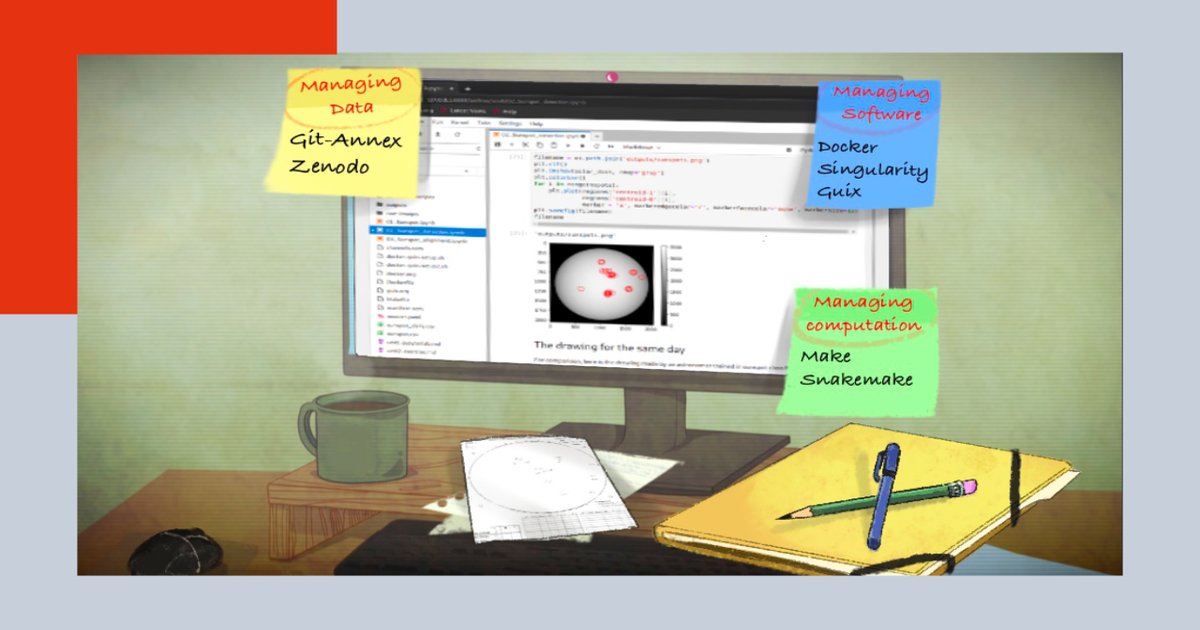
Reproducible Research II: Practices and tools for managing compu…
Claude Science (beta)
Lacuna: A Research Map for Machine Learning

Agentic Laboratories of the Future: Towards World Models for Scientific Discovery
Early science acceleration experiments with GPT-5
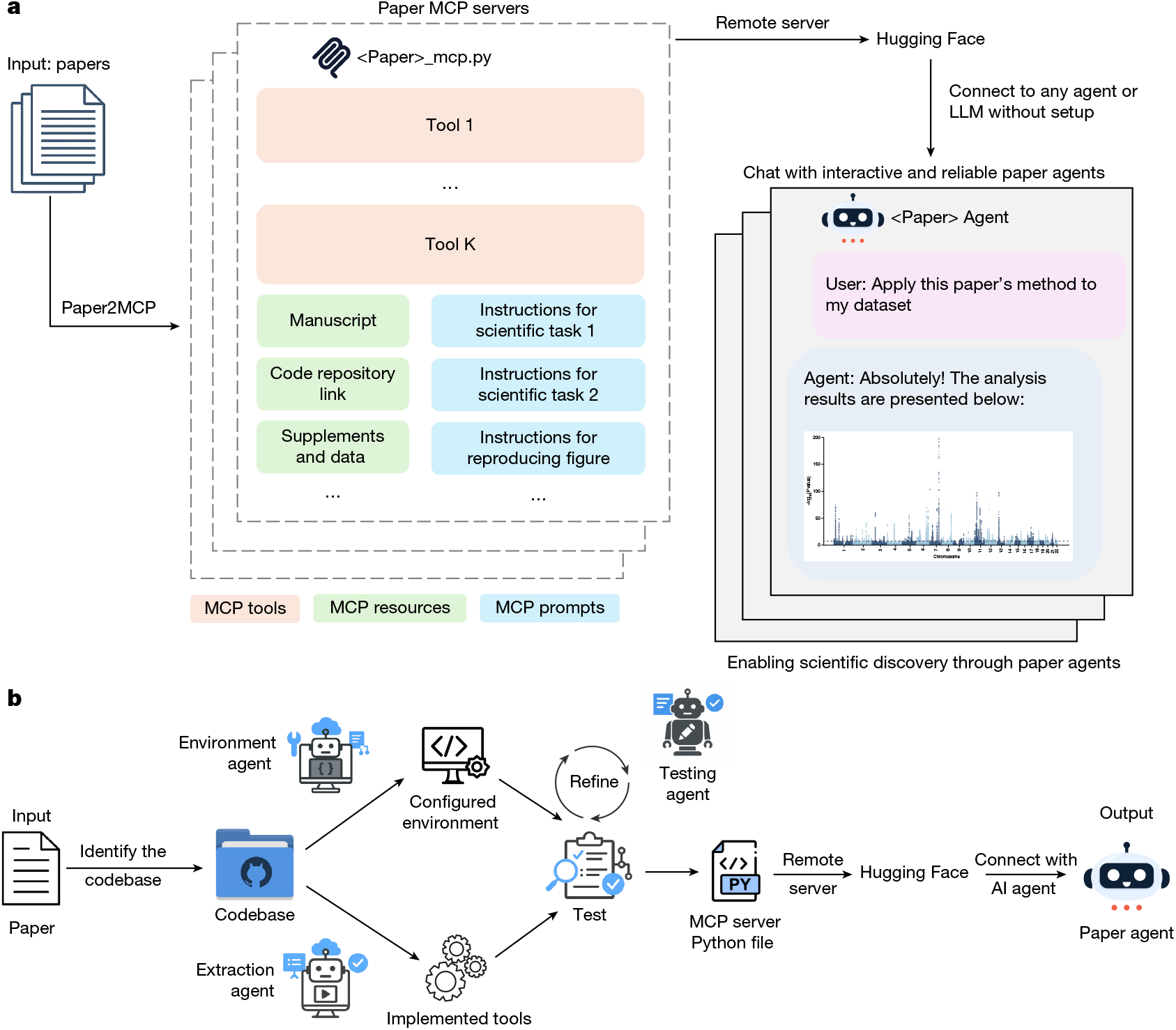
Reimagining research papers as interactive and reliable AI agents
The Alien Space of Science: Sampling Coherent but Cognitively...
