Citing Less Critically: LLMs Reshape the Rhetoric and Reach of Scientific Citation
Scientific citations carry rhetorical intent. Scholars may cite prior work positively (supporting), negatively (contrasting), or neutrally (mentioning). As large language models (LLMs) increasingly assist scientific writing, whether they reproduce citations with the same rhetorical intent as humans remains unclear. We introduce a masked-citation task to compare human and LLM-generated citation behavior. For each citation context, an LLM generates a replacement citation sentence, producing a counterfactual corpus directly comparable to human citation. We analyze what, whom, and how models cite, using an LLM-as-a-judge to classify citation intent and a 20-million-edge coauthorship network to measure social distance between cited authors. Across six popular LLMs and 1,746 top NLP conference papers (63k+ contexts, 132k+ citations), three patterns emerge: (1) Compared with human citation, LLMs cite significantly less critically; (2) LLMs over-cite popular and older papers, a tendency amplified for contrasting citations where human writing more often draws on recent, niche work; (3) Whereas humans often cite within their close social network, especially for supporting citations, LLMs tend to draw on more socially distant authors. Together, these differences are double-edged: LLM citation reaches beyond a scholar's close collaborators while being less critical and amplifying visibility bias, reshaping the rhetoric and reach of scientific citation.

Arvind Narayanan on Twitter / X
This week I had the honor of speaking to Princeton’s entire incoming undergraduate class to address their AI anxieties. I had three messages for them — good news, bad news, and a note of optimism. Here’s a condensed version.The good newsWe have enough evidence now to conclude…— Arvind Narayanan (@random_walker) August 27, 2026
AI Research Evaluation: Negative Findings and Failure Modes | Arvind Narayanan posted on the topic | LinkedIn
📢AI agents can autonomously conduct AI research when the result is easily verifiable, but what about open-ended AI research? That’s much harder to study, and our new preprint is our first crack at doing so. Our main finding is negative, and we identify five recurring failure modes. https://lnkd.in/eGKYi4Sa Our results are tentative, and we are working to address the limitations (sample size, potential scaffold improvements). But if the finding holds up, what are the implications? It depends on whether you think recursive self improvement can be achieved simply by hill climbing at scale (I personally don’t think so) and whether you think current limitations of open-ended research like judgment and creativity could change quickly (I’m personally very open to this possibility). We plan to continue this style of evaluation — which we call shadow evaluation — on a regular basis. We’ve wanted to do this for two years, but it took so long because we wanted to get the method right. The idea behind shadow evaluation was suggested by some of the UK AISI coauthors of the paper and refined by the Princeton team. This method has important advantages (and limitations) over the current ways of evaluating agents’ ability to conduct AI research. If you’re an AI researcher interested in working with us on a shadow evaluation based on one of your papers, we’d love to hear from you. https://lnkd.in/ecyp55SW This type of evaluation necessarily involves a ton of researcher flexibility in design, execution, and interpretation. Members of the core team have a particular position in the debate on recursive self-improvement / superintelligence, and this could influence how we conduct the research. We have a detailed section in the paper on our potential biases and how we address them. We sought out a team of collaborators who don’t all share our priors, and we explicitly surface the interpretive disagreements that resulted. For future evaluations, we are interested in having “adversarial collaborators” as part of the core team. This paper exists because of the careful, time-consuming and very much human work that Peter Kirgis, Sayash Kapoor, Andrew Schwartz, and Stephan Rabanser did over the last few months. I’m also very grateful to the larger group of collaborators and co-authors. The work is part of the larger CRUX project that pushes frontier AI agents beyond what benchmarks can measure (https://cruxevals.com/). We are looking for a senior researcher to join the team: https://lnkd.in/e9dC22X5
Leiden Declaration on Artificial Intelligence and Mathematics
This declaration calls for action to address the challenges posed by the use of artificial intelligence within mathematics research.

Can AI agents conduct open-ended AI research? Early evidence from two case studies
Forecasts of explosive AI progress hinge on AI agents automating AI research. But evidence on whether agents can carry out open-ended AI research is thin. Current evaluations either test agents on narrow, verifiable tasks, which excludes open-ended research, or submit AI-generated papers to blind peer review, which is overstretched, stochastic, and suffers from poor review quality. We introduce a third way to measure progress towards AI R\&D automation. An agent takes on the central, open-ended research question of a high-quality unpublished paper, and the paper's original authors grade its output. We call these shadow evaluations. We ran shadow evaluations on two unpublished NeurIPS 2026 submissions, giving frontier agents six days and thousands of dollars of compute. The agents completed all of the engineering without human help, yet could not make substantial progress towards answering the research questions. As a result, both papers were unambiguously rejected by the authors. We identify five recurring failure modes: poor judgment about the bar for publishable research, uncreative responses to shortcomings in the research design, ineffective backtracking from dead ends, poor resource awareness, and instruction drift. A robustness check with a second model and scaffold reproduced these failures. We release the expert reviews, survey responses, agent repositories, and logs. Our results provide early evidence that today's agents can do the engineering of AI research, but struggle with critical parts of the research lifecycle.

RRGI · Discourse Graph — lens switch
The diffusion of large language models in published academic articles | PNAS
Large language models (LLMs) are rapidly changing academic research, raising questions of who is adopting these tools and under what conditions. Th...

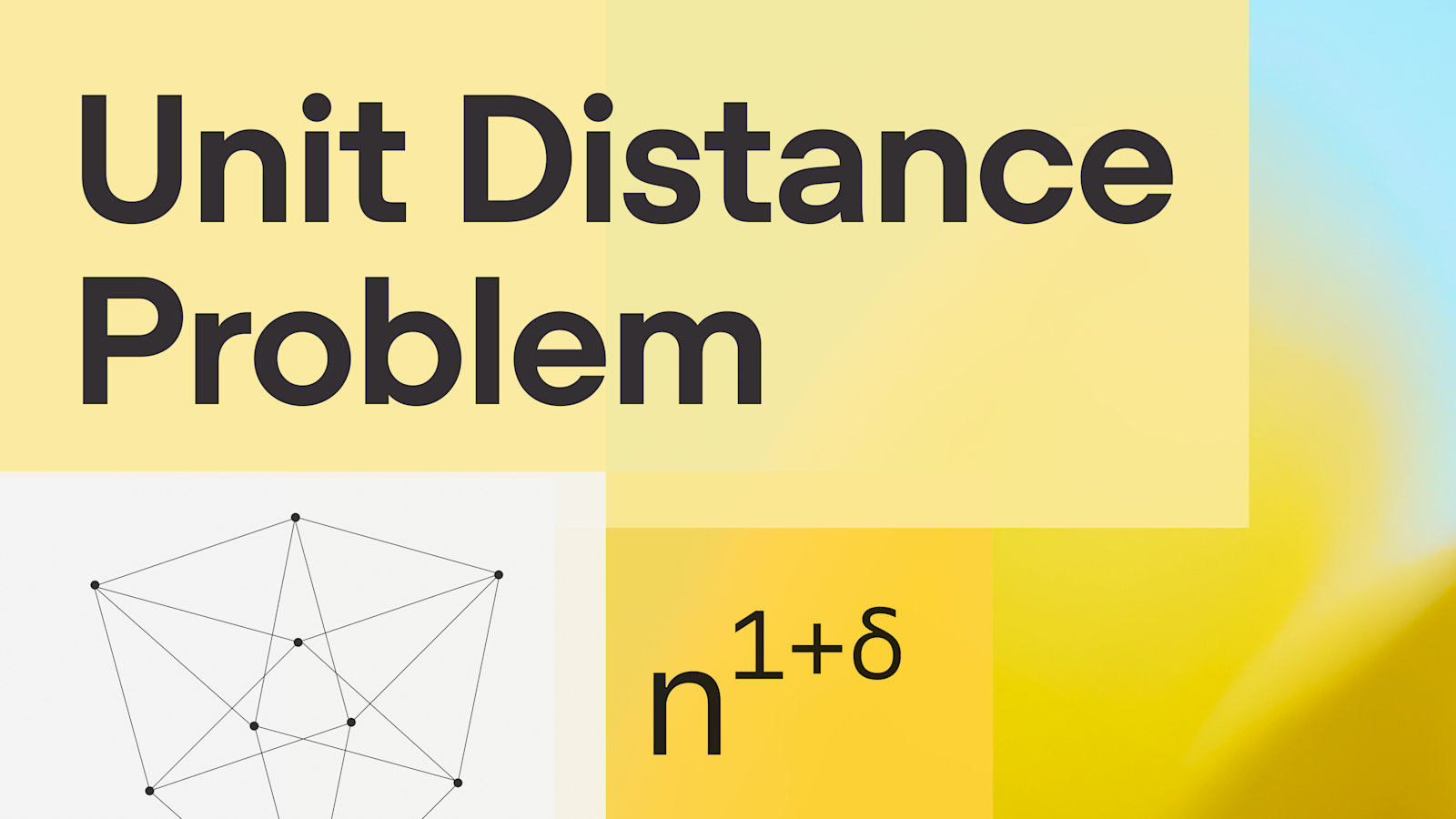
An OpenAI model has disproved a central conjecture in discrete geometry
An OpenAI model solved the 80-year-old unit distance problem, disproving a major conjecture in discrete geometry and marking a milestone in AI-driven mathematics.

AI Is Changing Who Wins Research Grants
A new study from the Northwestern Innovation Institute finds that proposals showing stronger signs of AI-assisted writing were more likely to receive support from the National Institutes of Health, while also tending to align more closely with ideas that had already been funded.
Mathematical methods and human thought in the age of AI
Artificial intelligence (AI) is the name popularly given to a broad spectrum of computer tools designed to perform increasingly complex cognitive tasks, including many that used to solely be the province of humans. As these tools become exponentially sophisticated and pervasive, the justifications for their rapid development and integration into society are frequently called into question, particularly as they consume finite resources and pose existential risks to the livelihoods of those skilled individuals they appear to replace. In this paper, we consider the rapidly evolving impact of AI to the traditional questions of philosophy with an emphasis on its application in mathematics and on the broader real-world outcomes of its more general use. We assert that artificial intelligence is a natural evolution of human tools developed throughout history to facilitate the creation, organization, and dissemination of ideas, and argue that it is paramount that the development and application of AI remain fundamentally human-centered. With an eye toward innovating solutions to meet human needs, enhancing the human quality of life and expanding the capacity for human thought and understanding, we propose a pathway to integrating AI into our most challenging and intellectually rigorous fields to the benefit of all humankind.


Tiptree Systems | AI Agent Runtime Platform
Build and run empowered, asynchronous, and networked AI agents on our production-ready runtime platform.

Claude Code 27: Research and Publishing Are Now Two Different Things
Some Claude Code fan fiction about the economics of publishing with AI agents set in the very near future

How do authors want to use AI for review?
A survey of researchers who compared AI-generated scientific reviews with journal-agnostic human peer review reveals that they overwhelmingly prefer using AI as a self-checking tool before submission rather than as a replacement for human reviewers. It encourages an “author-centric” model in which AI helps researchers improve their manuscripts before they are reviewed by their peers.

Refine
I recently tried refine, an AI tool for refining academic articles, developed by Yann Calvó López and Ben Golub.

Nothing to see, just very powerful pattern matching. www-cs-faculty.stanford.edu/~knuth/papers/claude-cycles.p…
Saw this metaphor by Terence Tao floating around about one of the drawbacks of using AI to solve hard math problems, and kind of have the same feeling for “vibe science” or “fully automated science” line of research in #AI4Science. theatlantic.com/technology/2026/02/ai-math-te… #ScAISci
What can we learn from automating an entire quantitative social science paper, from prompt to finished product? Thread about ongoing work with @natewilmers.bsky.social 1/12 Paper: osf.io/preprints/socarxiv/24xfq

Redressing the Balance: A Yin-Yang Perspective on Information Technology

Improving Science That Uses Code
Computational reproducibility (by Konrad Hinsen) — Semble
AI mediated science (by Ronen Tamari) — Semble

Establishing trust in automated reasoning - MetaROR

Why do we do astrophysics?