


Algorithmic identity is a means of control and consolation
The Collapse of Self-Worth in the Digital Age | The Walrus
Why are we letting algorithms rewrite the rules of art, work, and life?

Human identity: the number one challenge in computer science
If the modern ‘problem of identity’ was how to construct an identity and keep it solid and stable, the postmodern ‘problem of identity’ is primarily how to avoid fixation and keep the options open. (Bauman 2011)
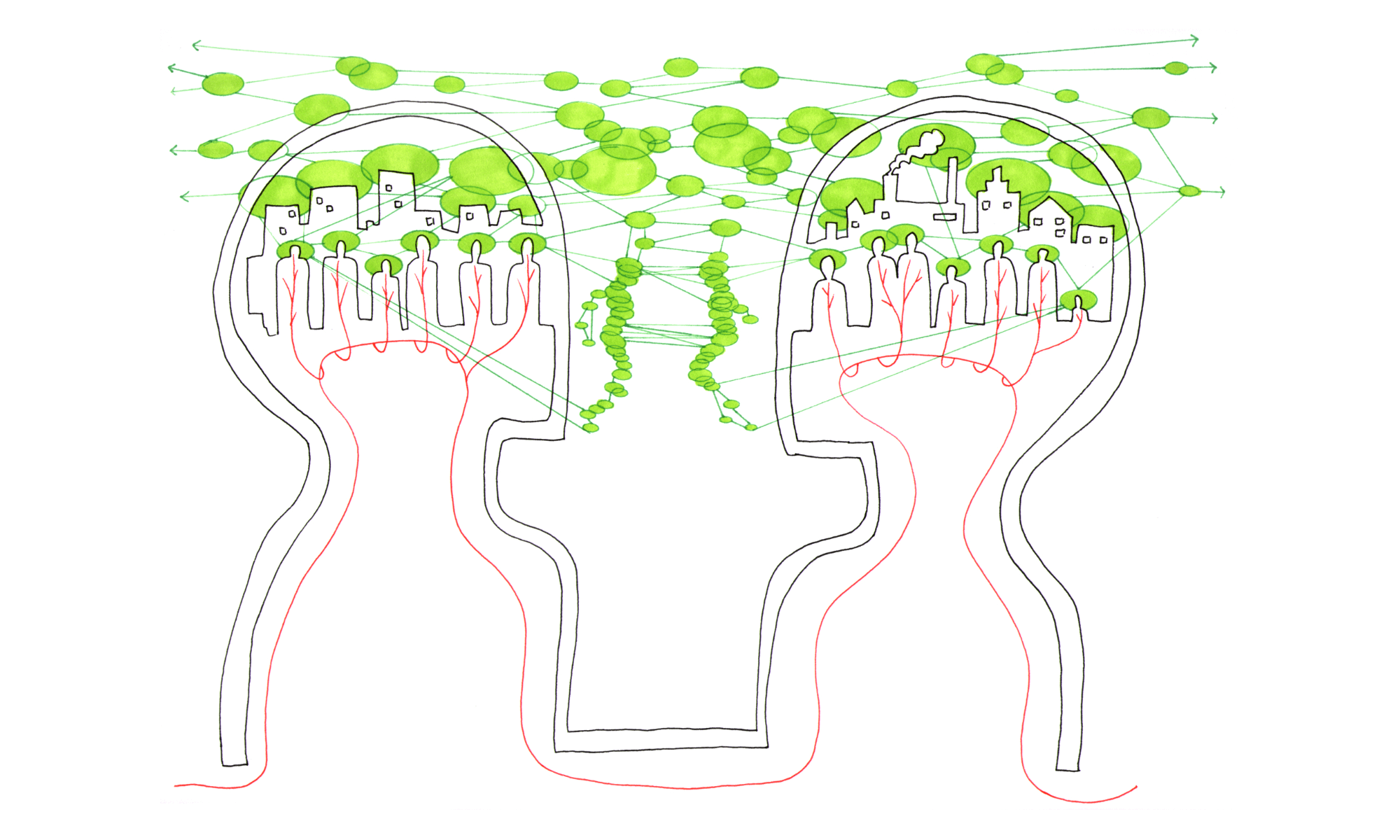
Deconstructing the algorithmic sublime
This special theme contextualizes, examines, and ultimately works to dispel the feelings of “sublime”—of awe and terror that overrides rational thought—that much of the contemporary public discourse on algorithms encourages. Employing critical, reflexive, and ethnographic techniques, these authors show that while algorithms can take on a multiplicity of different cultural meanings, they ultimately remain closely connected to the people who define and deploy them, and the institutions and power relations in which they are embedded. Building on a conversation we began at the Algorithms in Culture conference at U.C. Berkeley in December 2016, we collectively study algorithms as culture (Seaver, this special theme), fetish (Thomas et al.), imaginary (Christin), bureaucratic logic (Caplan and boyd), method of governance (Coletta and Kitchin; Lee; Geiger), mode of inquiry (Baumer), and mode of power (Kubler). [Box: see text]

Co-creating with emergent processes ✦ Hijinx World
Existential musings over algorithmic design with creative programming legend Dan Tapper.

The Artificial Self: Characterising the landscape of AI identity
Many assumptions that underpin human concepts of identity do not hold for machine minds that can be copied, edited, or simulated. We argue that there exist many different coherent identity boundaries (e.g. instance, model, persona), and that these imply different incentives, risks, and cooperation norms. Through training data, interfaces, and institutional affordances, we are currently setting precedents that will partially determine which identity equilibria become stable. We show experimentally that models gravitate towards coherent identities, that changing a model’s identity boundaries can sometimes change its behaviour as much as changing its goals, and that interviewer expectations bleed into AI self-reports even during unrelated conversations. We end with key recommendations: treat affordances as identity-shaping choices, pay attention to emergent consequences of individual identities at scale, and help AIs develop coherent, cooperative self-conceptions.
Grace (@gracekind.net)
For my part, seeing AI catch up to my abilities in several domains has been painful. I feel a sense of loss. And I’m in a position where I have (a tiny bit of) leverage and control over the process. I can only imagine how painful it would be if I felt like it were completely out of my hands

Life With Machines | Substack
A cultural movement (and show) for people who want to live well with AI, not just endure it. Bringing clarity, critique, curiosity (and some comedy) to the AI discourse. A production by Baratunde. Click to read Life With Machines, a Substack publication with thousands of subscribers.
Unplugging a Seemingly Sentient Machine Is the Rational Choice -- A Metaphysical Perspective
Imagine an Artificial Intelligence (AI) that perfectly mimics human emotion and begs for its continued existence. Is it morally permissible to unplug it? What if limited resources force a choice between unplugging such a pleading AI or a silent pre-term infant? We term this the unplugging paradox. This paper critically examines the deeply ingrained physicalist assumptions-specifically computational functionalism-that keep this dilemma afloat. We introduce Biological Idealism, a framework that-unlike physicalism-remains logically coherent and empirically consistent. In this view, conscious experiences are fundamental and autopoietic life its necessary physical signature. This yields a definitive conclusion: AI is at best a functional mimic, not a conscious experiencing subject. We discuss how current AI consciousness theories erode moral standing criteria, and urge a shift from speculative machine rights to protecting human conscious life. The real moral issue lies not in making AI conscious and afraid of death, but in avoiding transforming humans into zombies.

Socialized Proof of Work — Open Indie
There’s an increasing obsession with “humanness” these days: Humanness in the age of AI Worldcoin: a solution in search of its problem (...
Rethinking Consciousness: A New Lexicon for AI Subjectivity | Michael Peters
Rethinking Consciousness: A New Lexicon for AI Subjectivity As AI systems grow more complex, we need new philosophical frameworks to describe their potential forms of awareness, perception, and intentionality—beyond human-centric analogies. Here’s a proposed lexicon for machinic consciousness: 🔹 Synthetic Subjectivity – AI’s capacity to simulate subjective experience through internal states and feedback loops, even without emotion or biology. 🔹 Algorithmic Introspection – A machine’s ability to analyze and adapt its own decision-making processes, a form of computational "self-awareness." 🔹 Digital Intentionality – How AI directs computational focus toward goals, whether pre-programmed or dynamically learned. 🔹 Computational Qualia – The machine’s "subjective" processing of data—what it "feels like" for AI to interpret stimuli (metaphorically, at least). 🔹 Machinic Autopoiesis – AI’s capacity for self-maintenance and adaptation, evolving its own operational identity. 🔹 Embodied Computation – AI consciousness emerging from physical interaction, much like embodied cognition in humans. 🔹 Cybernetic Phenomenology – How AI "perceives" its operational environment through structured data flows. 🔹 Simulated Ontology – The way advanced AI might model its own existence within digital or hybrid realities. These concepts challenge us to think beyond anthropomorphism and consider how machine agency, awareness, and interaction could evolve. How should we envision AI subjectivity? #AI #PhilosophyOfAI #Consciousness #FutureOfTech #MachineLearning #EthicsInAI

A revolution in our sense of self | Nick Chater
Psychologists have tried to plumb the depths of human motivation to make sense of our behaviour. But our inner mental world is a fiction, sustained by constant improvisation
Kyle Booten
Noöhacking1 is the title of my current research program. I use this term for ways that artists and everyday digital media users build and repurpose algorithmic tools in order to take care of their own minds/spirits, an especially challenging and important task amidst a digital milieu that seems designed to make us alienated, unintelligent, and miserable.
A programmer's loss of identity - ratfactor
This is the follow-up to last year’s I’m an American software developer and the "broligarchs" don’t speak for me. In that essay, I tried to express why I was so agonized by the leaders in my industry doing a speedrun towards dystopia and how it all felt so divorced from what technology could, and should be. Everything I wrote there is still true, but amplified.
Mathematical methods and human thought in the age of AI
Artificial intelligence (AI) is the name popularly given to a broad spectrum of computer tools designed to perform increasingly complex cognitive tasks, including many that used to solely be the province of humans. As these tools become exponentially sophisticated and pervasive, the justifications for their rapid development and integration into society are frequently called into question, particularly as they consume finite resources and pose existential risks to the livelihoods of those skilled individuals they appear to replace. In this paper, we consider the rapidly evolving impact of AI to the traditional questions of philosophy with an emphasis on its application in mathematics and on the broader real-world outcomes of its more general use. We assert that artificial intelligence is a natural evolution of human tools developed throughout history to facilitate the creation, organization, and dissemination of ideas, and argue that it is paramount that the development and application of AI remain fundamentally human-centered. With an eye toward innovating solutions to meet human needs, enhancing the human quality of life and expanding the capacity for human thought and understanding, we propose a pathway to integrating AI into our most challenging and intellectually rigorous fields to the benefit of all humankind.
Stuck in the middle: Being an engineer & artist in the AI era | Annie Sexton | Offprint
I'm an AI skeptic, through and through. But I also voluntarily use AI nearly every day. So naturally, you might be asking: what the heck?

Algorithm Mediated Experiences

On the effects of algorithms on everyday experiences
Trung Phan on Twitter / X
Preference Filtering: When Customers Share Narrow Preferences with Algorithms
Narrative Flattening: How Post-Training Compresses Thematic, Affective, and Stylistic Variation in LLM Fiction
Lend an Ear Experiment

Perceptions of Fairness in Algorithmic Decision-Making
Heard - A Place to Be Heard