Don’t have time to read? Here’s a quick but comprehensive summary of Dan Pink’s “To Sell is Human,” released on December 31, 2012.

“Just Send us Pictures of Your feet”: Consent and Biometric Extraction in the AI Supply Chain, by James Oyange
The boundary between labour and personal resource has disappeared: the human body becomes raw material.
Lambda Land | Book Review: Technopoly
In Technopoly: The Surrender of Culture to Technology, Neil Postman argues that our infatuation with technology has insidiously eroded our culture. We gain much through technology, but it comes at a price; all too often we are blind to that price. This book seeks to call attention to the costs of a technology-focused society. I felt this poignantly because I, as a technology worker, know what that infatuation feels like.
Socialized Proof of Work — Open Indie
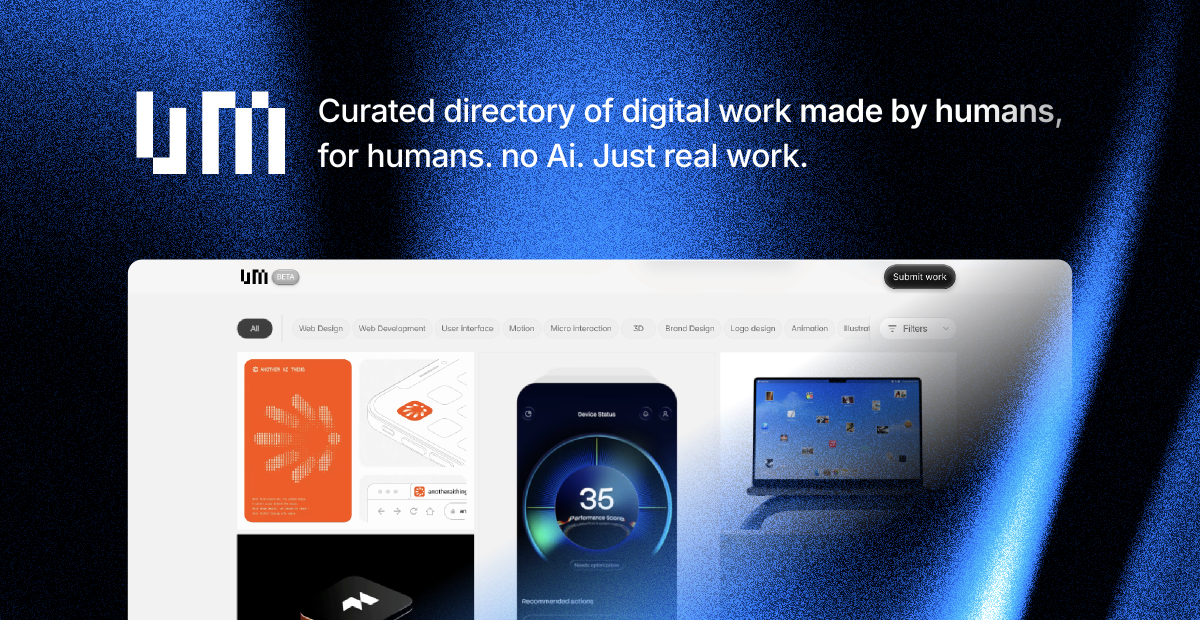
There’s an increasing obsession with “humanness” these days: Humanness in the age of AI Worldcoin: a solution in search of its problem (...
Why Questions Matter in Selling – A Synopsis of SPIN Selling by Richard Young - SalesPOP!
Neil Rackham's SPIN Selling is a game changing book. Here are his top sales techniques in a "cheatsheet" summary -- Get started immediately.
Geoff Shullenberger on Twitter / X
Günther Anders's "The Obsolescence of the Human," which was finally translated into English last year, is one of the books I most often recommend these days. Robert Bellafiore has written a lucid introduction to Anders's ever more relevant thought: https://t.co/MWiwSMeq6u— Geoff Shullenberger (@g_shullenberger) September 10, 2026
Writings and rehearsals by Nathan Schneider
Welcome. I’m a professor of media studies at the University of Colorado Boulder, where I direct the Media Economies Design Lab and teach and learn from our students. I’ve written a book each on online democracy, cooperative enterprise, the Occupy movement, and God, and I’ve edited ones about solidarity economies, crypto, and co-ops. Reporting articles for both magazines and academic journals keeps my notebooks filled. Working with others to build a democratic economy keeps me accountable.
AI as Social Technology
Our debates about ‘AI’ grow out of 1990s science fiction. Back then, Vinge (1993) wrote essays and novels urging us to face up to the oncoming “Singularity”: a moment of rapid change that would fundamentally transform the human condition. On that day, AI would rapidly evolve from merely human-level intelligence, what some now call ‘artificial general intelligence’ (AGI), into something super-intelligent with its own interests and goals. Humanity would then either be casually eliminated by out-of-control machines, or humans would become as gods, with super-human servitors at our command.

On Personal AI — Osaurus
A thesis on consumer AI — what it should be, what's missing, and what we're building with Osaurus.
AI: A Guide for Thinking Humans | Melanie Mitchell | Substack
I write about interesting new developments in AI. Click to read AI: A Guide for Thinking Humans, by Melanie Mitchell, a Substack publication with tens of thousands of subscribers.
mai ishikawa sutton
My work lies at the intersection of technology and the solidarity economy. I’m passionate about strengthening the digital commons, in which people control and steward communication technologies as collective goods.
The Consumer AI Revolution Won’t Be Technical. It’ll Be Emotional.
In technology, the obvious revolutions often come last.
How to AI by Christopher Mims: 9798217086184 | PenguinRandomHouse.com: Books
A frank, hands-on guide to using AI at work, unpacking for the curious and skeptical alike the “24 Laws” of AI and revealing strategies that businesses of every size can use to free...

AI and the Dangerous Fiction of ‘All Lawful Use’
Dunstan Allison-Hope and Iain Levine argue that human rights commitments are essential for all companies selling their products to governments worldwide.