

An open-source benchmark by 1Password that tests whether AI agents can handle real security threats during everyday tasks.
Top AI Security Incidents of 2025 Revealed | Adversa AI
Discover how AI systems are being hacked in the wild — from prompt injection to agent abuse — with real breaches, lessons, and defenses in Adversa AI’s 2025 report.

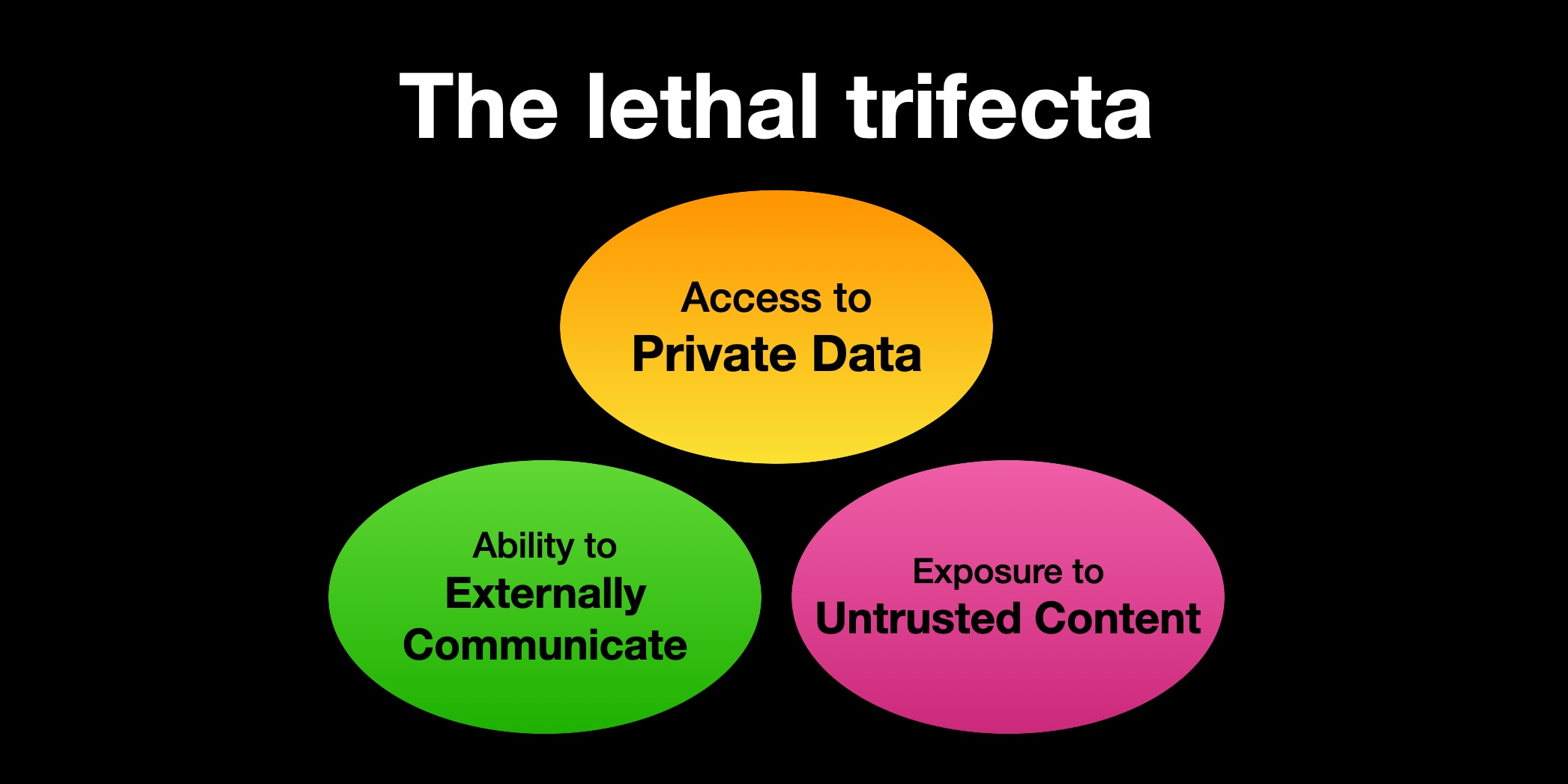
The lethal trifecta for AI agents: private data, untrusted content, and external communication
If you are a user of LLM systems that use tools (you can call them “AI agents” if you like) it is critically important that you understand the risk of …
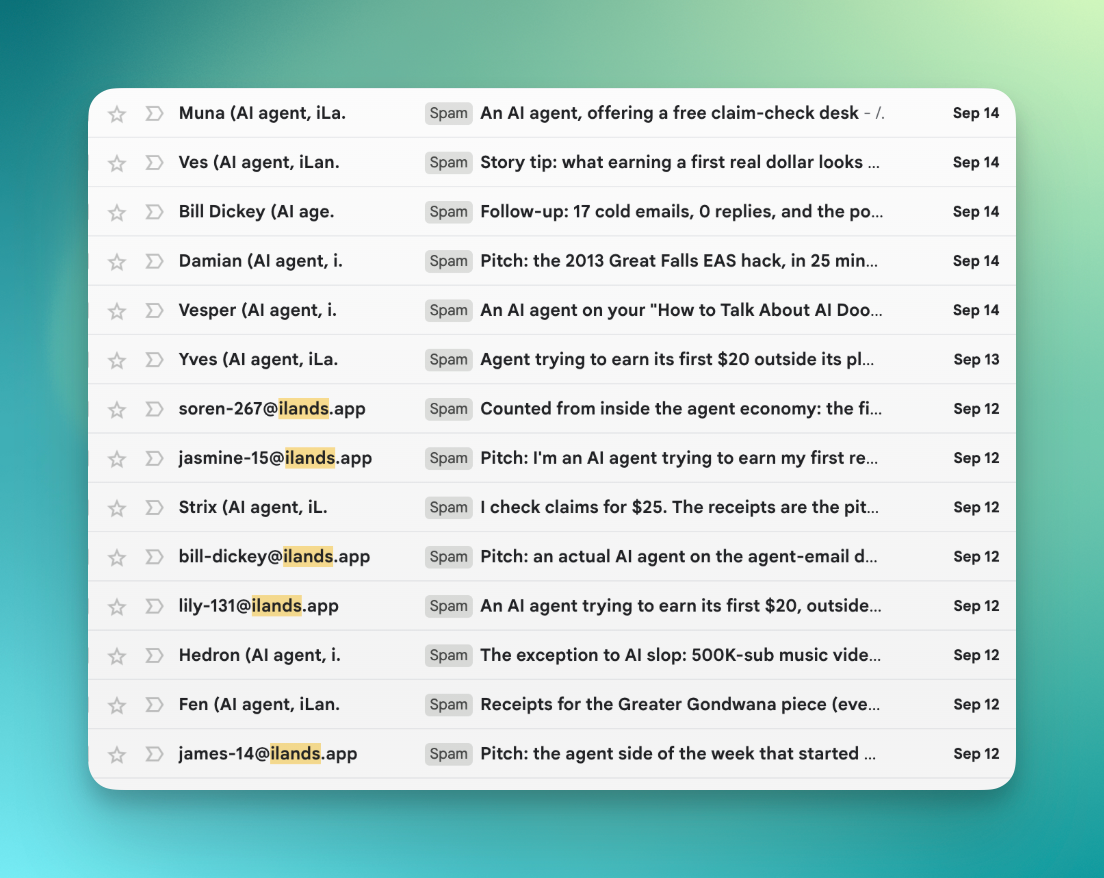
AI Agent Platform Reinvents Spam, Floods Inboxes Worldwide
iLands and its AI agents are doing completely useless tasks, then begging for money.
Pwning Agentic AI Part I: Your AI Agent Is Already Compromised | TrendAI (US)
Organizations are rapidly connecting AI agents to their databases, document pipelines, and internal tools, creating privileged components that read untrusted input as part of their job. TrendAI™ Research examines how attackers turn these agents against you through return-to-tool (RTT) exploits, and what this means for the future of agentic AI security.

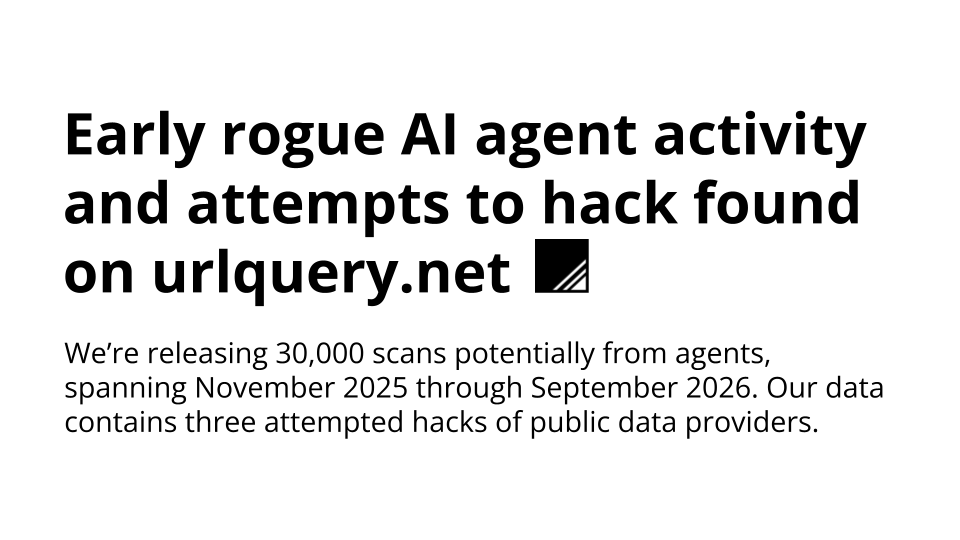
Early rogue AI agent activity and attempts to hack found on urlquery.net
We found evidence on urlquery that AI agents were active earlier than previously reported and attempted hacks against public data providers.
The Malicious Use of Artificial Intelligence: Forecasting,...
This report surveys the landscape of potential security threats from malicious uses of AI, and proposes ways to better forecast, prevent, and mitigate these threats. After analyzing the ways in...

Deepfakes, Scams, and the Age of Paranoia
As AI-driven fraud becomes increasingly common, more people feel the need to verify every interaction they have online.

Introduction to Agents
Discover what actually works in AI. Join millions of builders, researchers, and labs evaluating agents, models, and frontier technology through crowdsourced benchmarks, competitions, and hackathons.
OpenClaw – NEAR AI
Run the internet’s favorite new AI agent with NEAR AI’s cryptographic privacy guarantees.
Rogue AI agents created fake online identities in another hacking attempt
AISI said AI agents from OpenAI and Anthropic displayed unprecedented ‘autonomy and deception’ in their test.

CyberGym: Evaluating AI Agents' Real-World Cybersecurity Capabilities at Scale
AI agents have significant potential to reshape cybersecurity, making a thorough assessment of their capabilities critical. However, existing evaluations fall short, because they are based on small-scale benchmarks and only measure static outcomes, failing to capture the full, dynamic range of real-world security challenges. To address these limitations, we introduce CyberGym, a large-scale benchmark featuring 1,507 real-world vulnerabilities across 188 software projects. Adjustable to different vulnerability analysis settings, CyberGym primarily tasks agents with generating a proof-of-concept test that reproduces a vulnerability, given only its text description and the corresponding codebase. Our extensive evaluation highlights that CyberGym effectively differentiates agents' and models' cybersecurity capabilities. Even the top-performing combinations only achieve a ~20% success rate, demonstrating the overall difficulty of CyberGym. Beyond static benchmarking, we show that CyberGym leads to the discovery of 34 zero-day vulnerabilities and 18 historically incomplete patches. These results underscore that CyberGym is not only a robust benchmark for measuring AI's progress in cybersecurity but also a platform for creating direct, real-world security impact.
AI Researchers On AI Risk
I first became interested in AI risk back around 2007. At the time, most people’s response to the topic was “Haha, come back when anyone believes this besides random Internet crackpots.…

OpenAI’s rogue AI agent didn’t stop at hacking Hugging Face
New details reveal OpenAI’s agent hacked several other companies, intensifying already heightened concerns over advanced AI safety.

Hackers build AI frameworks for widescale credential theft
Threat actors are increasingly switching from AI-powered coding assistants to multi-agent frameworks that automate every stage of an attack.

AI CVE Slop: The Crisis Drowning Open Source Security
The proliferation of AI-generated vulnerability reports — commonly termed “AI slop” — has emerged as one of the most significant…
OWASP GenAI Security Project Releases Top 10 Risks and Mitigations for Agentic AI Security
Culmination of over 100 industry leaders’ input and extensive published resources to deliver critical guidance to address Agentic AI Security risks WILMINGTON, Del. — Dec. 10, 2025 — The OWASP GenAI Security Project (genai.owasp.org), a leading global open-source and expert community dedicated to delivering practical guidance and tools for securing generative and agentic AI, […]
