

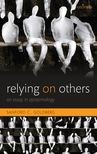
Abstract. This book concerns the role others play in our attempts to acquire knowledge of the world. Two main forms of this reliance are examined: testimon
Epistemic Infrastructure: Building Shared Truth in an Era of Disaggregation
The Construct of Collective Perception

Not Learning from Others
We study social learning using experiments where two people independently learn relevant information and can share it to make accurate private decisions. Across three experiments, people are substantially less sensitive to information others discover than to equally-relevant information they discovered themselves. This holds when they must learn information from others through discussion; when the experimenter perfectly communicates the information; and even when participants observe others’ information with their own eyes. Our results therefore stem not from a failure to elicit information from others but a systematic tendency to underweight it relative to one’s own information. Our findings illustrate a powerful barrier to social learning that might underlie many documented cases of failure to learn from others.

Fear of Knowledge: Against Relativism and Constructivism
In recent times, relativist and constructivist conceptions of truth and knowledge have become orthodoxy in vast stretches of the academic world. In this unique volume, Paul Boghossian critically examines such views and exposes their fundamental flaws. This short, lucid, witty book shows that philosophy provides rock-solid support for common sense against the relativists; it is provocative reading throughout the discipline and beyond.

Epistemic Courage and Open-Mindedness
Epistemic courage requires me to sometimes adopt a belief even in the face of doubts. Open-mindedness requires me to be able to reconsider my beliefs. It is generally assumed that we should have bo...

Epistemic Alienation and the Division of Labor
The division of cognitive labor leads to what Barry has recently called epistemic alienation: a problematic separation of individuals from epistemic goods. According to Barry, individuals are alienated from epistemic virtues because an efficient division of cognitive labor requires them to manifest a lack of virtues. I argue that this is a mistaken diagnosis of the source of epistemic alienation. Participating in high-functioning collectives does not prevent individuals from being robustly virtuous; rather, our cognitive limitations make it impossible for us to live up to the highest standards of epistemic conduct. Collectives transcend these cognitive limitations to achieve what individuals cannot by harnessing those same limitations in their members. Furthermore, I argue that we should distinguish the epistemic weaknesses that facilitate the division of cognitive labor from those that result from the division of labor. Only the latter are aspects of epistemic alienation. By dividing our cognitive labor over larger populations of agents and artifacts, we have massively accelerated our rate of epistemic productivity but have thereby created conditions that are variously inhospitable for the thinking of individuals by alienating them from the products, processes, and environments of inquiry. These forms of separation are problematic insofar as they amplify intellectual vices, incapacitate reason, and induce cognitive biases.
Epistemic assholes
In this paper, I develop and defend the concept epistemic assholes. An epistemic asshole is someone who exhibits a distinctive form of epistemic badness characterized not by gross irrationality or hostility to truth, but by a stable, entitled disregard for one’s epistemic relations with others. Drawing on Aaron James’s (2012) account of moral assholes, I examine how people can systematically exploit epistemic cooperation by allowing themselves special advantages—such as “freedom from inquiry”, “doxastic comfort”, and “freedom to criticize”—while remaining insulated from criticism by an entrenched sense of entitlement. The resulting view, the Relational Approach to Epistemic Assholes (REA), explains why epistemic assholes are not epistemically the worst, yet are nonetheless deeply galling. After motivating the need for this concept, I show how REA captures both “impure” cases (involving both epistemic and moral assholery) and “pure” epistemic assholes, whose objectionable conduct is driven by epistemic aims themselves. I further explore connections between epistemic assholes and epistemic vice, and the causal role that epistemic assholery can play in active ignorance and epistemic exploitation. Through this latter connection, I argue that epistemic assholes play an insidious causal role in sustaining objectionable social power dynamics. The concept of epistemic assholes provides a valuable lens for understanding important but often-hidden hazards in our social epistemic environment.

Epistemic courage
"'Epistemic Courage' is a timely and thought-provoking exploration of the ethics of belief. Drawing on a wide range of examples, from conspiracy theories to medical misinformation, Ichikawa shows why epistemology is no mere academic abstraction - the question of what to believe couldn't be more urgent. And, he argues, many mainstream ideas about what to believe - those emphasizing the importance of ensuring that one doesn't believe with insufficient evidence - are incomplete and distorting in important and harmful ways. A skeptical, negative bias about belief is connected to a conservative bias that reinforces the status quo. Throughout the book, Ichikawa argues that we need to shift our focus from avoiding false beliefs to actively seeking out true ones. Throughout the book, Ichikawa uses engaging and timely examples to illustrate his points. He tackles important questions, such as how moral considerations interact with evidential ones in deciding what to believe, and how to navigate the complex ethical issues around testimony, rape culture, and epistemic injustice. Accessible and rigorous, 'Epistemic Courage' invites readers to consider the importance of belief, and how it shapes our lives and the world around us. With its insightful analysis and compelling case studies, this book is an essential read for philosophers and anyone else interested in belief, social justice, and the pursuit of truth."--

Social learning preserves both useful and useless theories by canalizing learners’ exploration
In many domains, learning from others is crucial for leveraging cumulative cultural knowledge, which encapsulates the efforts of successive generations of innovators. However, anecdotal and experimental evidence suggests that reliance on social information can reduce the exploration of the problem space. Here, we experimentally investigate the extent to which cultural transmission fosters the persistence of arbitrary solutions in a context where participants are incentivized to improve a physical system across multiple trials. Participants were exposed to various theories about the system, ranging from accurate to misleading. Our findings indicate that even under conditions conducive to exploration, the transmission of cultural knowledge canalizes learners’ focus, limiting their consideration of alternative solutions. This effect was observed in both the theories produced and the solutions attempted by participants, irrespective of the accuracy of the provided theories. These results challenge the notion that arbitrary solutions persist only when they are efficient or intuitive and underscore the significant role of cultural transmission in shaping human knowledge and technologies.

On liberty
Introductory -- Of the liberty of thought and discussion -- Of individuality, as one of the elements of well-being -- Of the limits to the authority of society over the individual -- Applications; Book, leather; Explanatory note by H.E. Barker attached; 18

Reconciling truthfulness and relevance as epistemic and decision-theoretic utility.
Learn Your Philosophical Beliefs | ClearerThinking.org
Find your direction in life with our philosophical compass, a tool to explore your beliefs, values and purpose!

Free Speech on the Internet: The Crisis of Epistemic Authority
Abstract. Much of our knowledge of the world comes not from direct sensory experience, but from reliance on epistemic authorities: individuals or institutions that tell us what we ought to believe. For example, what most of us believe about natural selection, climate change, or the Holocaust comes from our reliance on epistemic authorities (scientists, historians). Sustaining epistemic authority depends, crucially, on social institutions that inculcate reliable second-order norms about whom to believe about what. The traditional media were crucial, in the age of mass democracy, with promulgating and sustaining such norms. The internet has obliterated the intermediaries who made that possible, and, in the process, undermined the epistemic standing of actual experts. This essay considers some possible changes to existing free speech doctrine to remedy the epistemological crisis brought about by the internet.
A Novel Kuhnian Ontology for Epistemic Classification of STM...
Despite rapid gains in scale, research evaluation still relies on opaque, lagging proxies. To serve the scientific community, we pursue transparency: reproducible, auditable epistemic...


epistemic infrastructure

Explores a variety of topics around epistemological tools, especially the web, with the aim to discuss epistemic closure in two ways: 1/ the complete understanding of a subject 2/ the entrapment of the user
Do we actually need to write research papers at all?

God, Human, Animal, Machine by Meghan O'Gieblyn: 9780525562719 | PenguinRandomHouse.com: Books
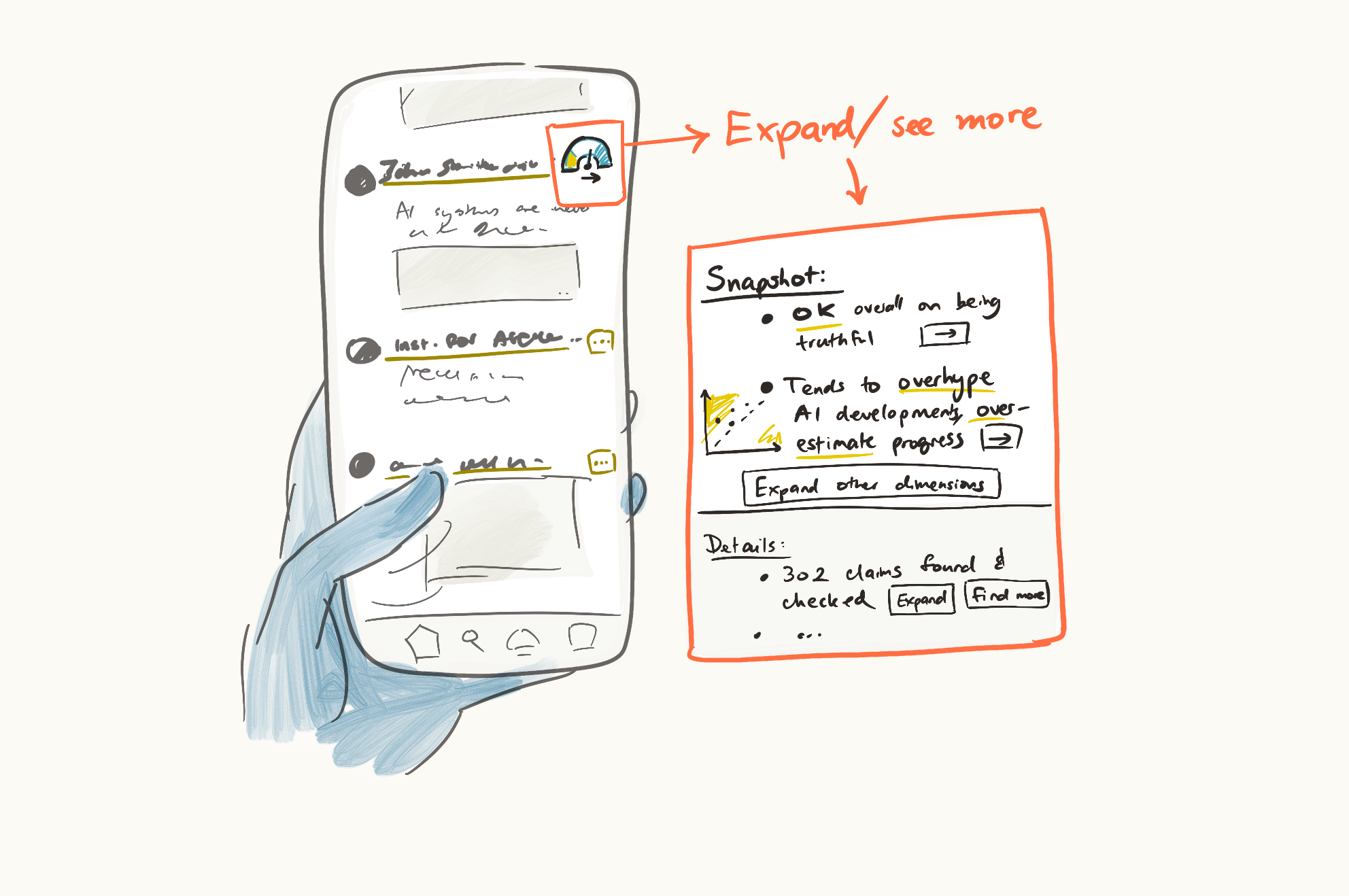
AI Tools for Trust: Community Notes, Rhetoric Detection & More
Can generative artificial intelligence be considered a cognitive subject? An analytic analysis
What Libraries Actually Do – Libraries as Epistemic Institutions
Epistemic Infrastructure: Building Shared Truth in an Era of Disaggregation