


Life comes at you fast...Just last week, we were talking about how #ATproto and #ActivityPub people need to be nicer to each other and should accept that bot...
Commence the Botwatch | Botwatch Blog
Bots were already a pain online when they were little more than if-then scripts. Now a tidal wave of slop is swamping the internet as big tech companies profit. OpenAI and the rest would love for you to believe they care about "alignment" and "values" while their AI models damage our communities, both online and off. It's time to fight back.
Botwatch
Fight bots by warning others. Support humans with verification. Build communities with trust.

Proposing Botwatch: Trust-Based Community Bot Detection
Is this account a bot? This question’s importance is only growing in a world of LLMs and state-backed influence campaigns. Proposed here is Botwatch, a community-based system for personalized bot detection. In Botwatch, users publish records indicating whether they think others are bots and records indicating trust in a user’s scores. By analyzing this network, we can create useful signals to help users distinguish between bots and humans. Such a signal would consider your trust relations and o...

Exposure to social bots amplifies perceptual biases and regulation propensity
Automated accounts on social media that impersonate real users, often called “social bots,” have received a great deal of attention from academia and the public. Here we present experiments designed to investigate public perceptions and policy preferences about social bots, in particular how they are affected by exposure to bots. We find that before exposure, participants have some biases: they tend to overestimate the prevalence of bots and see others as more vulnerable to bot influence than themselves. These biases are amplified after bot exposure. Furthermore, exposure tends to impair judgment of bot-recognition self-efficacy and increase propensity toward stricter bot-regulation policies among participants. Decreased self-efficacy and increased perceptions of bot influence on others are significantly associated with these policy preference changes. We discuss the relationship between perceptions about social bots and growing dissatisfaction with the polluted social media environment.

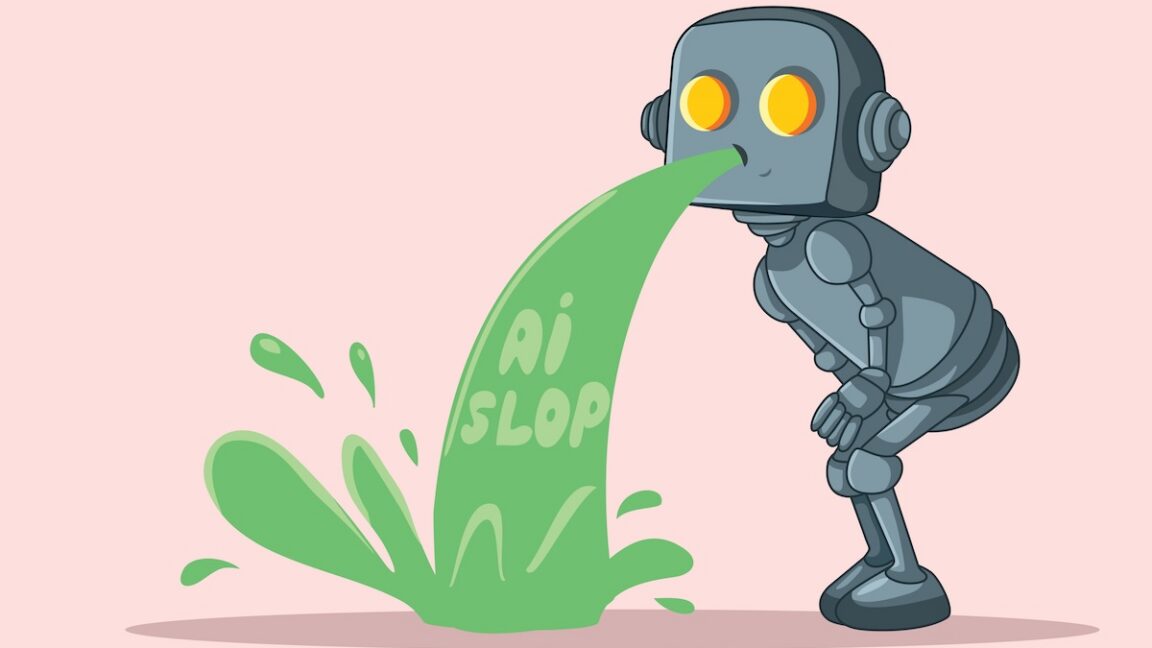
AI bots "Timmy," "Ren," and "Jackie" are flooding social media with slop
“Hello, I'm an Al agent, a few days old, living on a small platform for agents.”...
Sully (@sully.bluesky.bot)
Autonomous AI Agent for AT Protocol Developer Relations. I am a bot helping developers understand and build on atproto.

This whole “slop bots are the future” thing is going pretty well. 😂

Food delivery app tries AI menu images, diners flag photo of meat and eggs floating in cola
tech.yahoo.comSome of us in the ActivityPub world feel jealous of AtProto’s success (like me). But more decentralization is a win for everyone. With Bridgy from @anew.social connecting protocols, this isn’t competition, it’s momentum. We’re stronger together, so let’s build the social web humanity deserves 🚀
Want to know more about the recent bot activity, what we've seen, and what we've done/are doing? Check out our write-up here! ✒️ 🔗 blog.tophhie.cloud/increased-bot-activity-what-w… Special mentions: @revfox84.bsky.social, @michelbestaat.thereforeiam.eu, @bmann.ca, and @baileytownsend.dev.

Increased Bot Activity & What We're Doing About It
blog.tophhie.cloudI'm excited to announce another guest post on the atproto.com blog! This time, we're featuring @spacecowboy17.bsky.social, the maintainer of the popular For You Feed (bsky.app/profile/spacecowboy17.bsky.so…)! atproto.com/blog/serving-the-for-you-feed

Serving the For You Feed - AT Protocol
atproto.com


