

CAIROS | Collective Augmented Intelligence for Research & Open Science
We're a cooperative federation of open science projects working towards collectively stewarded research commons.
Open-Source EDA Birds-of-a-Feather: Open-Source EDA, Data and Collaboration Summit
This “Open-Source EDA, Data and Collaboration” Birds-of-a-Feather session is the seventh in a series that began at DAC 2018. As semiconductor design confronts the mounting complexities of advanced nodes, Augmented AI is transitioning from an experimental concept to an indispensable engineering co-pilot. The DAC 2026 session explores the transformative intersection of AI, open-source software and hardware, and the engineers who build them, serving as an informal forum for anyone to share ideas and the latest updates on our open-source ecosystem.
Kevin Weil 🇺🇸 on Twitter / X
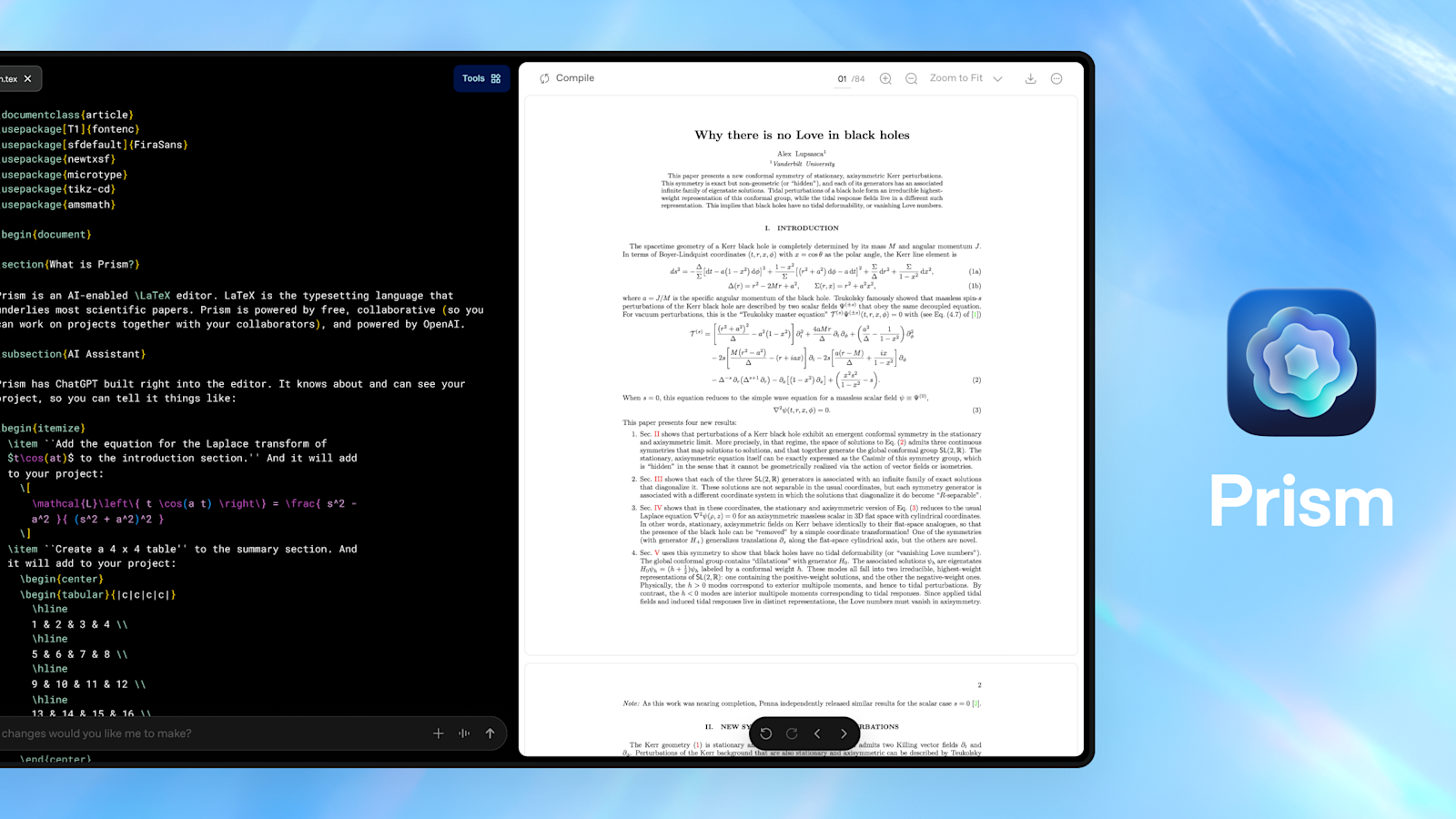
💥 Today we’re introducing Prism—a free, AI-native workspace for scientists to write and collaborate on research, powered by GPT-5.2.Accelerating science requires progress on two fronts:1. Frontier AI models that use scientific tools and can tackle the hardest problems2.… pic.twitter.com/cnLysHixuQ— Kevin Weil 🇺🇸 (@kevinweil) January 27, 2026

Reflections on the Cooperative AI Conference | Platform Cooperativism Consortium
I am just returning from our conference on Cooperative AI in Istanbul. Part of what I love about conferences—what keeps me doing this, convening these global PCC events —is meeting people who are both…

Digital Science on Twitter / X
An AI-native workspace that already knows your project?The new Papers AI from Digital Science keeps your drafts, data & references together, so the AI assistant has full context of your work - instead of starting fresh each time. 👉 Available now: https://t.co/DNcG173GDk… pic.twitter.com/FQWxdfKfS4— Digital Science (@digitalsci) August 4, 2026

The Fork in the Road: AI Horseless Carriages or Collective Intelligence for Science - Cosmik Labs
Kosmos: An AI Scientist for Autonomous Discovery
Today, we are announcing Kosmos, our next-generation AI Scientist. Kosmos is a major upgrade on Robin, our previous AI Scientist. You can read about it in our technical report, here. Kosmos is available to use from day one on our platform, here.

Charting AI’s Role in Scientific Discovery — Renaissance Philanthropy – A brighter future for all through science, technology, and innovation
Renaissance Philanthropy, with support from Google.org , is conducting a landscape study of AI integration in scientific research — and we want your perspective.

Beyond the Individual: Understanding the Evolution of Collective Intelligence
This chapter outlines the evolution of collective intelligence, starting from its ancient roots and concluding with modern digital platforms. It discusses intelligence theories, project examples, and the impact of technology on collaborative efforts. Key focuses include the role of the internet and online communities in boosting our collective IQ, with a particular emphasis on Douglas Engelbart's contributions and the open-source movement, as exemplified by Linux's development. The chapter examines how digital transformation has facilitated new forms of community and knowledge sharing, significantly influencing fields such as management, decision-making, and organizational learning. Various scholars and their definitions of CI are discussed, including Pierre Lévy's vision of universally distributed intelligence and the concept of swarm intelligence in biological sciences. We then move on to practically implemented CI projects, exploring crowdsourcing as a manifestation of CI in business and social projects and examining possibilities of harnessing the wisdom of crowds for problem-solving and innovation. The chapter concludes with a presentation of the current state of collective intelligence academic research.

Using X-Labs to Unleash AI-Driven Scientific Breakthroughs | IFP
How to adapt our science funding mechanisms to the unique infrastructure needs of large-scale AI projects

“Open, Collaborative and Participative Science: Rethinking the Legitimacy of Knowledge, the Policies and the Future of Science.” - looks like an interesting track during the Eu-SPRI Forum Annual Conference 2026 (10–12 June 2026, Valencia) euspri2026.webs.upv.es
"The truly visionary AI for Science company is not automating experiments or AI-generating Nature papers, but building technology to improve the collective sensemaking ability of scientists @cosmik.network and alphaXiv are both examples of startups trying to build new sensemaking infrastructure"

Science as Collective Sensemaking
republicofscience.substack.comCAIROS - motivation

Why we need community stewarded research commons

The Least Agentic People Alive

The Tragedy of the Cognitive Commons: How AI Could Disrupt the Regeneration of Professional Expertise

Oof. Bending spoons now owns Evernote, Meetup, Eventbrite, Vimeo, and a handful of others. 1.2B is pretty substantial. Are those products…
Digital Science on Twitter / X
Governing the scholarly AI Commons – Open Future

An inference cooperative for academic AI – Writings and rehearsals by Nathan Schneider
MOSAIC
Modular Open Science, AI & Collective Intelligence (BiTS program)
Is the scientific paper still a fraud?

The Robyn Dawes Institute for the Improvement of Science
The Least Agentic People Alive
How can citizen science reduce psychological distance to science? Insights from three projects in contested environmental contexts

Nova Scotia’s Experiment in Research That Solves Real Problems
We argue badly, and nothing accumulates. How could we do better? | Reason Commons — Issue Trees & Logical Thinking Process

