

A few days ago, Google announced its experimental project Open Source Insights, which permits the exploration of the dependency graph of Open Source software. My first look at it ended with a disappointment: in its initial stage, the site considers only the package universes of Java, JavaScript, Go, and Rust. That excludes most of the software I know and use, which tends to be written mainly in C, C++, Fortran, and Python. But I do have a package manager that has all the dependency information for most of the software that I care about: Guix. So I set out to do my own exploration of the Guix dependency graph, with a particular focus: identifying the hubs of the Open Source dependency network.
Code Galaxies Visualization
Code galaxies visualization allows you to explore huge graphs of software package managers (npm, go, ruby gems, composer, etc.)

GitHub Star History
View and compare GitHub star history graph of open source projects.

SemRepo: A Knowledge Graph for Research Software and Its Scholarly Ecosystem
We present SemRepo, an RDF knowledge graph comprising over 81 million triples describing nearly 200,000 GitHub repositories associated with scientific research. SemRepo captures repository-level metadata, such as contributors, issues, and programming languages, and interlinks this information with external scholarly knowledge graphs. In particular, repository authors are linked to their profiles in SemOpenAlex, repositories are connected to scholarly publications in LPWC, and research artifacts, such as datasets and experiments, are linked via MLSea-KG. This integration enables queries that span publications and their scholarly artifacts, which are typically fragmented across separate platforms. SemRepo supports analyses that are difficult to perform with existing resources in isolation, including provenance reconstruction across repositories and publications, as well as the systematic identification of risks to research reproducibility and software sustainability. By unifying research software with its scholarly context in a single graph, SemRepo provides an important infrastructure for large-scale analysis of software within the broader scientific research ecosystem.

Drips | Fund Open Source In Your Ecosystem
Drips is the easiest way to fund Open Source in your ecosystem. Fund your dependencies with built-in dependency splitting, run RetroPGF rounds, and achieve any


Roadmap: Open Source
After years of investing in open source software, we’re releasing our thinking on what positions these companies as emerging technology giants.

Cody - Sourcegraph docs
Documentation for Sourcegraph, the code intelligence platform.
SemRepo.org
SemRepo is a large-scale RDF knowledge graph of GitHub repositories linked to scientific research. SemRepo captures fine-grained repository-level metadata (e.g., contributors, issues, programming languages) and interlinks this with external scholarly knowledge graphs: repositories to publications in LPWC, repository authors to their profiles in SemOpenAlex, and research artifacts (e.g., datasets, experiments) are linked via MLSea.
Linking the world's research to the code it runs on - OpenAlex blog
Research relies on software. Software written by scientists, for science, runs through the entire modern research stack: NumPy and SciPy, R and ggplot2, Jupyter, BLAST, ImageJ, AlphaFold. Yet in the scholarly record, that software is nearly invisible. Software is not usually cited formally in publications and is usually just mentioned in the text, which means […]

Open Source
These GitHub repositories contain open-source software developed by the Observatory on Social Media for various projects

Package Managers Need to Cool Down
A survey of dependency cooldown support across package managers and update tools.

Anna’s Archive: LibGen (Library Genesis), Sci-Hub, Z-Library in one place - Anna’s Archive
The world’s largest open-source open-data library. Mirrors Sci-Hub, Library Genesis, Z-Library, and more.
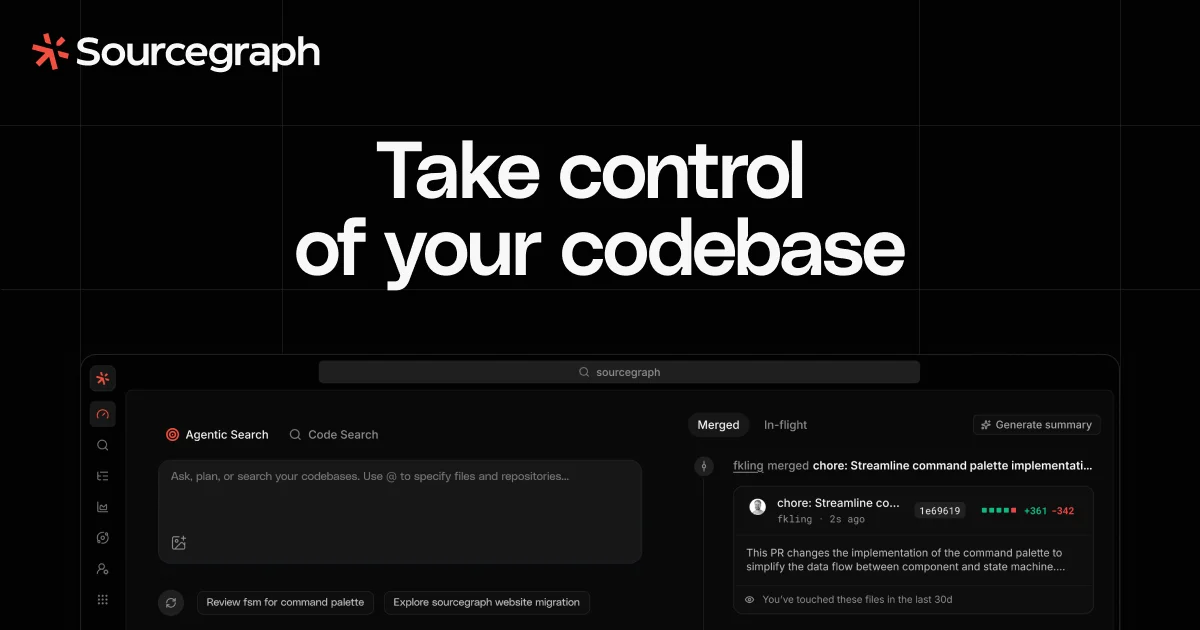
Sourcegraph — Code Understanding, Oversight and Evolution
Give humans and agents complete context to understand, oversee, and evolve the world's largest, most complex codebases.
A Taxonomy for Open Source Software
I’m working on a structured taxonomy for classifying open source projects across multiple dimensions: domain, role, technology, audience, layer, and function.
The just-announced Open Source Endowment is now on Bluesky, and we're open to your ideas on how to identify critical OSS projects 🙏

Open Source Endowment
We heard the Bluesky community cares about Open Source, so we showed up 👋 Our endowment dedicated to supporting Open Source maintainers is already at $729k, and we're developing a model for distributing our first funding round. Have ideas on how to identify critical OSS projects? We're listening.
