

Computer scientists tend to work by separating the essence of a problem from its environment, solving it in an abstract form, and then figuring out how to make the abstract solution work in the real world. For example, there is an enormous body of work on solving searching and sorting problems and in general it applies to finding and rearranging things regardless of whether they live in memory, on disk, or in a filing cabinet.

The Missing Discipline in Computer Science
On Teaching Computer Scientists to Ask “Why”

Feeling of Computing — Conversations
Qualitative Research in an Era of Artificial Intelligence: A Pragmatic Approach to Data Analysis, Workflow, and Computation
Computational developments—particularly artificial intelligence—are reshaping social scientific research and raising new questions for in-depth methods such as ethnography and qualitative interviewing. Building on classic debates about computers in qualitative data analysis, we revisit possibilities and dangers in an era of automation, large language model chatbots, and big data. We introduce a typology of contemporary approaches to using computers in qualitative research: streamlining workflows, scaling up projects, hybrid analytical methods, the sociology of computation, and technological rejection. Drawing from scaled team ethnographies and solo research integrating computational social science alongside in-depth observation, we describe methodological choices across study life cycles, from literature reviews through data collection, coding, text retrieval, and representation. We argue that new technologies hold potential to address long-standing methodological challenges when deployed with knowledge, purpose, and ethical commitment. Yet, a pragmatic approach—moving beyond technological optimism and dismissal—is essential given rapidly changing tools that are both generative and dangerous. Computation now saturates research infrastructure, from algorithmic literature searches to scholarly metrics, making computational literacy a core methodological competence in and beyond sociology. We conclude that when used carefully and transparently, contemporary computational tools can meaningfully expand, rather than displace, the irreducible insights of qualitative research.

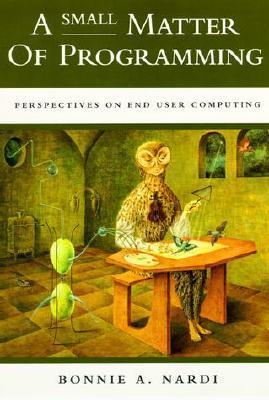
A small matter of programming: perspectives on end user computing
A Small Matter of Programming asks why it has been so d…
Alexander Obenauer
Exploring new and renewed ideas for how personal computing and the interfaces we think with can better serve people’s lives – expanding opportunity, agency, curiosity, and creativity.
Liberatory Computing
We live under a capitalist mode of computing. The tools, languages, techniques, and assumptions of digital systems are structured by economic forces that shape not just what we can do, but what we can imagine doing. By separating production from use, producing inflexible software, and slicing up computing into siloed apps, your agency is held back by a tech industry that profits from a population rendered computationally passive.
Lifelong engineer, curious tinkerer, and unapologetic problem-solver. I thrive on unraveling complexity and building clever, often unconventional solutions. Whether it's code, circuits, or workflows. I don't just like thinking outside the box, I like to take it apart and see how it works.
Computational Thinking for All Students
Posted by Maggie Johnson, Director of Education and University Relations, Google(Crossposted on the Google for Education Blog, and the the Huffingt...

Feminist Computer Science Education: "'Women in Computing' As Problematic": A Summary
I've long been interested in why, despite so much organized effort, there percentage of women in CS has been so stagnant. One hypothesis I h...
Interleaving Computational and Inferential Thinking: Data Science for Undergraduates at Berkeley · Issue 3.2, Spring 2021
The undergraduate data science curriculum at the University of California, Berkeley is anchored in five new courses that emphasize computational thinking, inferential thinking, and the perspective gained by working on real-world problems. We believe that interleaving these elements within our core courses is essential to preparing students to engage in data-driven inquiry at the scale that contemporary scientific and industrial applications demand. This new curriculum is already reshaping the undergraduate experience at Berkeley, where these courses have become some of the most popular on campus and have led to a surging interest in a new undergraduate major and minor program in data science.

Joe Bak-Coleman
I’m a computational social scientist whose research explores how collectives make decisions in the face of uncertainty, focusing on the impact of digital technologies on collective behavior.

Thinking about how computers can support intentional work. youtube.com/watch?v=Q7pbAW470qA

Attention architecture - thinking about todos, timeblocks, and calendars
www.youtube.comAlgorithm Mediated Experiences

On the effects of algorithms on everyday experiences

AI in Disguise—Quasi-Experimental Analysis of a Large-Scale Deployment of AI-Generated Ads
The Effects of Search Interface on Consumer Preferences: Evidence from a Randomized Experiment

AI, Human Cognition and Knowledge Collapse
State media control influences large language models
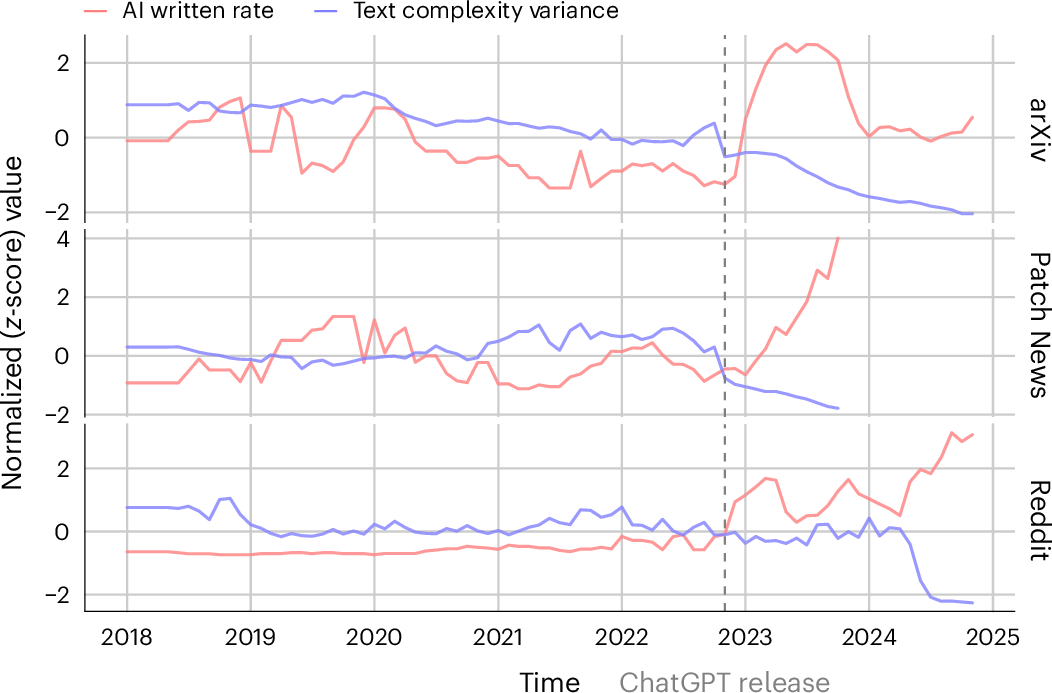
The shrinking landscape of linguistic diversity in the age of large language models

Artificial intelligence in communication impacts language and social relationships

