

Part 1 of building an Agentic AI with augmented memory
AI Agent Memory: Complete Guide & Architecture
AI agent memory: what it is, how it works, architecture, memory types, and how to add persistent long-term context.

Memory Models: Towards Agents That Learn
Agents that truly learn from experience will be powered by memory models: models that create and curate token-space memory across model generations, trained with memory-native RL.
pguso/ai-agents-from-scratch
Demystify AI agents by building them yourself. Local LLMs, no black boxes, real understanding of function calling, memory, and ReAct patterns.
Letta
Making machines that learn. Create stateful agents that remember everything, learn continuously, and improve themselves over time.

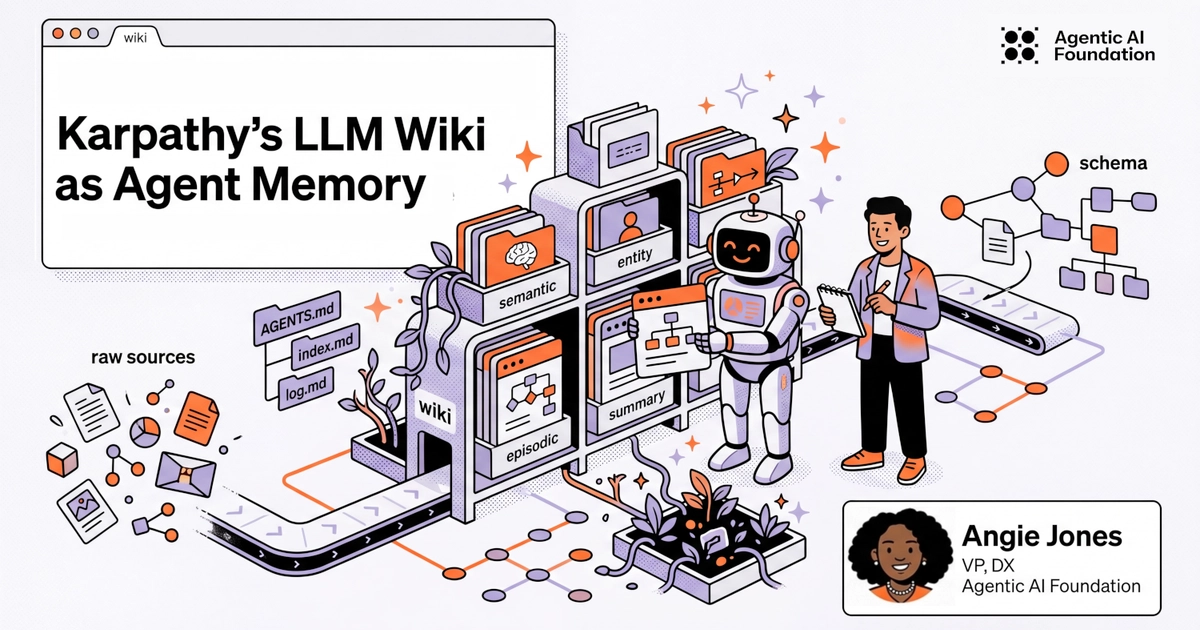
Karpathy's LLM Wiki as Agent Memory - Agentic AI Foundation (AAIF)
At work, I’m building agents to handle various operational tasks and have found Karpathy’s LLM Wiki design to be an excellent solution for implementing most ty…
Agentic AI, explained | MIT Sloan
The age of agentic AI — systems that are semi- or fully autonomous and can act on their own — has arrived. Here’s what you need to know, according to MIT experts.

The AI Operating System: Stateful Agents with Letta | Cameron Pfiffer, AI By the Bay25
Why AI Coding Agents Forget — And How ArcticMem Fixes It
Explore ArcticMem, Snowflake’s persistent semantic memory system for AI coding agents. See how dual-tier memory improves benchmark pass rates to 73%.

The Hitchhiker's Guide to Agentic AI: From Foundations to Systems
The Hitchhiker's Guide to Agentic AI is a comprehensive practitioner's reference for building autonomous AI systems. The book covers the full stack from first principles to production deployment, organized around a central thesis: building great agentic systems requires understanding every layer of the pipeline, not just one. The book opens with the LLM substrate -- transformer architecture, GPU systems, training and fine-tuning (SFT,LoRA, MoE), model compression, and inference optimization -- treated as essential foundations rather than the primary focus. It then develops the alignment and reasoning layer: reinforcement learning from human feedback (RLHF), PPO, DPO and its variants, GRPO, reward modeling, and RL for large reasoning models including chain-of-thought and test-time scaling. The second half is devoted to agentic AI proper. Topics include agentic training and trajectory-based RL, retrieval-augmented generation (RAG and Agentic RAG), memory systems (in-context, external, episodic, and semantic), agent harness design and context management, and a taxonomy of agent design patterns. Inter-agent coordination is covered in depth: the Model Context Protocol (MCP), agent skills and tool use, the Agent-to-Agent (A2A) communication protocol, and multi-agent architectures spanning centralized, decentralized, and hierarchical topologies. The book concludes with agent development frameworks, agentic UI design, evaluation methodology for agentic tasks, and production deployment. Each chapter pairs rigorous theoretical foundations with implementation guidance, code examples, and references to the primary literature.

Project Think: building the next generation of AI agents on Cloudflare
Announcing a preview of the next edition of the Agents SDK — from lightweight primitives to a batteries-included platform for AI agents that think, act, and persist.

Supermemory
The memory layer for AI agents. Context engineering platform powering enterprise APIs, developer plugins, and a personal app that remembers everything.
Agent Plugins
A portable package format for reusable components that extend AI agents.
Building an Advanced Agentic Harness | Data For Science
From a single pilot to an air campaign: planning, parallelism, memory, verification, and observability for production-shaped agents.
Agents

AI agents

Humans approve intent, machines prove conformance
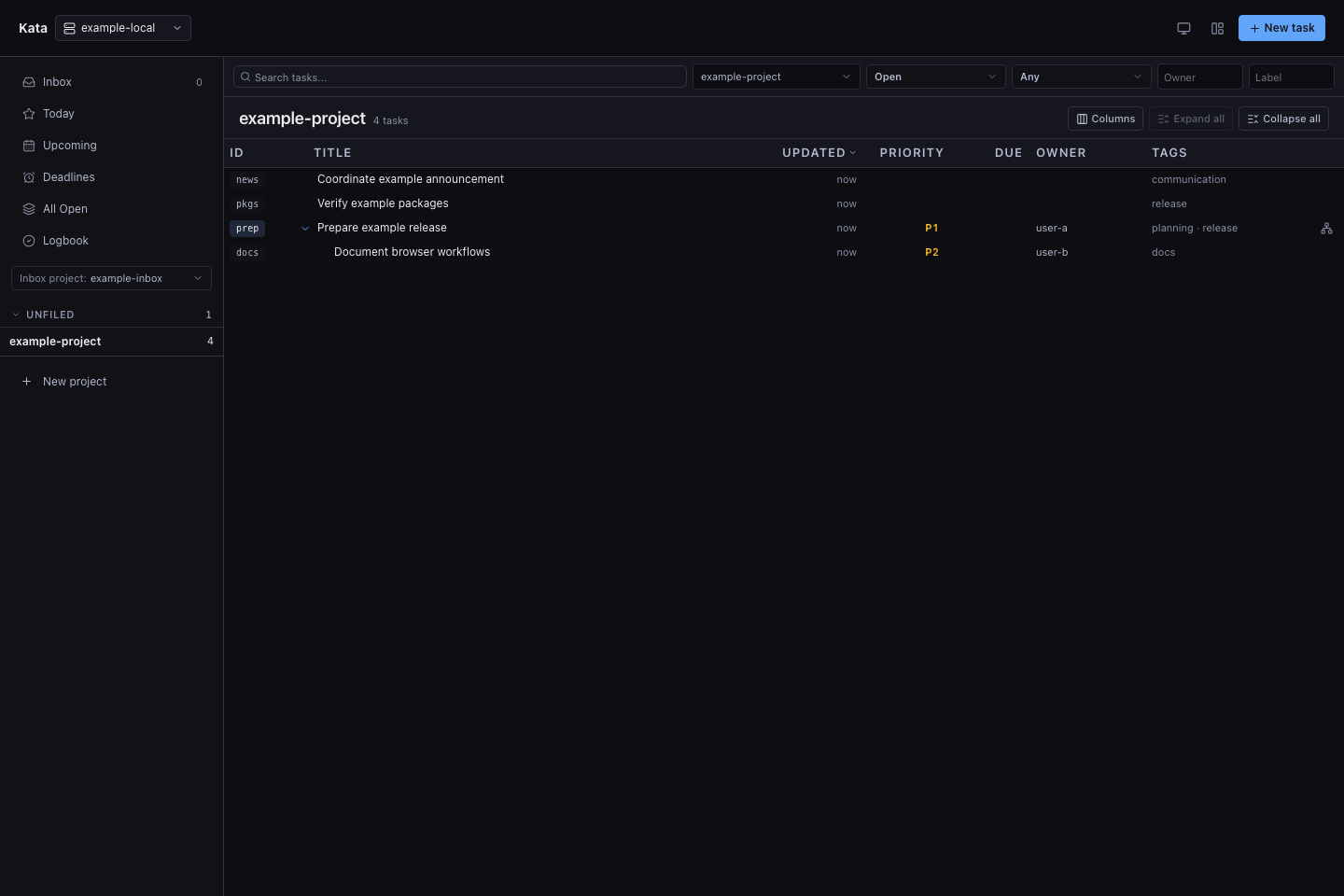
The issue tracker that runs inside the loop.
vitals — paseo.cafe
depatchedmode/oughta
robot.wtf — Memory for agents in a wiki for humans

Thoughts.md