

This one starts off a little slow but makes some really good points about the pressure to not work on the “middle part” (and how “infrastructure gravity” often means people do unnecessary innovation too low in the stack).

Aleksey Skorobogaty
Excellent article on positioning domain engineering between product engineering and infrastructure engineering. I fully agree with the financial model section. However, I prefer to call it ‘platform engineering: the hard parts,’ simply because in the middle, we face more volatile semantics.
May 17, 2025 at 12:34 PM
Community Imbalance Theory
This is my best effort to summarize the last 4 years of community building, governance, and general open source sustainability work I’ve…

Climate, Energy, & the Future–How Infrastructure Works–Deb Chachra–The Future is Literally Bright
Everything is In-Between — Douglas Rushkoff
I’ve begun this piece maybe twenty times in the past three weeks. By the time I’ve finished the first paragraph, some new thing happens that obsolesces whatever event I’m writing about. And I’m not even writing about the news, so much as using one shared moment as a “peg” for a piece about some larger phenomenon or strategy.
Open Source Summit Prague: Sovereignty, Metrics, and Burnout
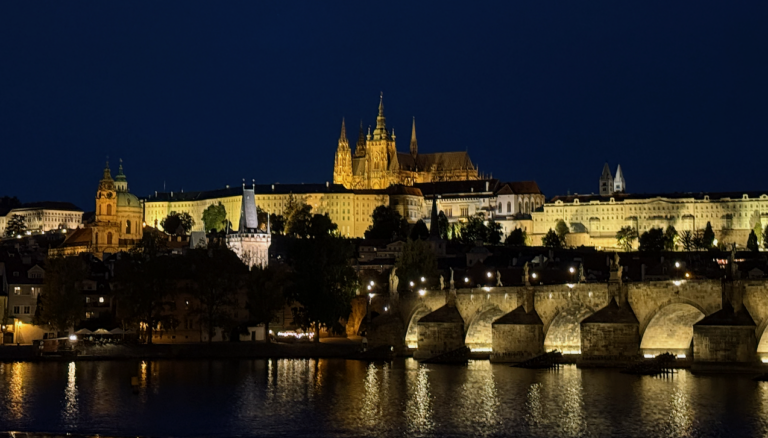
At the Open Source Summit EU last week in Prague, there were a few common themes that I wanted to write about with the caveat that these are, of course, not the only themes, and they were certainly biased by the types of talks that I chose to attend.
Attention Is All You Need #2: This Time Is Different
What can we learn from the 2007 Global Financial Crisis and the 1990’s dot-com bubble?

How Infrastructure Works: Transforming our shared systems for a changing world
'Pulsing with wisdom and humanity... a masterpiece' ED YONG'A hopeful, lyrical - even beautiful - hymn to the systems of mutual aid we embed in our material world' CORY DOCTOROW'An extraordinary book' MARK MIODOWNIK'You won't see the world the same after reading this book!' AUSTIN KLEONEvery day, we are granted the power to travel at high speeds, fly, see in the dark, summon water from distant mountains and electricity from the sun. The systems that run our world are invisible to us until they fail.Infrastructure enables lives of astounding ease and freedom that would have been unimaginable just a century ago. These technological systems - the most complex and vast ever created by humans - have allowed us to work collectively for the public good. But these systems are now beginning to fail us.Engineering professor Deb Chachra takes readers on a fascinating tour of these essential utilities, revealing how they work, what it takes to keep them running, and just how much they shape our lives - but also the price they extract, who pays it and in what ways, as well as the threats to our infrastructure in a changing world.From Snowdonia's Electric Mountain to a solar plant in southern India, Chachra shows how we can rebuild our shared infrastructure to be not just functional but also equitable, resilient, and sustainable. We need to learn how to see these systems and to transform them, together, because the cost of not being able to rely on them is unthinkably high.
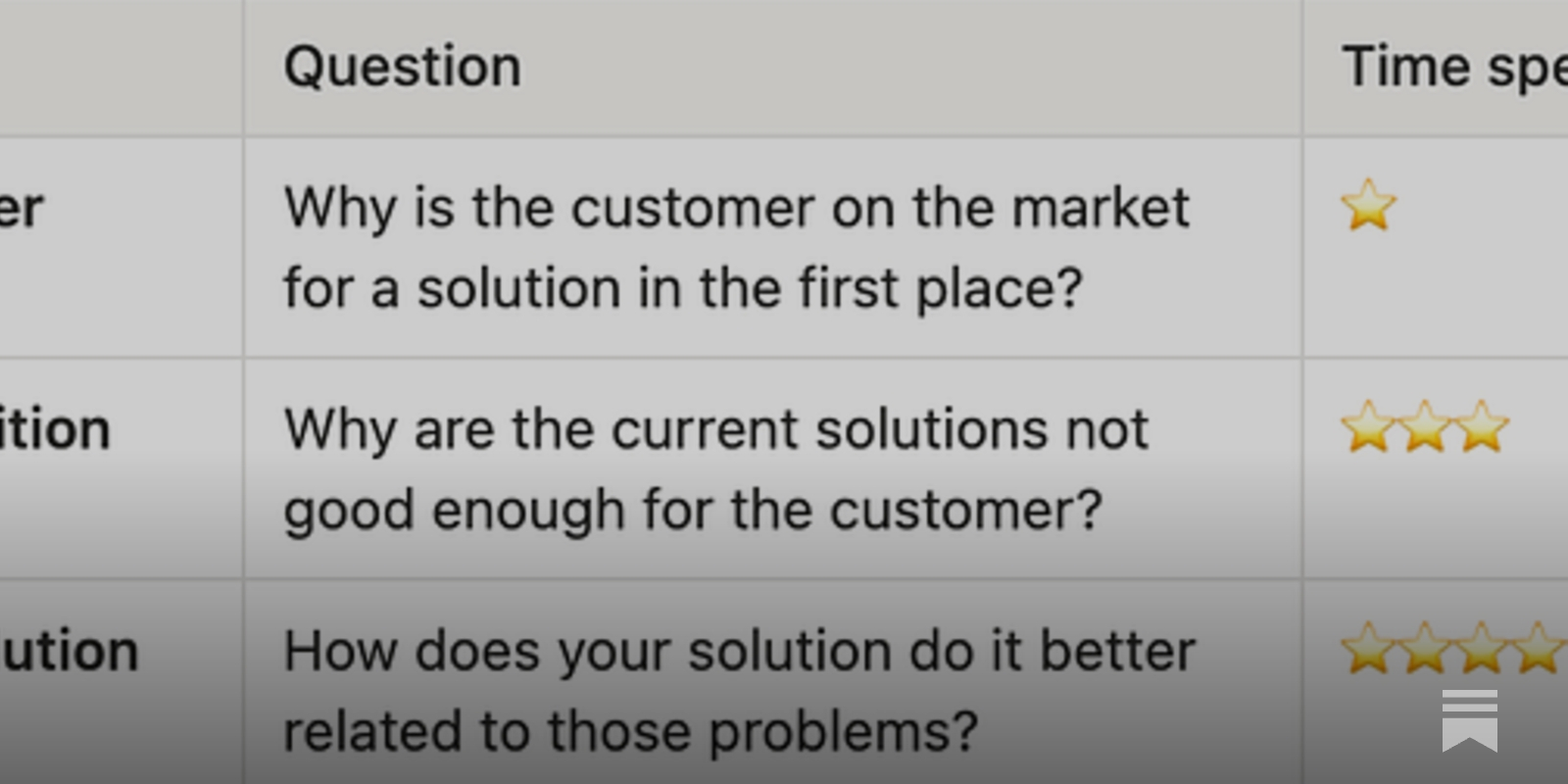
Three questions any founders should be able to answer
Stress test your product-market fit with these three simple questions
Leverage Points: Places to Intervene in a System
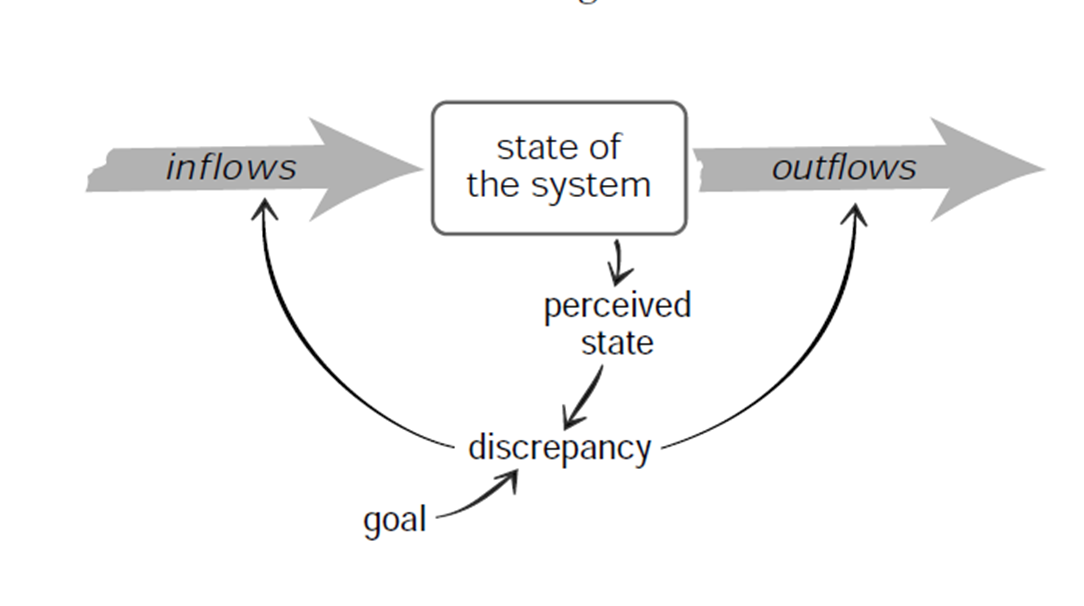
By Donella Meadows~ Folks who do systems analysis have a great belief in “leverage points.” These are places within a complex system (a corporation, an economy, a living body, a city, an ecosystem) where a small shift in one thing can produce big changes in everything. This idea is not unique to systems analysis — […]
Leverage Points: Places to Intervene in a System
By Donella Meadows~ Folks who do systems analysis have a great belief in “leverage points.” These are places within a complex system (a corporation, an economy, a living body, a city, an ecosystem) where a small shift in one thing can produce big changes in everything. This idea is not unique to systems analysis — […]
Khan Academy's Engineering Principles
⭐ Read about our 2019 revision of the principles! ⭐ By Ben Kamens You know those super-frustrating movie ... Read more
Wisdom in a World in Crisis: The Counterintuitive Need to Slow Down and Find Spaciousness with Iain McGilchrist
tristanbuckmaster (@tristanbuckmaster@mastodon.social)
Today, Levent Alpöge and I have made public three results: finite-time blowup with smooth forcing for incompressible porous media, for Boussinesq, and for 3d incompressible Euler. https://cims.nyu.edu/~tristanb/statement.pdf https://cims.nyu.edu/~tristanb/euler.pdf https://cims.nyu.edu/~tristanb/ipm.pdf https://cims.nyu.edu/~tristanb/boussinesq.pdf https://github.com/tristanbuckmaster/fluid_lean
1/ Lots of thoughts about the new White House science and tech policy report, meanwhile just a few quick notes (I only skimmed it so far but plan to read through it)

Science: A New Golden Age
www.whitehouse.govTechnological

Posts about the future of the internet, AI, and anything technological. Hence the name.
Landslide/Holdfast

Citations and background for my talk at Atmosphere Conf 2026

Child Predators Turn to Open-Source AI to Make Unlimited Illegal Images

Mac Users Reclaim 12GB+ of Storage With Apple Intelligence Removal Tool

‘Doom Loop’: OpenAI and Microsoft Admits LLMs Are Destroying the Web and Built on Theft

Cory Doctorow: AI’s big beasts aren’t really scared of their products. They’re scared of their competition

How AI Chatbots Are 'Deskilling' Human Empathy
Pluralistic: The Claude Delusion (21 Sep 2026) – Pluralistic: Daily links from Cory Doctorow

Sources on social media: Information context collapse and volume of content as predictors of source blindness - George Pearson, 2021

Pacific kelp forests are far older than we thought - Berkeley News
Illusion of knowledge through Facebook news? Effects of snack news in a news feed on perceived knowledge, attitude strength, and willingness for discussions

No Sense of Place by Joshua Meyrowitz | Open Library
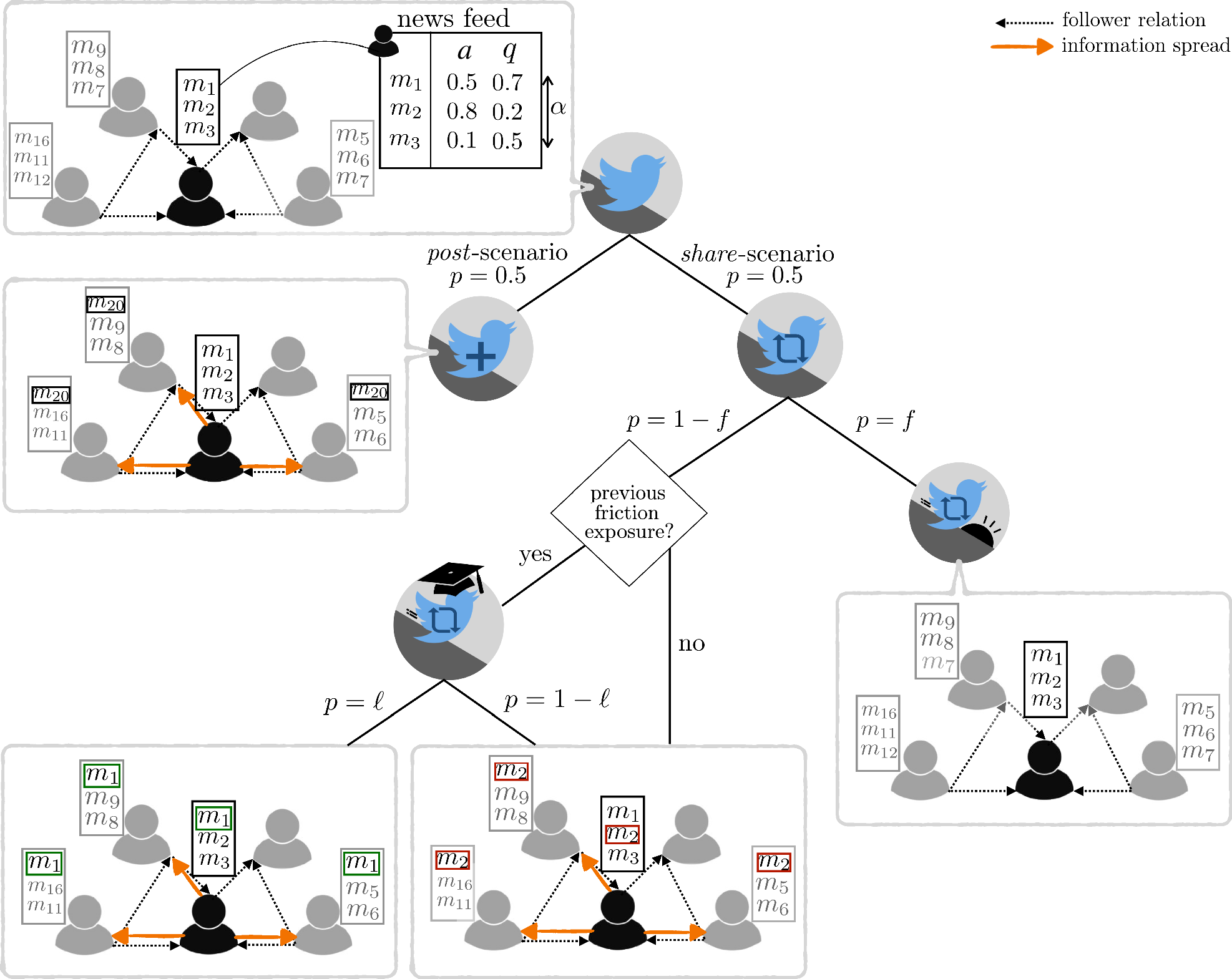
A perspective on friction interventions to curb the spread of misinformation

The social media context interferes with truth discernment

