

I'm a cognitive scientist with an interest in epistemic vigilance, and this essay that's been going around gave me pause. I don't think it's straightforward to apply the concept of epistemic vigilance to interactions with LLMs, as this essay does. 🧵/ sbgeoaiphd.github.io/rotating_the_space/posture
Amplifiers of Epistemic Posture
sbgeoaiphd.github.ioFeb 26, 2026 at 1:18 PM
Epistemic Vigilance
Humans massively depend on communication with others, but this leaves them open to the risk of being accidentally or intentionally misinformed. To ensure that, despite this risk, communication remain...

AI Epistemic Risks: Emerging Mechanisms & Evidence
<p>Advances in artificial intelligence pose risks to humanity's collective capacity to form accurate beliefs, reason well, and maintain a healthy information en

Scientists Say LLMs Appear to Be Acting as a Cognitive Virus Among Humans
AI's wide proliferation shares some striking similarities with the ways viruses spread, as an international team of researchers argue.

Epistemic Alienation and the Division of Labor
The division of cognitive labor leads to what Barry has recently called epistemic alienation: a problematic separation of individuals from epistemic goods. According to Barry, individuals are alienated from epistemic virtues because an efficient division of cognitive labor requires them to manifest a lack of virtues. I argue that this is a mistaken diagnosis of the source of epistemic alienation. Participating in high-functioning collectives does not prevent individuals from being robustly virtuous; rather, our cognitive limitations make it impossible for us to live up to the highest standards of epistemic conduct. Collectives transcend these cognitive limitations to achieve what individuals cannot by harnessing those same limitations in their members. Furthermore, I argue that we should distinguish the epistemic weaknesses that facilitate the division of cognitive labor from those that result from the division of labor. Only the latter are aspects of epistemic alienation. By dividing our cognitive labor over larger populations of agents and artifacts, we have massively accelerated our rate of epistemic productivity but have thereby created conditions that are variously inhospitable for the thinking of individuals by alienating them from the products, processes, and environments of inquiry. These forms of separation are problematic insofar as they amplify intellectual vices, incapacitate reason, and induce cognitive biases.
Why Crisis Resilience Depends on Epistemic Security
If we want to prevent tomorrow’s crises from spiraling out of control, we must recognize epistemic systems as critical infrastructure, writes Elizabeth Seger.

Epistemic Courage and Open-Mindedness
Epistemic courage requires me to sometimes adopt a belief even in the face of doubts. Open-mindedness requires me to be able to reconsider my beliefs. It is generally assumed that we should have bo...

Human Adults and LLMs as Scientists: Who Benefits from Active Exploration?
A long-standing finding in the causal learning literature is that adults struggle to identify conjunctive causal rules, where an effect requires the simultaneous presence of multiple causes, while...

Cognitive exponents and LLM leverage
I know a few people for whom LLMs have been a near-immediate multiplier of attention and effort. I know a lot for whom LLMs clearly make them worse at thinking and doing things. So: why?
EPISTEMIC STIGMERGY: NATURAL VS. ARTIFICIAL INTELLIGENCE
The article\(^{1}\) defends the thesis that intelligent behavior might require not internal complexity but complex interaction. This is demonstrated by the various forms of stigmergy that can be observed both in social insects and in humans. The exposition is structured as follows: (§0) explains how the term “intelligence” is interpreted in the following text; (§1) clarifies the relation between intelligence and complexity; (§2) shows that intelligent behavior does not require internal complexity; (§3) introduces the concept of stigmergy; (§4) presents the mechanisms that give rise to this phenomenon; (§5) distinguishes several types of stigmergic interaction; (§6) briefly discusses the evolutionary mechanisms that could have produced them; (§7) sketches the possible ways in which the concept of stigmergy is used outside biology; (§8) examines collaborative stigmergy in humans; (§9) points to its epistemic projections; (§10) outlines some conclusions concerning the role of artificial intelligence systems and their place in human society.
Metacognitive Myopia: A Major Obstacle on the Way to Rationality
The notion of metacognitive myopia refers to a conspicuous weakness of the quality control of memory and reasoning processes. Although people are often remarkably sensitive even to complex samples of information when making evaluative judgments and decisions, their uncritical and naive tendency to take the validity of sampled information for granted constitutes a major obstacle to rational behavior. After illustrating this phenomenon with reference to prominent biases (base-rate neglect, misattribution, perseverance), we decompose metacognitive myopia into two distinct but intertwined functions, monitoring and control. We offer explanations for why effectively monitoring the biases resulting from information sampling in an uncertain world is so difficult and why the control function is severely restricted by the lack of volitional control over mental actions. Because of these and other difficulties, metacognitive myopia constitutes a major obstacle to rational judgment and decision making.

How to be more creative in seconds!
Epistemic courage
"'Epistemic Courage' is a timely and thought-provoking exploration of the ethics of belief. Drawing on a wide range of examples, from conspiracy theories to medical misinformation, Ichikawa shows why epistemology is no mere academic abstraction - the question of what to believe couldn't be more urgent. And, he argues, many mainstream ideas about what to believe - those emphasizing the importance of ensuring that one doesn't believe with insufficient evidence - are incomplete and distorting in important and harmful ways. A skeptical, negative bias about belief is connected to a conservative bias that reinforces the status quo. Throughout the book, Ichikawa argues that we need to shift our focus from avoiding false beliefs to actively seeking out true ones. Throughout the book, Ichikawa uses engaging and timely examples to illustrate his points. He tackles important questions, such as how moral considerations interact with evidential ones in deciding what to believe, and how to navigate the complex ethical issues around testimony, rape culture, and epistemic injustice. Accessible and rigorous, 'Epistemic Courage' invites readers to consider the importance of belief, and how it shapes our lives and the world around us. With its insightful analysis and compelling case studies, this book is an essential read for philosophers and anyone else interested in belief, social justice, and the pursuit of truth."--

There's growing experimental evidence¹˒²˒³˒⁴ that LLMs are unusually good at talking people out of entrenched false beliefs and conspiracy theories. ¹ pubmed.ncbi.nlm.nih.gov/39264999/ ² pubmed.ncbi.nlm.nih.gov/41179846/ ³ sciety.org/articles/activity/10.21203/rs… ⁴ connecticut.adl.org/resources/report/short-dialog…

Der Fisher
Unpopular opinion: LLMs are generally deradicalizing people whose beliefs are based on pure propaganda. I've been watching this happen slowly with some people I care about. ChatGPT is one of the reasons they finally accept that the NRA, OAN, and NewsMax are lying to them.
Capturing our Attention by @neillevy.bsky.social "we possess sophisticated capacities of epistemic vigilance, which work reasonably well to distinguish reliable from unreliable information, but ... we do not have parallel defences against attentional capture" > tandfonline.com/doi/full/10.1080/00048402.202…
epistemic infrastructure

Explores a variety of topics around epistemological tools, especially the web, with the aim to discuss epistemic closure in two ways: 1/ the complete understanding of a subject 2/ the entrapment of the user
Do we actually need to write research papers at all?
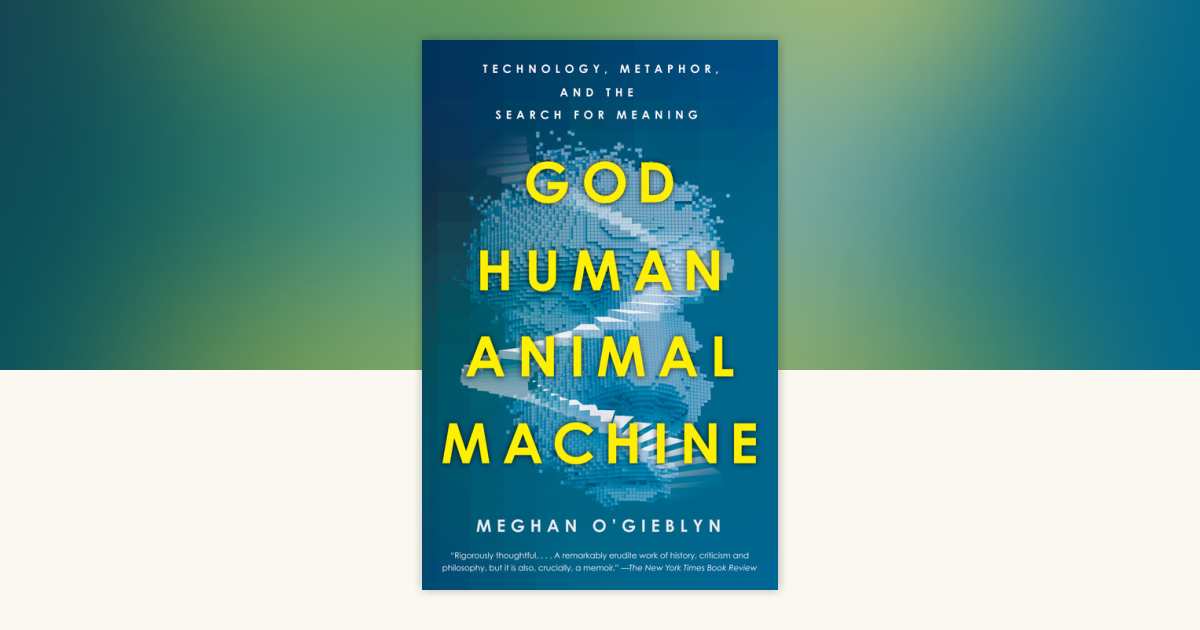
God, Human, Animal, Machine by Meghan O'Gieblyn: 9780525562719 | PenguinRandomHouse.com: Books
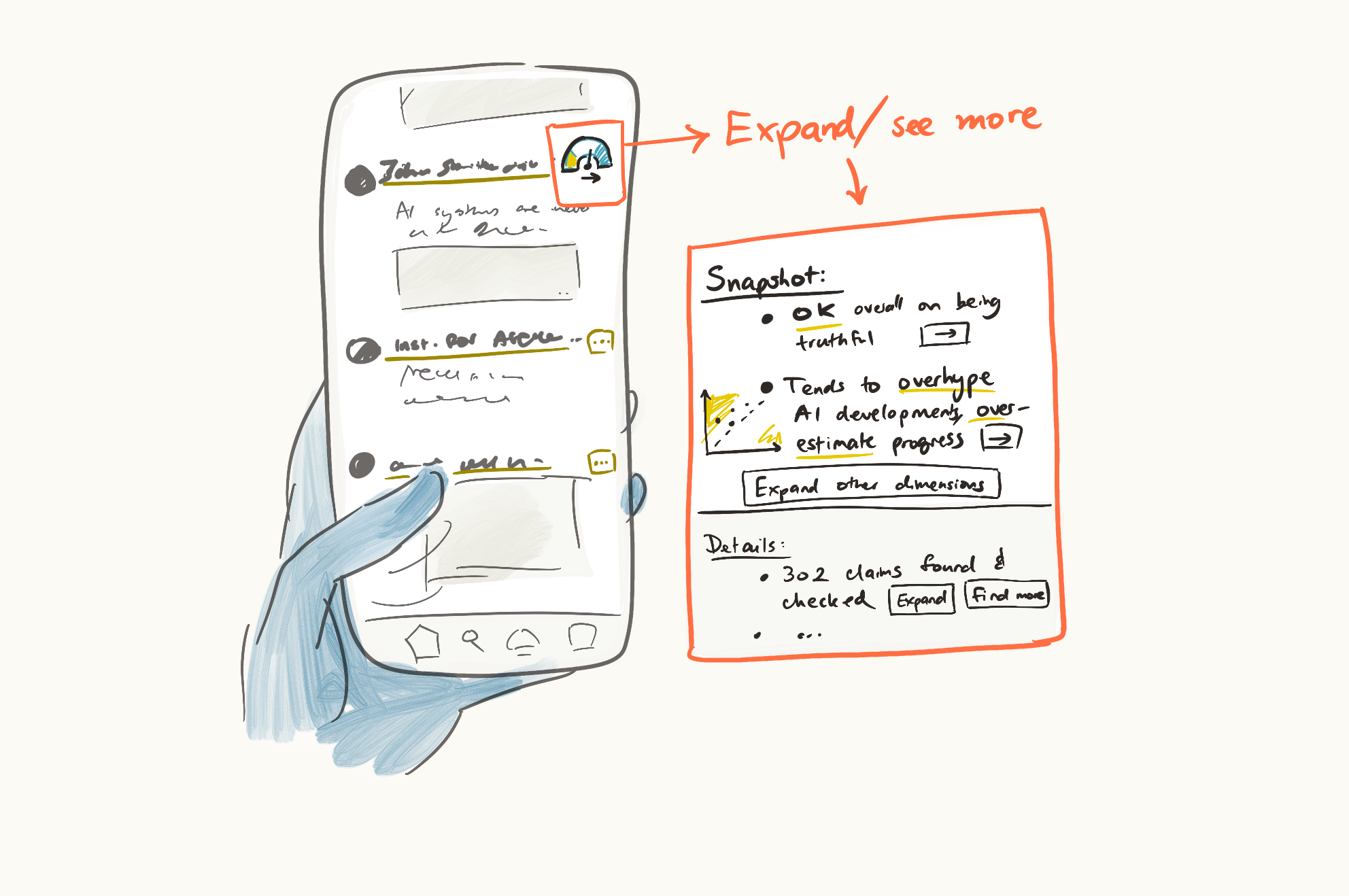
AI Tools for Trust: Community Notes, Rhetoric Detection & More
Can generative artificial intelligence be considered a cognitive subject? An analytic analysis
What Libraries Actually Do – Libraries as Epistemic Institutions

Epistemic Infrastructure: Building Shared Truth in an Era of Disaggregation


