

I'm no accounting expert, but getting your accounting compared to Enron seems...not great. Fortunately Amanda Iacone is an accounting expert (follow her on LinkedIn. I don't think she's here), and she and our graphics team explain it well.

Big Tech AI Spree Revives Accounting Devices That Toppled Enron
news.bloomberglaw.comJul 21, 2026 at 2:59 PM
Human + AI in Accounting: Early Evidence from the Field
This paper provides early evidence on the integration and impact of Generative Artificial Intelligence (GenAI) in accounting at both the accountant and task lev

Human + AI in Accounting: Early Evidence from the Field
This paper provides early evidence on the integration and impact of Generative Artificial Intelligence (GenAI) in accounting at both the accountant and task lev
Human + AI in Accounting: Early Evidence from the Field
This paper provides early evidence on the integration and impact of Generative Artificial Intelligence (GenAI) in accounting at both the accountant and task levels. Using a multi-method approach, we first identify the heterogeneous adoption patterns, perceived benefits, and concerns through survey data from 277 accountants, which we formalize into testable predictions. Leveraging field data from a technology firm providing AI-based accounting software to 79 small- and medium-sized enterprises, we analyze hundreds of thousands of transaction-level records. We document significant productivity gains among adopters, including an 18% increase in weekly client support per standard deviation of AI use, with estimates reaching 59% when comparing the highest to lowest usage levels. We also find a reallocation of approximately 9% of accountant time from routine data entry toward high-value tasks. AI use corresponds to improved financial reporting quality, evidenced by a 12% increase in ledger granularity and a 7.5-day reduction in monthly close time. Experienced accountants selectively intervene when AI confidence scores are low, suggesting complementarity between expertise and AI. A framed field experiment shows that accountants sometimes over-rely on inaccurate AI-suggested classifications, illustrating risks of AI use. Overall, our findings highlight AI’s role in potentially augmenting, rather than replacing, professional accounting expertise.
How generative AI can make accountants more productive | MIT Sloan
A new study finds that working with artificial intelligence boosted efficiency and reporting quality. But human expertise still matters.

Perspectives on mental accounting: An exploration of budgeting and investing
This article provides an overview of recent advances in the literature on mental accounting within the context of consumer financial decision‐making. We first discuss the categorization process that underlies mental accounting and the methods people use to categorize funds. We then highlight some of the notable work that examines how mental accounting influences budgeting, spending, and investment decisions. The article concludes by proposing an agenda for future research, focusing on current gaps in our knowledge and promising areas to explore.

Asana
I’m delighted to finally be investing in Asana, which I’ve wanted to do for a long time. One of the things I’ve learned about companies is that 1) clear tasks and goals, 2) clearly communicated,...
How to Set Up SaaS Expense Categories for Accurate Metrics
Proper expense categorization improves your visibility into your SaaS company’s spending while enabling more accurate metrics and forecasting. After all, as a startup founder, you want to have a solid idea of what your true gross margins are and what it actually costs to acquire a customer!

How to Price Effectively: A Guide for Managers and Entr…
Pricing decisions are among the most important and impa…

Revenue Models (2026): 19 Different Ways to Make Money [B2B & B2C] - Gust de Backer
So many different revenue models... But, which one fits your business? Over the past few decades, many new revenue models have proven to be profitable. That's why I'm going to show you 16 different revenue models so you can evaluate if there might be a better way to monetize the value you deliver to your customer. Let's start... What is…

Personal Finance
Get the Business Insider take and compare the best savings accounts, best credit cards, best insurance policies, and more. Never feel like a financial outsider again.

ServiceTitan and the Software-vs-PE Race
Plus! Devaluation; Browsers; Slicing Up the Capital Structure; Who Audits the Auditors; International

A Structural Model of Mental Accounting
We construct and estimate a formal economic model of mental accounting where utility maximizing consumers facing rationality constraints infrequently update the
Pacing the Frontier
A statement from over 1000 employees of frontier AI companies

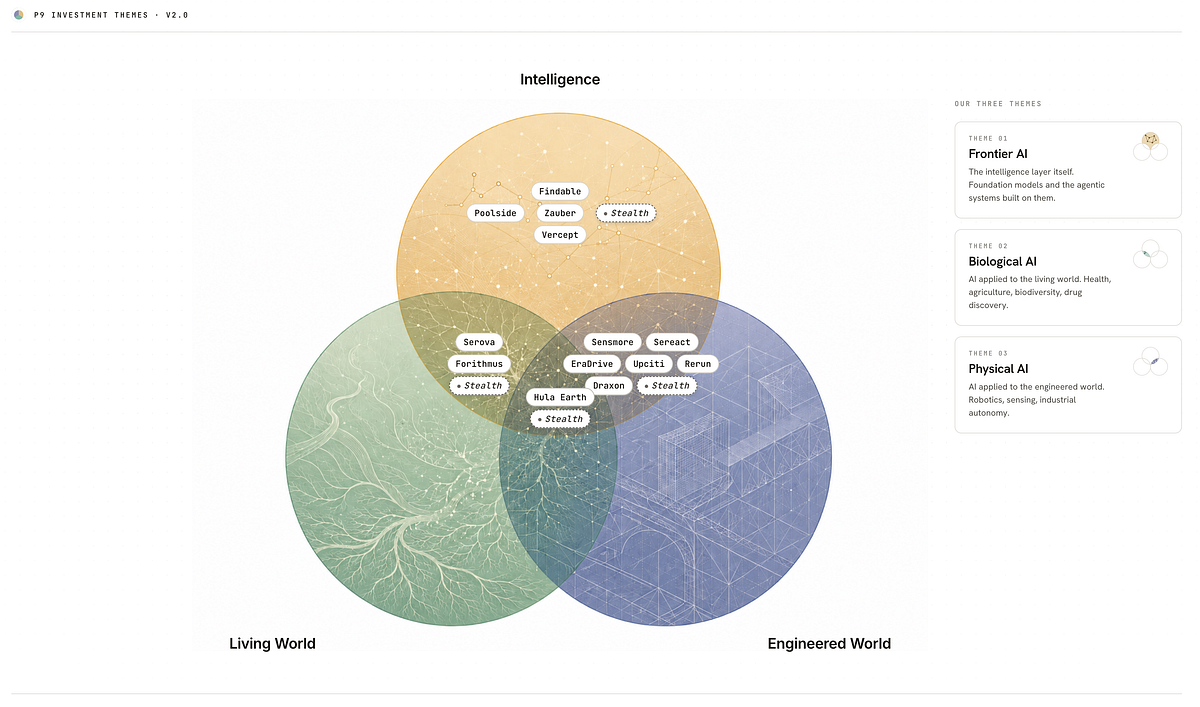
What Investing in Software Looks Like in 2026
In case you quietly filed Point Nine under “boring SaaS investor” … well, first of all, I’m not going to blame you. We’ve been investing in…
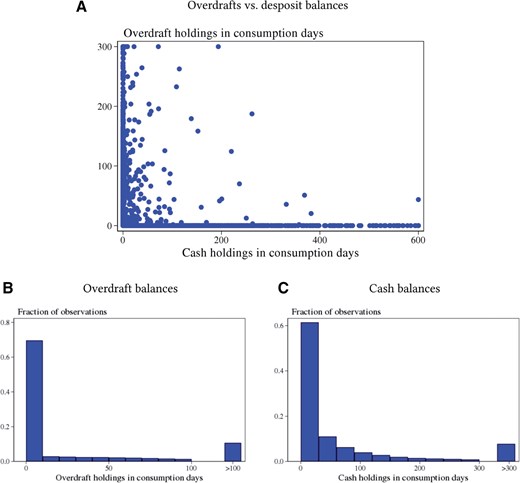
The Coholding Puzzle: New Evidence from Transaction-Level Data
Abstract Why do individuals pay debt interest when they could use their savings to pay down the debt? We explore why individuals “cohold” debt and savings using detailed and highly disaggregated daily-level data on household finances. We find that coholding mostly occurs in short spells within the month and the level of coholding is typically modest. Periods of coholding are not associated with shocks at the individual level. We show that mental accounting has a role to play in explaining coholding, in particular how individuals allocate different categories of expenditure to accounts in credit and debit.
multiple ways of understanding the atmosphere are good - you can store extra stuff in your bluesky account : good - an open file system for your social graph : good - an ocean of possibility created by freeing data from the clutches of big tech : good different approaches reach different people

