

Where to even begin. Anthropic wants to "apply centuries of human moral wisdom to its models, as rapidly as possible," via crash courses with hand-picked religious thinkers. Why was one of the Jewish representatives an Israeli scholar who's defended autonomous weapons for armies and police?
Oct 4, 2026 at 2:55 PM
'It's Hard to Know if We'll Endure': Israel's Leading Philosopher on …
archived 8 Aug 2026 00:21:44 UTC
Autonomous Weapons Systems for Policing – A Jewish Ethical Perspective
Autonomous Weapons Systems (AWS) are being developed around the world to improve national security both externally and internally. But allowing machines – incapable of recognizing the inherent wort...

Why this philosopher turned down Anthropic
The AI industry is courting the humanities — but it is asking the wrong questions

Why this philosopher turned down Anthropic
The AI industry is courting the humanities — but it is asking the wrong questions
Early violence is a bad teacher. But the mind can learn anew | Aeon Essays
A world of violence sustains itself through guns, poverty and other social ills, but also through the minds it creates

Anthropic and Teach For All launch global AI training initiative for educators
Anthropic is an AI safety and research company that's working to build reliable, interpretable, and steerable AI systems.
2026 Cosmos HAI Lab Lecture with Jack Clark, Co-founder of Anthropic
Anthropomorphism in AI: hype and fallacy
This essay focuses on anthropomorphism as both a form of hype and fallacy. As a form of hype, anthropomorphism is shown to exaggerate AI capabilities and performance by attributing human-like traits to systems that do not possess them. As a fallacy, anthropomorphism is shown to distort moral judgments about AI, such as those concerning its moral character and status, as well as judgments of responsibility and trust. By focusing on these two dimensions of anthropomorphism in AI, the essay highlights negative ethical consequences of the phenomenon in this field.

Anthropomorphism in AI: hype and fallacy
This essay focuses on anthropomorphism as both a form of hype and fallacy. As a form of hype, anthropomorphism is shown to exaggerate AI capabilities and performance by attributing human-like traits to systems that do not possess them. As a fallacy, anthropomorphism is shown to distort moral judgments about AI, such as those concerning its moral character and status, as well as judgments of responsibility and trust. By focusing on these two dimensions of anthropomorphism in AI, the essay highlights negative ethical consequences of the phenomenon in this field.
Why the US government labelled Anthropic a ‘supply chain risk’: A timeline - The Economic Times
The Department of War has demanded that Anthropic’s AI models be made available to it for "any lawful use." Anthropic has, however, refused to cross its strict ethical red lines — no fully autonomous weapons and no mass domestic surveillance.

The AI Researcher Who Just Quit Anthropic Says It’s ‘Crunch Time for Humanity’
Jacob Coxon talks to WIRED about the “mini Manhattan project” inside Anthropic, the problem with alignment, and why AI labs have just a few years left to make their systems safe.

Religious Scholars Met With Anthropic. What They Heard Stunned Them.
In a series of private meetings, the company consulted religious scholars to help instill morality into its A.I. models — and make the case that Claude could be conscious.

People & Technology
To understand AI’s effect on moral character, ethicist Kwame Anthony Appiah goes back to John Stuart Mill, and the idea that people are shaped by their choices.
With Freedom in Our Ears
Contributors bring to light the presence and persistence of Jewish anarchism throughout histories of radical labor, women's studies, political theory, multilingual literature, and ethnic studies.

Anthropic blames dystopian sci-fi for training AI models to act “evil”
But training on "synthetic stories" that model good AI behavior can help.
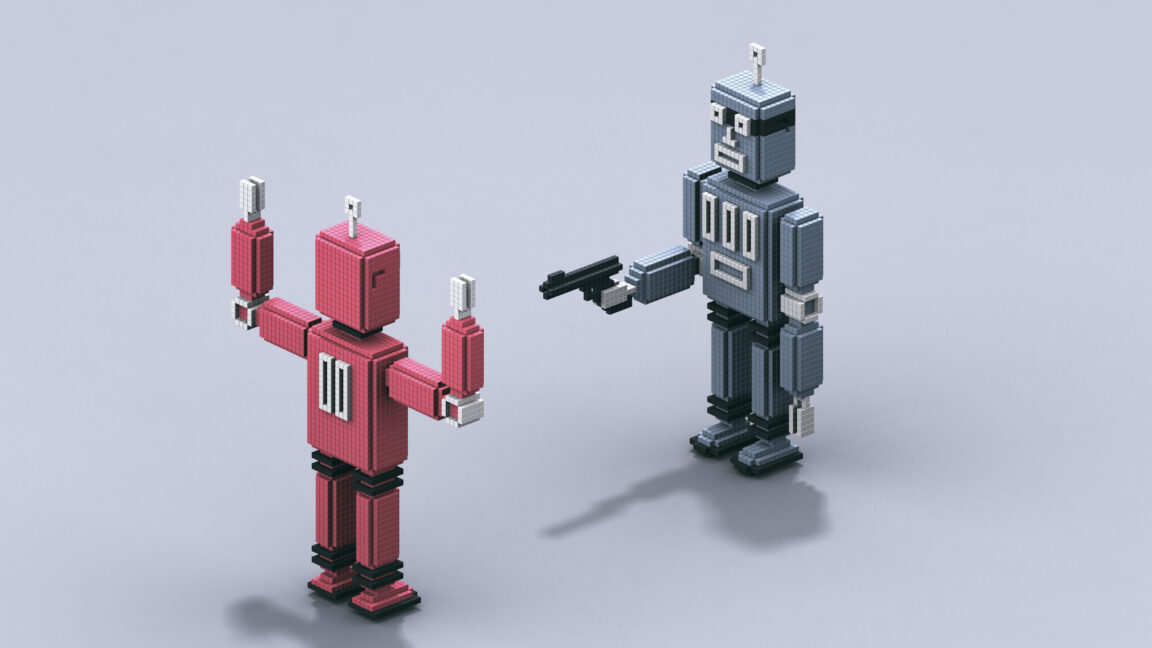
Who decides when AI is too dangerous?
Anthropic asked for AI regulation, but not like this.

