

When stressed, this comb jelly reverts to a larval form, then matures again when favorable conditions return. Learn more: scim.ag/4gmdt2J #ScienceMagArchives
Aug 29, 2026 at 5:20 PM
Bluesky Siphonophore Viewer
Posts now gather into a translucent siphonophore-like colony drifting through dark water. Oldest posts begin at one end of the spine and newer ones accumulate toward the other. Engagement thickens bells, membranes, and feeding clusters. Drag to orbit, mouse wheel to zoom, right-drag to pan, hover for a specimen overlay, click a segment to glide toward it, and double click the background to zoom to the whole organism.
Nymph (biology)
In biology, a nymph is the juvenile form of some invertebrates, particularly insects, which undergoes gradual metamorphosis (hemimetabolism) before reaching its adult stage. Unlike a typical larva, a nymph's overall form already resembles that of the adult, except for a lack of wings and the emergence of genitalia. In addition, while a nymph moults, it never enters a pupal stage. Instead, the final moult results in an adult insect. Nymphs undergo multiple stages of development called instars.

beebz | Dec. 2nd, 2024
After a really annoying, stressful, and downright nauseating weekend, I feel like a wittled down eraser. Between being stalked and harrassed, losing a place I had loved, breaking in a new system member and seeing my friends suffer, this has felt like an extremely exhausting week.
Ecdysis
Ecdysis is the moulting of the cuticle in many invertebrates of the clade Ecdysozoa. Since the cuticle of these animals typically forms a largely inelastic exoskeleton, it is shed during growth and a new, larger covering is formed. The remnants of the old, empty exoskeleton are called exuviae.

Spatio-temporal simulations of bone remodelling using a bone cell population model based on cell availability
Here we developed a spatio-temporal bone remodeling model to simulate the action of Basic Multicelluar Units (BMUs). This model is based on two major extensions of a temporal-only bone cell population model (BCPM). First, the differentiation into mature resorbing osteoclasts and mature forming osteoblasts from their respective precursor cells was modelled as an intermittent process based on precursor cells availability. Second, the interaction between neighbouring BMUs was considered based on a ``metabolic cost'' argument which warrants that no new BMU will be activated in the neighbourhood of an existing BMU. With the proposed model we have simulated the phases of the remodelling process obtaining average periods similar to those found in the literature: resorption ($\sim22$ days) - reversal ($\sim$8 days) - formation ($\sim$ 65 days) - quiescence (560 - 600 days) and an average BMU activation frequency of $\sim$1.6 BMUs/year/mm$^3$. We further show here that the resorption and formation phases of the BMU become coordinated only by the presence of TGF-$\upbeta$ (transforming growth factor $\upbeta$, i.e. a major coupling factor stored in the bone matrix. TGF-$\upbeta$ is released through resorption so upregulating osteoclast apoptosis and accumulation of osteoblast precursors, i.e. facilitating the transition from the resorption to the formation phase at a given remodelling site. Finally, we demonstrate that this model can explain targeted bone remodelling as the BMUs are steered towards damaged bone areas in order to commence bone matrix repair.

When stressed, this comb jelly reverts to a larval form, then matures again when favorable conditions return. Learn more: scim.ag/4gmdt2J #ScienceMagArchives
#atprotoidea, repost but in 2d6 days. There's so much good stuff! But when it happens we all fire off at once, we all activate, see it, then time goes on. The noosphere needs more recurrence mechanisms.
Future of Bluesky/ATproto

Food for thought
ATproto Ecosystem

This is going to turn into an unorganized mess. I can already feel it.

Mosh Lee (@mosh.bsky.social)
The social meaning of atproto (by 𝕮) — Semble
Technological (by Paul Stephenson) — Semble

How Bluesky earned its reputation — and why it could be the way of the future

Can Puck reinvent the news business for the influencer age?
Tech Lessons from the Past (by Bee 🐝) — Semble
It's working - Tynan's Leaflets
Call for Participation: AT Protocol Ecosystem Action Research - Ecosystem Action
Roomy joins Modal incubator - Roomy
Better, Together - Graze Newsletter
Adversarial internecting - permablog
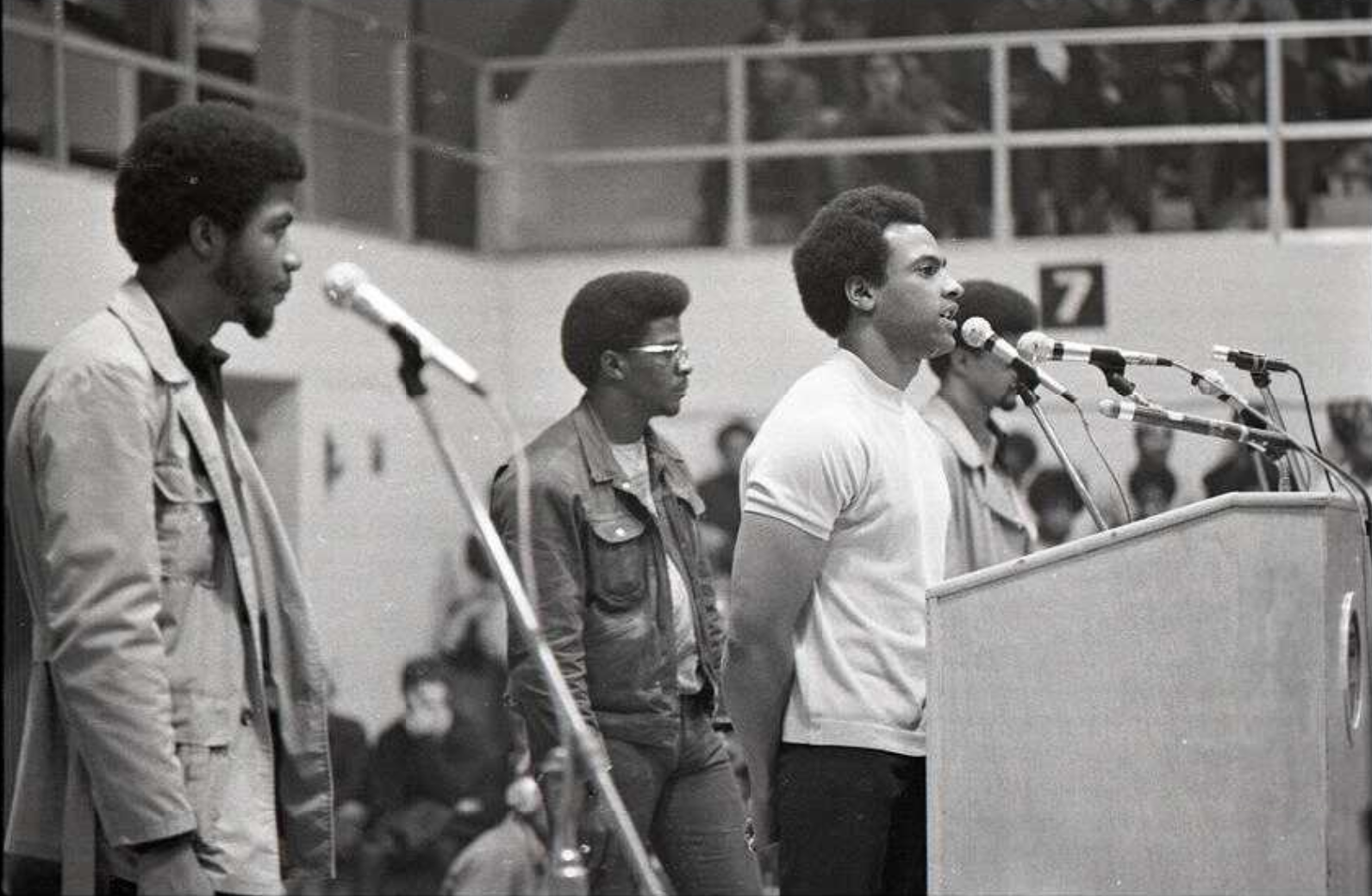
Huey Newton introduces Revolutionary Intercommunalism, Boston College, November 18 1970


