

Karpathy's LLM Knowledge Base Wiki for Enterprise | Vijoy Pandey posted on the topic | LinkedIn
There's a new kind of computer media in the enterprise: Write once, Read never. The docs are perpetually stale, constantly diverging from reality, and scattered across Confluence, SharePoint, GitHub, Webex (or Slack) threads, Notion, Obsidian - and in my personal life, add Apple Notes, Goodnotes, web clippings, and multiple Google Drives worth of docs and slides that nobody is ever going back to. Karpathy tweeted his LLM knowledge base wiki architecture which went viral last weekend and I decided to give it a run yesterday. Verdict: You *have* to try this out. Prediction: You won’t be able to live without it soon. There were a few mods and decisions I made to the base Karpathy provided. First, the vault / folder structure in Obsidian. I already use Obsidian as a human. Instead of creating separate vaults and dealing with the sync nightmare, I just have folders for Human and Agent, and a Raw folder. (1) The Human/ folder is where I write long form articles and notes independent of the knowledge base wiki. No LLM or agent touches this folder. (2) I do have Arnold Layne, my OpenClaw agent, doing background tasks for me. Raw/ is where both Arnold and I, dump raw snippets. Inclusive of diverse kinds of media. (3) The Agent/ folder is where the LLM (Claude in my case) synthesizes the wiki. No human touches this folder. Second, some customizations to CLAUDE.md for enterprise-like usage - (4) Domain extensions - the agent needs to know that quantum computing and agentic AI have different entity types and different provenance thresholds. (5) Primary source protection, when I drop in my own original work, secondary sources can extend it or raise questions against it, but they cannot overwrite it. It sounds like a small thing but its’s not, especially at enterprise scale where provenance actually matters. Karpathy is upfront that what he’s built is working memory for a single agent, and it’s truly remarkable at that. The jump to Shared Context across teams, reconciling conflicting beliefs at org scale, ontologies that don’t collapse under the weight of a hundred contributors - those are much harder problems and what we are exploring with the Internet of Cognition. PS: The screenshot shows my Obsidian vault after just two runs: one with Karpathy’s original tweet and gist file itself (so meta!) and one with our Internet of Cognition paper. Claude (Sonnet) read it, compiled it into structured summaries, entity pages, concept pages, backlinks, merged all the information cohesively, and keeps it all maintained from there. You just read the Wiki. It’s simply magical.

Archiving web sites
I recently took a deep dive into web site archival for friends who were worried about losing co [...]
IIPC WAC 2024 Presentation: A Conceptual Model of Decentralized Storage for Community-Based Archives
Connected Places - Links Collections
Rethinking Digital Storage for Community-Based Archives
Over the last few decades, the standard procedure for storing and backing up data has been ‘put it in the cloud.’ Many of us use cloud…

CCFS cryptographically curated file system
The Internet was originally designed to be a next-generation phone system that could withstand a Soviet attack. Today, we ask the Internet to perform tasks that no longer resemble phone calls in the face of threats that no longer resemble Soviet bombardment. However, we have come to rely on names that can be subverted at every level of the stack or simply be allowed to rot by their original creators. It is possible for us to build networks of content that serve the content distribution needs of today while withstanding the hostile environment that all modern systems face. This dissertation presents the Cryptographically Curated File System (CCFS), which offers five properties that we feel a modern content distribution system should provide. The first property is Strong Links, which maintains that only the owner of a link can change the content to which it points. The second property, Permissionless Distribution, allows anyone to become a curator without dependence on a naming or numbering authority. Third, Independent Validation arises from the fact that the object seeking affirmation need not choose the source of trust. Connectivity, the fourth property, allows any curator to delegate and curate the right to alter links. Each curator can delegate the control of a link and that designee can do the same, leaving a chain of trust from the original curator to the one who assigned the content. Lastly, with the property of Collective Confidence, trust does not need to come from a single source, but can instead be an aggregate affirmation. Since CCFS embodies all five of these properties, it can serve as the foundational technology for a more robust Web. CCFS can serve as the base of a web that performs the tasks of today’s Web, but also may outperform it. In the third chapter, we present a number of scenarios that demonstrate the capacity and potential of CCFS. The system can be used as a publication platform that has been re-optimized within the constraints of the modern Internet, but not the constraints of decades past. The curated links can still be organized into a hierarchical namespace (e.g., a Domain Naming System (DNS)) and de jure verifications (e.g., a Certificate Authority (CA) system), but also support social, professional, and reputational graphs. This data can be distributed, versioned, and archived more efficiently. Although communication systems were not designed for such a content-centric system, the combination of broadcasts and point-to-point communications are perfectly suited for scaling the distribution, while allowing communities to share the burdens of hosting and maintenance. CCFS even supports the privacy of friend-to-friend networks without sacrificing the ability to interoperate with the wider world. Finally, CCFS does all of this without damaging the ability to operate search engines or alert systems, providing a discovery mechanism, which is vital to a usable, useful web. To demonstrate the viability of this model, we built a research prototype. The results of these tests demonstrate that while the CCFS prototype is not ready to be used as a drop-in replacement for all file system use cases, the system is feasible. CCFS is fast enough to be usable and can be used to publish, version, archive, and search data. Even in this crude form, CCFS already demonstrates advantages over previous state-of-the-art systems. When the Internet was designed, there were relatively fewer computers that were far weaker than the computers we have now. They were largely connected to each other over reliable connections. When the Internet was first created, computing was expensive and propagation delay was negligible. Since then, the propagation delay has not improved on a Moore’s Law Curve. Now, latency has come to dominate all other costs of retrieving content; specifically, the propagation time has come to dominate the latency. In order to improve the latency, we are paying more for storage, processing, and bandwidth. The only way to improve propagation delay is to move the content closer to the destination. In order to have the content close to the demand, we store multiple copies and search multiple locations, thus trading off storage, bandwidth, and processing for lower propagation delay. The computing world should re-evaluate these trade-offs because the situation has changed. We need an Internet that is designed for the technologies used today, rather than the tools of the 20th century. CCFS, which regards the trade-off for lower propagation delay, will be better suited for 21st-century technologies. Although CCFS is not preferable in all situations, it can still offer tremendous value. Better robustness, performance, and democracy make CCFS a contribution to the field. Robustness comes from the cryptographic assurances provided by the five properties of CCFS. Performance comes from the locality of content. Democracy arises from the lack of a centralized authority that may grant the right of Free Speech only to those who espouse rhetoric compatible with their ideals. Combined, this model for a cryptographically secure, content-centric system provides a novel contribution to the state of communications technology and information security.
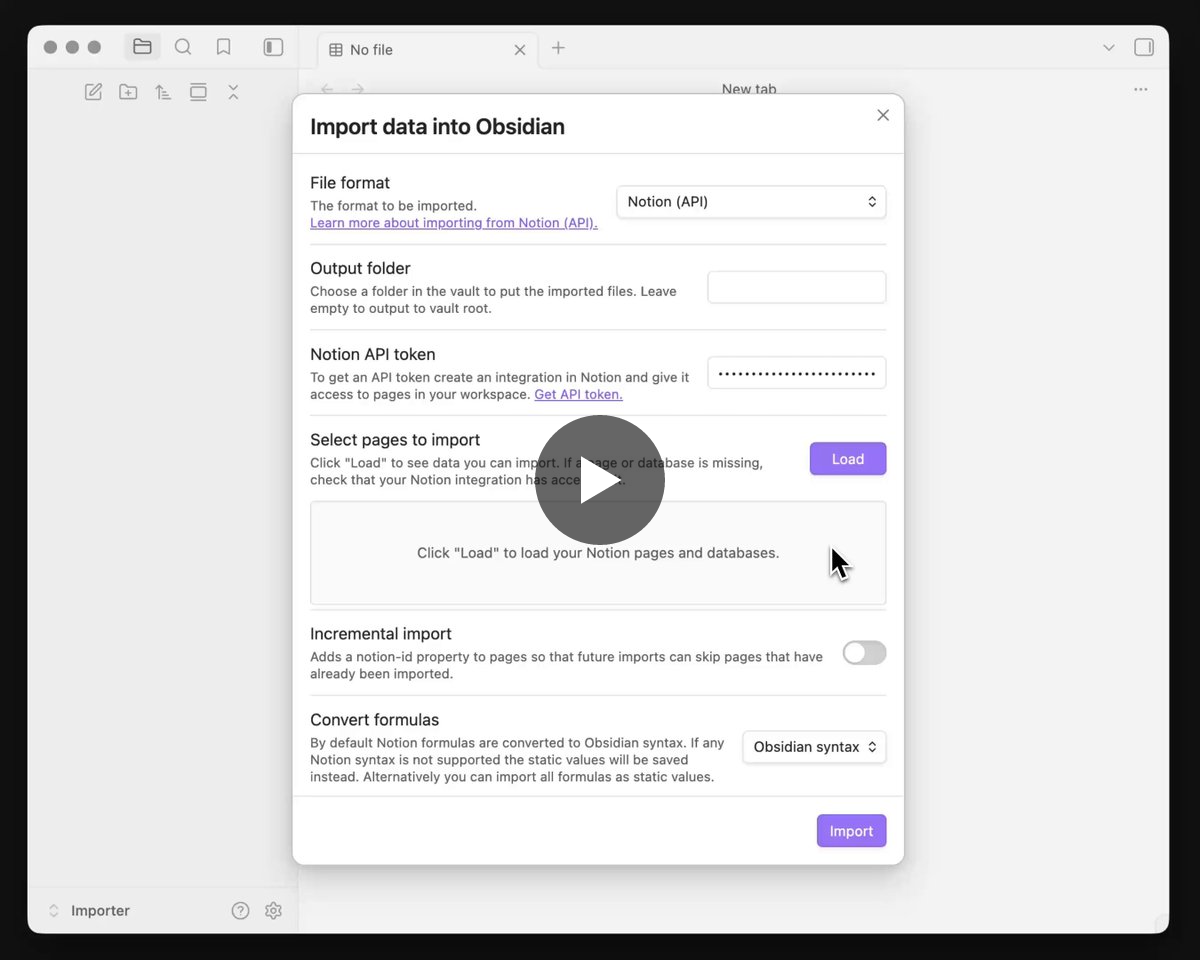
Obsidian on Twitter / X
You can now convert your Notion pages and databases to durable, private, local files.Your data, offline, forever, for free. pic.twitter.com/AOvITLbzWn— Obsidian (@obsdmd) November 22, 2025
Connect or Collect Data? - Sense making
Should WikiSim connect to data rather than collect it?
this is what I am *TALKING* about. I'm sure I'm late but this is such a cool idea from @semble.so. Collections are not new but mapping the specific kind of relationship between two things?? And this is publicly usable shared knowledge? Social knowledge as a service, beautiful.

Taurean
to be fair we are also getting that from projects, I am just greedy and want to see even more. For example with @germnetwork.com, E2EE messaging is not new but multiple sub-identities in one inbox is. Show us something weird and new if/when you adopt an existing experience but for atproto.
Back into blogging and just published something I've been thinking about for a while now – making archival content more resilient and discoverable on atproto. Oral history, interactive transcripts, content addressing, and keeping important stories from being quietly erased. maboa.it/resilient-archives-on-the-at-…

Keeping Archives Alive: Resilience and Discovery on ATProto
maboa.itPost-Archive-Everything

For me personally there is a journey here - I was a firm believer in archive everything. This peaked in a period where I was very interested in IPFS, CIDs, CAS, etc. Now, the next step. Post-Archive(-Everything). Through a series of conversations I came to the conclusion that forgetting is probably more powerful than remembering. The links in this collections play a similar note, or are related to my understanding of this.
Social media (unsorted)

Will probably be sorted into separate collections
Collection of collections: Miscellaneous
Other collections that may eventually be sorted into new collections of collections
Adults in Great Britain now spending more time on mobiles than watching TV
The Attention Economy and the Collapse of Cognitive Autonomy
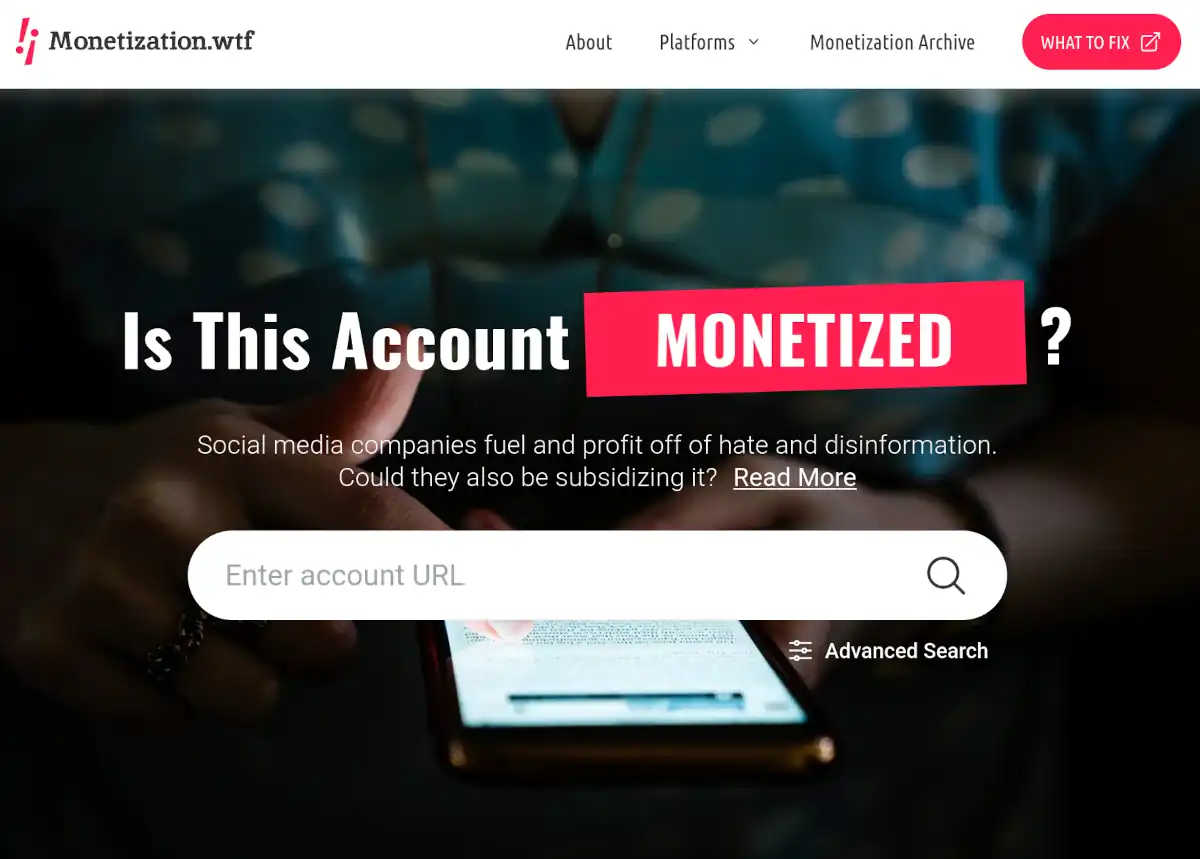
Who Makes Money From Social Media?
People Across the Globe Increasingly Say Social Media Is Harming Democracy

Sharing of misinformation is habitual, not just lazy or biased

How Social Media Rewards Misinformation

FOSDEM 2026 - Willow - Protocols for an uncertain future
Willow - Home
I Deleted My Second Brain
Films (unsorted) (by あ) — Semble
Japanese anti-espionage law (by あ) — Semble
My files (by あ) — Semble
Data leaks in Japan (by あ) — Semble
Greta Thunberg incident (2018) (by あ) — Semble
Russian bot farm misinfo, October 2026 (by あ) — Semble


