


“How can you not be romantic about baseball?” — Moneyball 2011
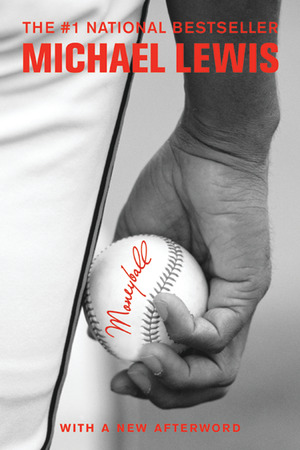
Moneyball: the art of winning an unfair game ; [with a new afterword]
Billy Beane, general manager of MLB's Oakland A's and p…

Analyzing Baseball Data with R (3e)
Back in the late 1980s, as a college student, I would go to the NHL offices in downtown Montreal, and pick up their official end-of-season statistics package. This was something that was reserved for the media, but somehow I had the idea to ask, and they were kind enough to oblige. Since I was learning dBase, I then had to manually enter every piece of data in that package, probably some 20,000 discrete data values. Combining sports, numbers, and computers was a labour of love for me. Add in that in the 1980s, Pete Palmer and Bill James inspired the sabermetric revolution: my career path was set, as was that of thousands more.
The Smart Money Is on Bluesky - Bluesky
Since Bluesky launched, economists, investment strategists, and financial commentators have been building a finance community here, post by post. Now, it’s breaking out.


Moneyball
Michael Lewis’s instant classic may be 'the most influential book on sports ever written' (<em>People</em>), but 'you need know absolutely nothing about baseball to appreciate the wit, snap, economy and incisiveness of [Lewis’s] thoughts about it' (Janet Maslin, <em>New York Times</em>).<br /><br />One of <em>GQ</em>'s 50 Best Books of Literary Journalism of the 21st Century • A <em>Kirkus Review</em> Best Book of the 21st Century (So Far), Moneyball, The Art of Winning an Unfair Game, Michael Lewis, 9780393324815
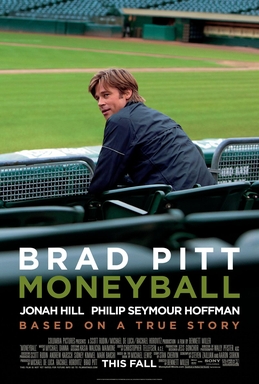
Moneyball (film)
Moneyball is a 2011 American biographical sports drama film directed by Bennett Miller and adapted by Steven Zaillian and Aaron Sorkin. It stars Brad Pitt, Jonah Hill, Philip Seymour Hoffman, Robin Wright and Chris Pratt. The film is based on the 2003 book Moneyball: The Art of Winning an Unfair Game by Michael Lewis, an account of the Oakland Athletics baseball team's 2002 season and their general manager Billy Beane's attempts to assemble a competitive team with half as much money as his rivals. Moneyball follows Beane and his deputy Peter Brand scout the major leagues for undervalued talent by taking a sophisticated sabermetric approach to scouting and analyzing players, triggering skepticism and resentment within the baseball community.
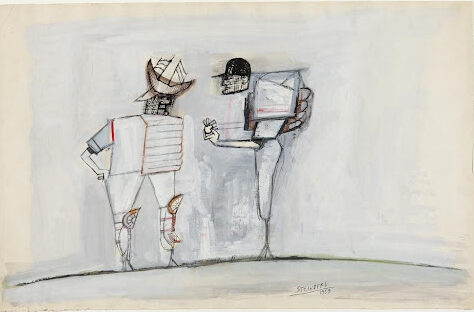
A Philosophical Game: An Interview with Saul Steinberg by Lauren Kane
November 4, 2021 – Steinberg and George Plimpton discuss how the form of sports reflects on nationhood.
Field notes #1: July 2026 - Things your Bluesky can do for you as an artist + Artfight, ArtWHAT? - Field notes: The ARTmosphere
And an overall pulse check on things in the Atmosphere
Bluesky Is Not The Center of The Atmosphere | Sam Clemente | Offprint
The Bluesky app is not—and should not be—an everything app

The Steve Ballmer Interview

BlATBall - Interdimensional Baseball on AT Protocol
this latest “bluesky is dying” wave feels like a good time for me to reshare the talk i gave at Atmosphere Conference 2026 i’m biased of course, but i think it does a pretty damn good job of explaining how we got here and where we’re going i’ve never felt more certain that atproto will “win”

From Toilets to Moths: The Future of Social Media is Weird and Not for Everyone
dame.is
Anil Dash
It's important to understand: social networks are not meant to be one-size-fits all! When Meta (which makes Threads, as well as Facebook and Instagram) creates platforms that have hundreds of millions of users, they do things like enable genocides, where tens of thousands of innocent people die.
🐝 Bluesky/Atmosphere (SB Commentary)

things I said about Bluesky and the greater atmosphere

Bee 🐝 (@sweetbee.vip)
Bee 🐝 (@sweetbee.vip)
Bee 🐝 (@sweetbee.vip)
Bee 🐝 (@sweetbee.vip)
Bee 🐝 (@sweetbee.vip)
Bee 🐝 (@sweetbee.vip)
