

Tools for deliberative democracy.
Five Dimensions of Scaling Democratic Deliberation: With and Beyond AI
DemocracyNext's new paper on Five dimensions of scaling democratic deliberation: With and beyond AI
Scoping report: Future challenges to democracy | CoP CC on Participatory and Deliberative Democracy
The report from the European Commission identifies 10 key challenges and emerging trends impacting European democratic systems and suggests future policy options. These challenges are structured across three interconnected levels: citizens and societal dynamics, the information and knowledge environment, and institutions and the democratic system. This framework aims to provide a comprehensive and integrated view of democracy as a connected ecosystem, emphasising how challenges in one area can affect the entire system.
New Project to Tackle the Challenge of Scaling Democratic Innovations | CoP CC on Participatory and Deliberative Democracy
The “Missing Link” between Research and Society
Democracy and the Epistemic Commons
The Consilience Project is a publication of the Civilization Research Institute (CRI)

Democracy Policy Network
Together, we can build the foundation for a deeper democracy.
Liquid Democracy: True Democracy for the 21st Century
Liquid Democracy, a subset of Delegative Democracy, is a powerful voting model for collective decision making in large communities. Liquid…
Bridging Voting and Deliberation with Algorithms: Field Insights from vTaiwan and Kultur Komitee
Democratic processes increasingly aim to integrate large-scale voting with face-to-face deliberation, addressing the challenge of reconciling individual preferences with collective decision-making. This work introduces new methods that use algorithms and computational tools to bridge online voting with face-to-face deliberation, tested in two real-world scenarios: Kultur Komitee 2024 (KK24) and vTaiwan. These case studies highlight the practical applications and impacts of the proposed methods. We present three key contributions: (1) Preference-based Clustering for Deliberation (PCD), which enables both in-depth and broad discussions in deliberative settings by computing homogeneous and heterogeneous group compositions with balanced and adjustable group sizes; (2) Human-in-the-loop MES, a practical method that enhances the Method of Equal Shares (MES) algorithm with real-time digital feedback. This builds algorithmic trust by giving participants full control over how much decision-making is delegated to the voting aggregation algorithm as compared to deliberation; and (3) the ReadTheRoom deliberation method, which uses opinion space mapping to identify agreement and divergence, along with spectrum-based preference visualisation to track opinion shifts during deliberation. This approach enhances transparency by clarifying collective sentiment and fosters collaboration by encouraging participants to engage constructively with differing perspectives. By introducing these actionable frameworks, this research extends in-person deliberation with scalable digital methods that address the complexities of modern decision-making in participatory processes.

Democracy x AI Cohort | Mozilla Foundation
The Democracy x AI cohort is founded on the hypothesis that, if built differently, AI could strengthen democracy rather than erode it.

A Roadmap to Democratic AI — The Collective Intelligence Project
Our roadmap outlines concrete steps that can be taken in 2024 to build a more democratic AI ecosystem that is adaptive, accountable, processes decentralized information, provides public goods, and safeguards human wellbeing. We describe what the ecosystem could build, research, advocate for, and fun
Another Democratic Future | Substack
DemocracyNext brings you stories, research, and reflections on the global deliberative wave. Click to read Another Democratic Future, a Substack publication with thousands of subscribers.

Digital Democracy in the Age of AI
For many participants, this was their first interaction with AI in a deliberative context.
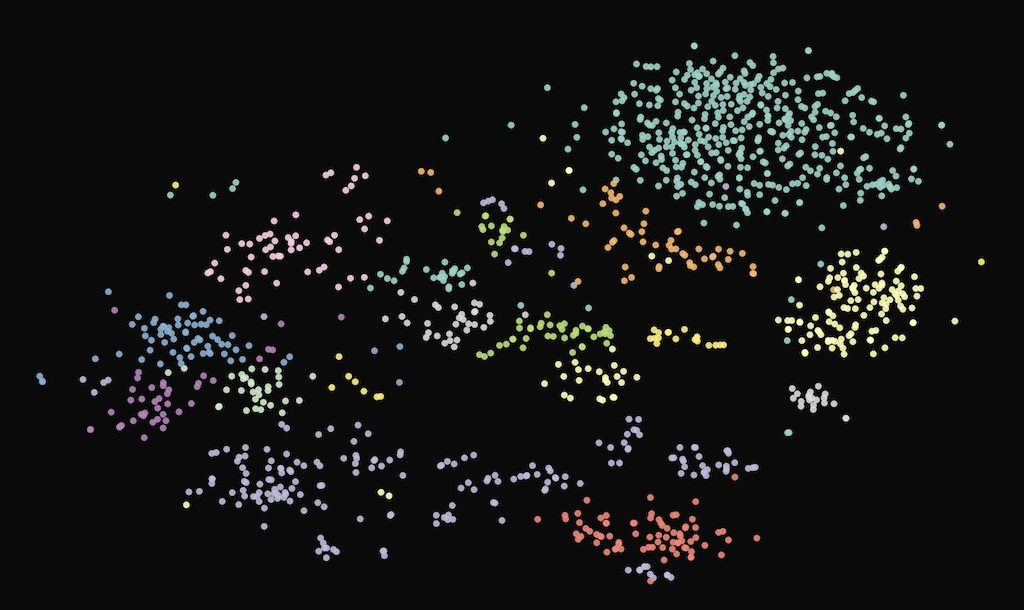
Democracy as a Scaled Collective Intelligence Process: Points of Vulnerability and Augmentation
As part of the Digital Library's transition to Open Access, new features for researchers are available in the Premium Edition. Click here to learn more.

Generative AI for Pro-Democracy Platforms · From Novel Chemicals to Opera
Online discourse faces challenges in facilitating substantive and productive political conversations. Recent technologies have explored the potential of generative AI to promote civil discourse, encourage the development of mutual understanding in a discussion, produce . . .

Democracy is an epistemic discipline, it only works if truth can constrain power. Without a faster, more transparent architecture for shared reality, the arc of democracy bends away from substance, through simulation, and toward authoritarianism. Without major action, it's the inevitable end state.
How will democracy work in the 21st century?

Exploring and understanding how democracy is and must evolve to support self governance and open societies into the future
AI for mass deliberation and bridge-building
How AI (LLMs, bridging-based ranking, Polis) is used to involve many people in deliberation and synthesize common-ground statements: Israeli-Palestinian peacebuilding, Taiwan's vTaiwan/Polis, and the Habermas Machine.

How a permanent Citizens' Assembly in Paris passed a bill into law
Another Democratic Future | Substack
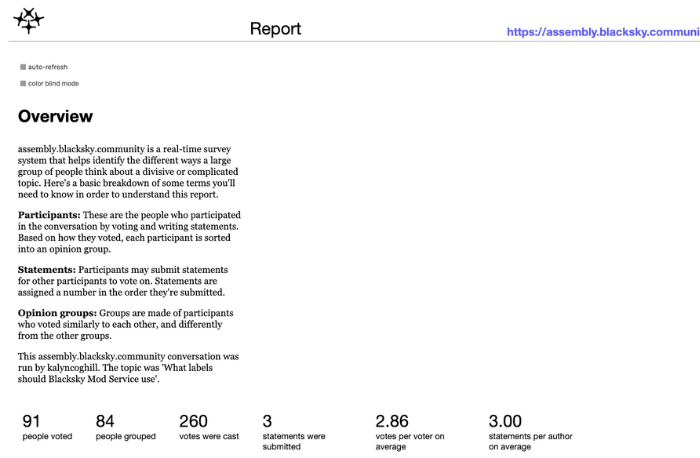
What Happens When You Have a Choice? : A Breakdown of The People's Assembly and Blacksky's Vision for Democratic Tooling

Home - LogiVote
Plurality

One year on: The momentum behind Jigsaw’s Sensemaking AI
Generative AI for Pro-Democracy Platforms · From Novel Chemicals to Opera

The levers of political persuasion with conversational artificial intelligence
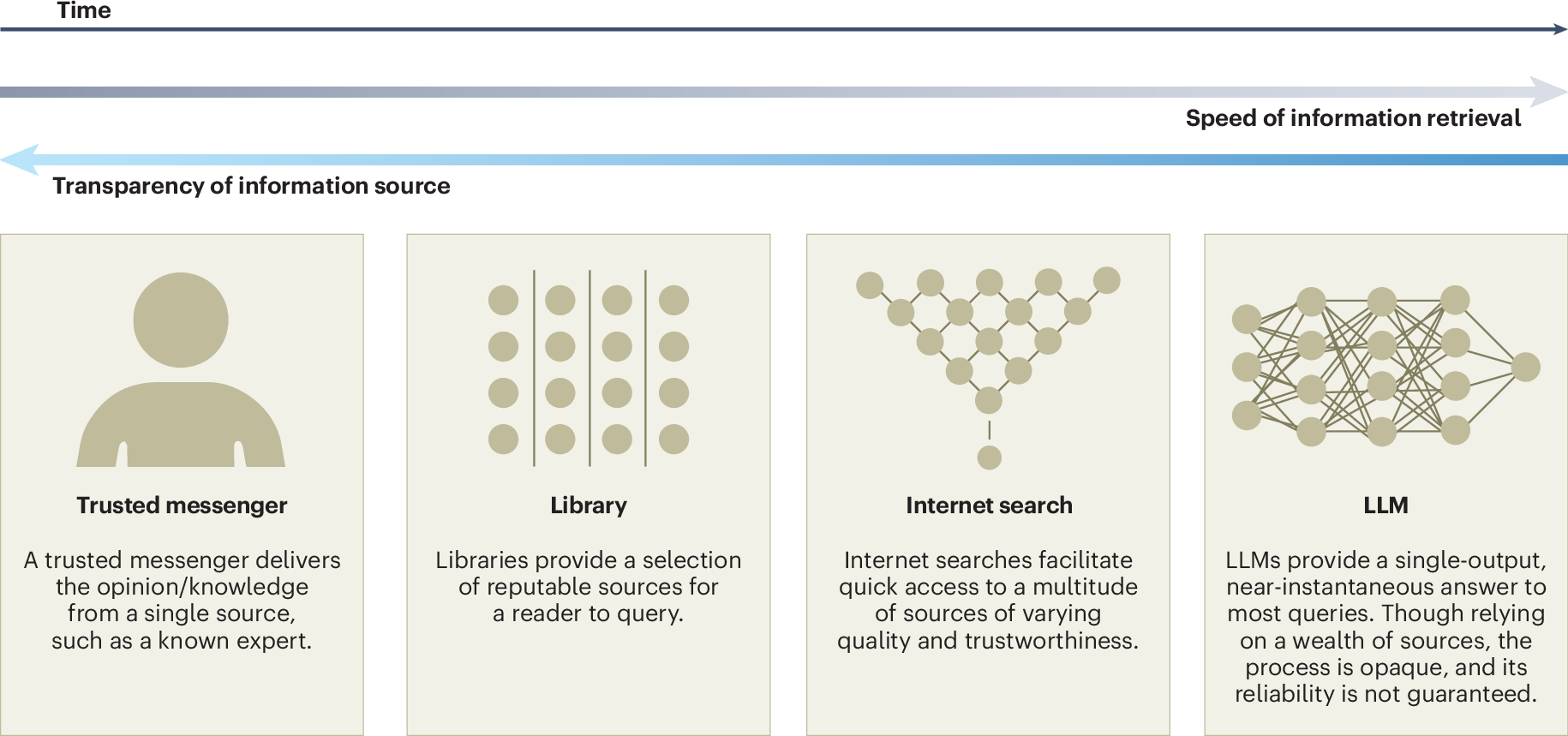
How large language models can reshape collective intelligence
Democracy as a Scaled Collective Intelligence Process: Points of Vulnerability and Augmentation
Bridging Voting and Deliberation with Algorithms: Field Insights from vTaiwan and Kultur Komitee
vTaiwan
