

How does digital affect publishing spaces? How do we talk about these effects?

The Journal Article Is Not the Job - The Scholarly Kitchen
There is more and more skepticism toward the role of publishers, a steady commoditization of publishing services, and growing fragmentation across the research ecosystem. If that is the case, the question is no longer what publishers do, but how that value is understood and extended.


Thoughts on Cyberpositionality: The Construction of Digital Communities in Digital Spaces, Damien Patrick Williams
I found Rebecca Monteleone, Martin Perez Comisso, and Elma Hajric’s “Cyberpositionality: Sociotechnical Location in the Digital Age” (2024) to be an extremely timely and important article which can…

Publishing is fucked. The ATmosphere could save it. | Paul Stephenson | Offprint
Building a future for publishing that keeps authors and readers at its heart.

Everything is miscellaneous : the power of the new digital disorder
Includes bibliographical references (p. [235]-257) and index; Prologue : information in space -- The new order of order -- Alphabetization and its discontents -- The geography of knowledge -- Lumps and splits -- The laws of the jungle -- Smart leaves -- Social knowing -- What nothing says -- Messiness as a virtue -- The work of knowledge -- Coda : misc; Philosopher Weinberger shows how the digital revolution is radically changing the way we make sense of our lives. Human beings constantly collect, label, and organize data--but today, the shift from the physical to the digital is mixing, burning, and ripping our lives apart. In the past, everything had its one place--the physical world demanded it--but now everything has its places: multiple categories, multiple shelves. Everything is suddenly miscellaneous. Weinberger charts the new principles of digital order that are remaking business, education, politics, science, and culture. He examines how Rand McNally decides what information not to include in a physical map (and why Google Earth is winning that battle), how Staples stores emulate online shopping to increase sales, why your children's teachers will stop having them memorize facts, and how the shift to digital music stands as the model for the future.--From publisher description; From A to Z, Everything Is Miscellaneous will completely reshape the way you think - and what you know - about the world. Includes information on alphabetical order, Amaxon.com, animals, Aristotle, authority, Bettmann Archive, blogs (weblogs), books, broadcasting, British Broadcasting Corporation (BBC), business, card catalog, categories and categorization, clusters, companies, Colon Classification, conversation, Melvil Dewey, Dewey Decimal Classification system, Encyclopaedia Britannica, encyclopedia, essentialism, experts, faceted classification system, first order of order, Flickr.com, Google, Great Books of the Western World, ancient Greeks, health and medical information, identifiers, index, inventory tracking, knowledge, labels, leaf and leaves, libraries, Library of Congress, links, Carolus Linnaeus, lumping and splitting, maps and mapping, marketing, meaning, metadata, multiple listing services (MLS), names of people, neutrality or neutral point of view, New York Public Library, Online Computer Library Center (OCLC), order and organization, people, physical space, everything having place, Plato, race, S.R. Ranganathan, Eleanor Rosch, Joshua Schacter, science, second order of order, simplicity, social constructivism, social knowledge, social networks, sorting, species, standardization, tags, taxonomies, third order of roder, topical categorization, tree, Uniform Product Code (UPC), users, Jimmy Wales, web, Wikipedia, etc

xpubliverse
XPUB’s interests in publishing are therefore twofold: first, publishing as the inquiry and participation into the technological frameworks, political context and cultural processes through which things are made public; and second, how these are, or can be, used to create publics.
Publishing Beyond the Market: Open Access, Care, and the Commons
<I>Publishing Beyond the Market</I> argues that the move to open access should focus less on the free accessibility of research outputs and more on who controls the publications and infrastructures for scholarly communication. By deploying theoretical literature on science and technology studies, care ethics, and the commons, the book critically interrogates open access and reimagines a more ethical future for researcher-led publishing. A case study of Plan S—the multifunder European policy for open access publishing—explores its tendency to rehearse all the failures of commercialisation. Through critical engagement with the open access landscape, the book reveals the shortcomings of market-centric and policy-based approaches to open access book and journal publishing, particularly their tendency to reinforce conservatism, commercialism, and private control of publishing.<BR /><BR /> Going forward, <I>Publishing Beyond the Market</I> explores the importance of collectivity and democratic governance within the transition to open access publishing. It suggests that developing a commons-based, scholar-led publishing landscape through a series of presses that are each managed by working academics could offer a productive counterpoint to marketised systems of open access and subscription publishing. In weaving themselves together in order to "scale small" these publishing initiatives would act as a counter-hegemonic project based on mutual reliance and care. By illustrating how these projects build toward a commons-based publishing future, and how they may complement other approaches to publishing within university presses and libraries, the book culminates in an argument for the infrastructures, policies, and forms of governance needed to nurture such a collective vision.

Research Fiction: Storytelling, Plot and Design
As part of the Digital Library's transition to Open Access, new features for researchers are available in the Premium Edition. Click here to learn more.

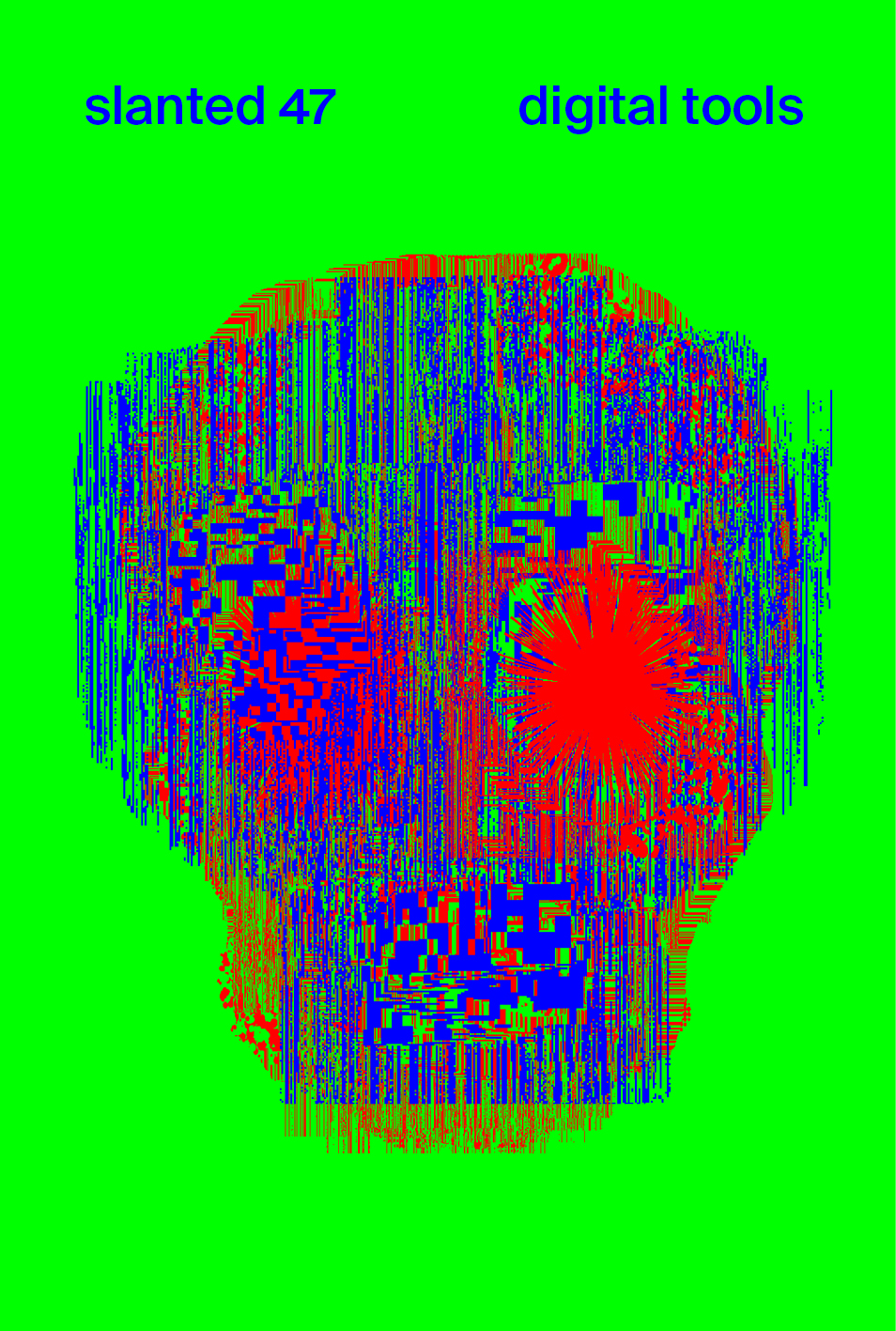
Slanted Magazine #47—Digital Tools - slanted
Slanted Magazine #47—Digital Tools examines the instruments that shape contemporary creative practice and offers an insight into the global creative scene.
Publications
(Re)envisioning and creating just and sustainable futures for information technologies.
Digital Locality | The Paper Pilot
The Paper Pilot's digital garden of thoughts on philosophy, politics, and sociology
Digital Placemaking

What does it mean to make a digital space into a place?
Science in the Digital Era

How does scientific research adapt to digital media and automated information processing? What are the opportunities, what are the risks?

Gradients of intimacy and creating shelter: An interview with Erin Kissane

When the Internet Was a Place - Front Porch Republic

Law and Borders - the Rise of Law in Cyberspace
AI and the future of digital public squares
Ambient Co-presence

Spatial Communication in Level Design
Leibniz book
Konrad Hinsen's blog
Konrad Hinsen's blog
Konrad Hinsen's blog
Konrad Hinsen's blog
Konrad Hinsen's blog