

The industry-established code review process, review-then-commit, was a straightforward mechanism that allowed a relatively low-trust group of engineers to collaborate. It appears to have been initially developed for the Apache server OSS project in the 90s, corporatized by Google in the early 2000s, and popularized throughout the industry by several means, most notable of which was the GitHub PR.
Gerrit Code Review | Gerrit Code Review
The open source, patchset based, code review platform for Git-based development
Review the reviews
When I was actively contributing to the Go project, my primary feed was the code review email firehose. Issues, mailing lists, and Slack had low SNR. The finished commit history was better: it was finely polished work with some of the best written commit messages I have ever encountered. But it didn’t hold a candle to code reviews for operational learning. The commit history could tell you what got done and why, in impressive technical detail.
Code Repository - Git Source Control | Harness
Host Git repositories in Harness, manage pull requests, and connect every commit to secure CI/CD workflows with source-to-deploy traceability.
Software Is Made Between Commits
From the Zed Blog: Agents turned the conversation into the real source of our software. DeltaDB is the version control built for it.
Decent Code Collaboration Concepts after Git(Hub)
Mon, Oct 5, 7:00 PM GMT+2 · c-base, 20, Rungestraße, Luisenstadt, Mitte, Berlin, 10179, Germany GitHub is on the decline and a centralized SPOF in the hand of a huge corporate anyway. So it's re
Better tools made Copilot code review worse. Here's how we actually improved it.
How migrating Copilot code review to shared Unix-style code exploration tools reduced review cost by reshaping agent workflows around pull request evidence.

The End of Code Review: Coding Agents Supersede Human Inspection
Code review has been the primary quality gate in software development since Fagan formalised code inspection in 1976. For five decades, having a human examine and comment on a colleague's changes before merge has been a cornerstone practice at organisations of every size. Coding agents are large language model (LLM)-based autonomous systems capable of reading, writing, testing, and repairing software. We argue that coding agents have crossed a threshold of capability at which traditional human code review is no longer a necessary component of a software quality pipeline. Our argument rests on two claims: every stated goal of code review can be served by agents at lower cost and higher throughput; the naive integration in which agents write code and humans remain the mandatory reviewers is a dead end because it neither provides meaningful assurance nor scales with AI-assisted throughput.

Ditching GitHub
This is going to be some sort of a public service announcement, withside notes. This has been brewing for a long, long time (years), it’sjust that I never se...
GitHub’s one-dimensional view of open source contributions – Wes McKinney
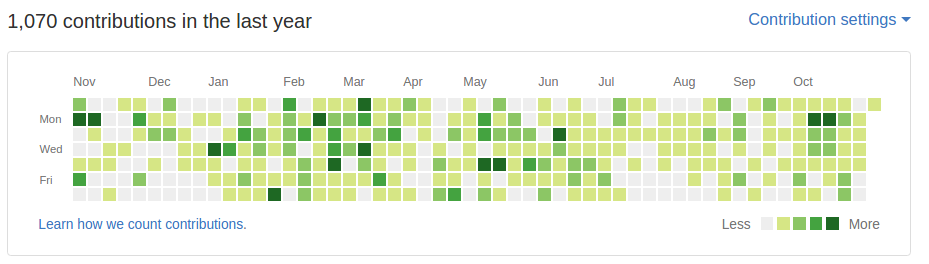
TL;DR One of the most harmful parts of the GitHub platform is the code contribution calendar. This “hacker score card” overemphasizes the value of commits over the other kinds of important contributions to open source projects, like doing code reviews and discussing bugs and new features on the issue tracker.
Microsoft + GitHub = Empowering Developers - The Official Microsoft Blog
Today, we announced an agreement to acquire GitHub, the world’s leading software development platform. I want to share what this acquisition will mean for our industry and for developers. The era of the intelligent cloud and intelligent edge is upon us. Computing is becoming embedded in the world, with every part of our daily life...

How We Exploited CodeRabbit: From a Simple PR to RCE and Write Access on 1M Repositories - Kudelski Security Research Center
Aug 19, 2025 - Nils Amiet -
Contributions and the Latest Generation
Simon Phipps wrote a particularly interesting article on project governance in the “GITHUB generation.” The article is very good reading, and thought-provoking. In it, he articulates, …

Introducing the Open-Source Codex Security CLI
Codex Security helps security and engineering teams find, confirm, and fix vulnerabilities. Use its command-line interface (CLI) to scan repositories you own or have permission to assess, review findings over time, and check changes before they land. Quickstart Guide for an interactive scan Cloud set-up for connected GitHub repositories Link to the public repo: Codex Security This is an early release, and we’re listening to your feedback as we continue improving it. The Codex Security CLI ...
