

Please note that this is a copy of the “Bloom’s Taxonomy” guide produced by the Vanderbilt University Center for Teaching, archived in March 2023. The guide was released under a Creative Commons BY-NC license, so you’re free to reuse it as long as you provide attribution to the Vanderbilt University CFT and don’t try to make money from it. This is an archive copy and won’t be updated. View other archived teaching guides here.
The Motivation Blueprint | Learning Development Accelerator | Professional L&D Community
You can buy an ebook from us directly or wherever ebooks are sold (Apple Books, Amazon, B&N, etc..

Twelve Emerging Best practices for Adding UX Work to Agile Development
How experienced UX practitioners have adapted to work happily in Agile environments
Moving On From Agile Engineering | Built In
Nineteen years after the Agile Manifesto was formalized, agile engineering is still on the tips of tongues, from everyday developers to corporate executives. Mary Poppendieck, however, is ready for the next thing.

Emergent complexity, agile programming and the future of embedded systems design - Embedded
At the most recent Embedded Systems Conference in Boston, emergentcomplexity was discussed in a class presented by Brian Cruickshank,titled "Keeping Agile

SPIDR: Five Simple but Powerful Ways to Split User Stories - Mountain Goat Software
Online and in-person training to help you succeed with agile

Learn anything with the /teach skill
skills/openverse/SKILL.md at main · toosean/skills
the skills i wrote. Contribute to toosean/skills development by creating an account on GitHub.
Maven | Lightning Lessons
Short, free, live course previews with tactical tips & tools. Taught by Maven's experts in AI, Product, Leadership, Design, Data & engineering, Marketing & sales, and Business & finance.

Welcome to Software Foundations in Coq

Open Source Goal Setting — Open Tech Strategies | Blog
Treat this list as a menu, not a buffet. Pick three items and make them your high priority targets. Focus on effects that connect best to your strategy, and, ultimately, to your organization's mission. You need to know where you want to go before you can chart a course to get there. We've broken the goals into three categories, but you can mix and match across or within categories as you please.
Design for a Living Planet: Settlement, Science, & the Human Future
In this brief, accessible volume, the authors — an urban philosopher and a mathematician-physicist — explain the surprising new findings from the sciences that are beginning to transform environmental design in the modern era. Authors Michael Mehaffy and Nikos Salingaros explore fractals, networks, self-organization, dynamical systems and other revolutionary ideas, describing them to non-science readers in a direct and engaging way. The book also examines fascinating new topics of design, including Agile, Wiki, Design Patterns and other “open-source” approaches from the software world. The authors conclude that a profound transformation is under way in modern design — and today’s students and practitioners will need to be aware of its implications for our future.“Lucidly describes what’s coming in the world of design — and what needs to come.” — Ward Cunningham, Inventor of wiki, and pioneer of Pattern Languages of Programming, Agile, and Scrum“Essential reading for all urban designers.” — Jeff Speck, Author of Walkable City“Brilliant.” — Charles Montgomery, Author of Happy City“Inspired, compelling and fascinating… Recognizes that a true architecture can be dug from the facts, insights, and theories, that occur with a broadening of science to include the human being.” — Christopher Alexander, Author of A Pattern Language and Notes on the Synthesis of FormSome comments on the individual chapters:“Packed with detail and beautiful in presentation.” — Gil Friend“Human society must find a path of retreat. Salingaros and Mehaffy point the way.” — David Brussat, Providence Journal“Michael Mehaffy and Nikos Salingaros have written some brilliant articles on how we can co-create cities which are truly resilient, rather than being ‘engineered resilient’.” — Smallworld Urbanism“For me, this essay was like a flash of insight, and I suddenly saw the world in a new light.” — Oeyvind Holmstad, Permaliv“We’ve just come across a very thoughtful article by Michael Mehaffy and Nikos Salingaros… [who] draw a number of lessons from biological systems and use them to draw conclusions about how resilient human systems must be designed.” — Resilient Design Institute“Salingaros and Mehaffy take us from the configuration of city spaces to the order of cells in living beings.” — Jaap Dawson, Delft Institute of Technology“If you wanted to know where the cutting edge was in urban design, it is here.” — Patrick J. Kennedy, CarFreeInBigD“This is the single most intelligent and illuminating article I’ve seen on Archdaily in 3 years.” — Nìming Pínglùn Zhě, ChinaMichael Mehaffy is an urbanist and design theorist, and a periodic visiting professor or adjunct in five graduate universities in four countries and three disciplines (architecture, urban planning and philosophy) including the University of Oregon (US) and the University of Strathclyde (UK). He has been a close associate of the architect and software pioneer Christopher Alexander, and a Research Associate with the Center for Environmental Structure, Alexander’s research center founded in 1967. He is currently executive director of Portland, Oregon based Sustasis Foundation, and editor of Sustasis Press.Nikos A. Salingaros is a mathematician and polymath known for his work on urban theory, architectural theory, complexity theory, and design philosophy. He has been a close collaborator of the architect and computer software pioneer Christopher Alexander. Salingaros published substantive research on Algebras, Mathematical Physics, Electromagnetic Fields, and Thermonuclear Fusion before turning his attention to Architecture and Urbanism. He is Professor of Mathematics at the University of Texas at San Antonio and has been on the Architecture faculties of universities in Italy, Mexico, and The Netherlands.
GitHub - bmad-code-org/BMAD-METHOD: Breakthrough Method for Agile Ai Driven Development
Breakthrough Method for Agile Ai Driven Development - bmad-code-org/BMAD-METHOD
Bobby Grayson - Deciduous
Knowledgebase Apps

Long form writing. Group access control. OIDC so we can use atproto. The commercial versions would be Notion or Confluence. An open version would be Outline Wiki.
knowledge management

Scuba
Reams
Portent

v2 Editor

Memex AI Journal App — Open Source, Local-First, iOS & Android
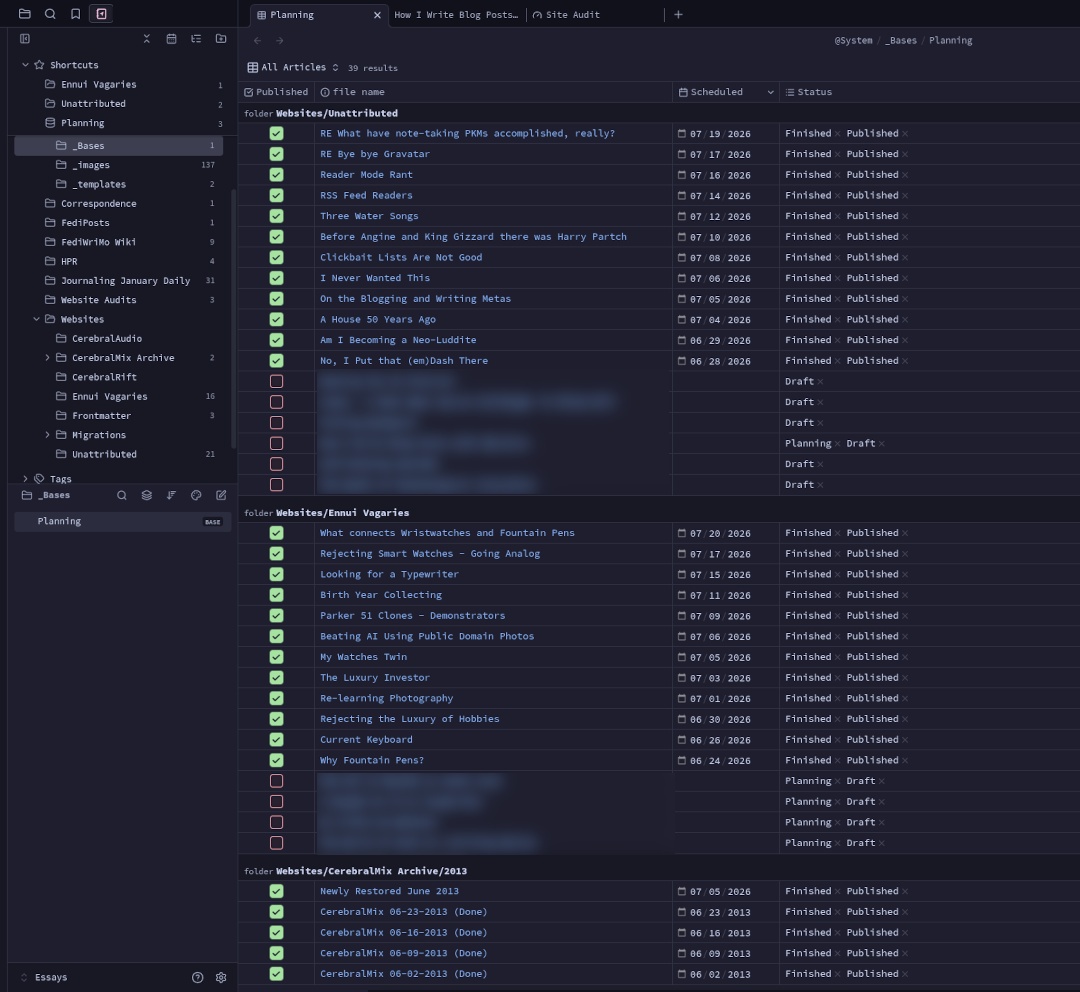
How I Write Blog Posts with Obsidian — Unattributed
Anytwo and the future of Anytype

Fichiers - La Suite Numérique
Docs - La Suite Numérique

Docs — Turn your team's content into knowledge
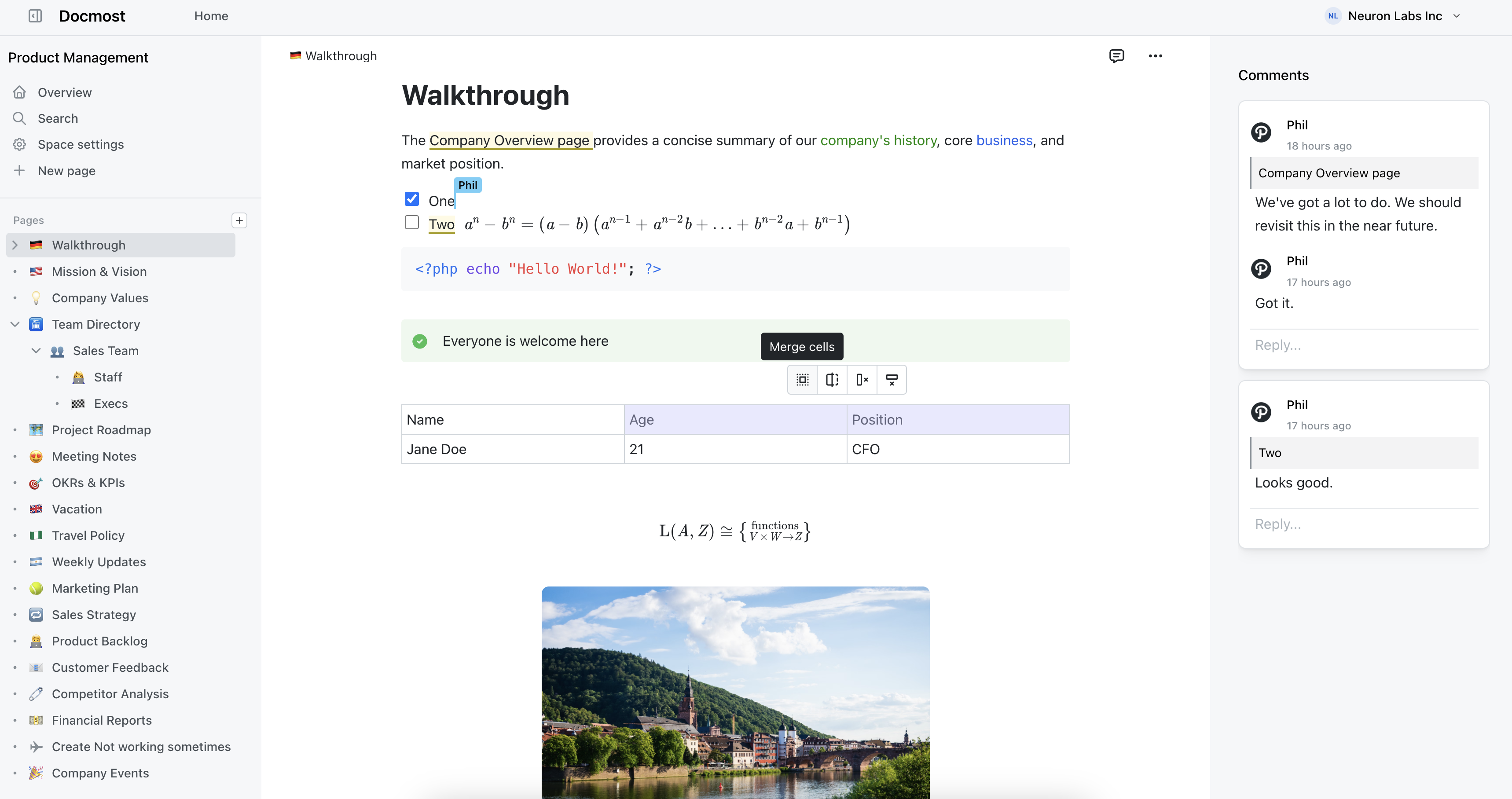
Enterprise-ready Wiki for Teams | Docmost
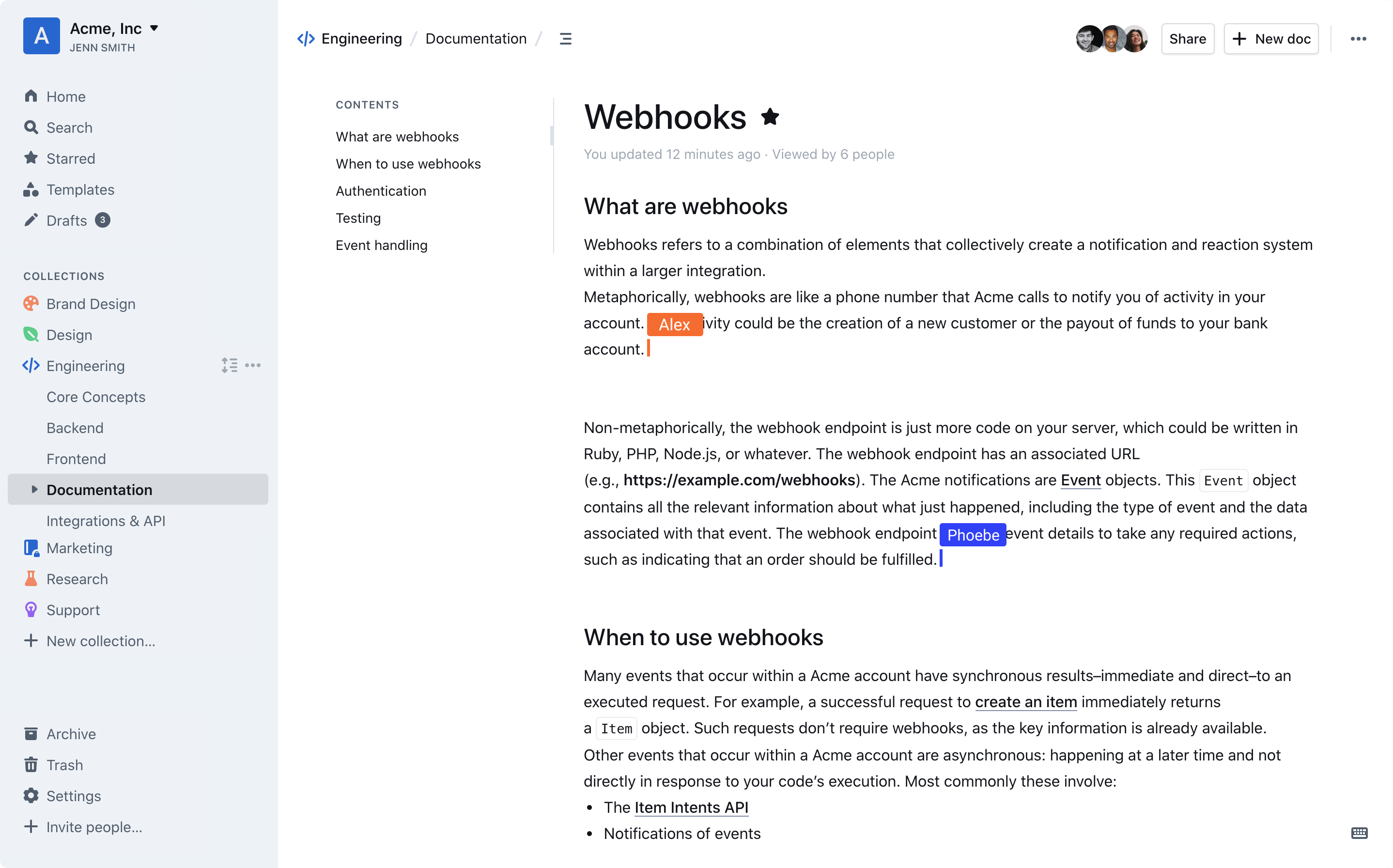
Outline – Team knowledge base & wiki