

IMHO, there is no “reply guy” anti-pattern, and I wish people would stop using that toxic term. There is something I call the living room problem, and it affects all social media to some degree, because social media confuses locality. We’re not really evolved to navigate cyberspace. Even that name is a hint of that. Because cyberspace is information, which can be linked in a myriad of dimensions. But what we’re evolved to navigate is three dimensional space. And so our social norms are, to so...
Introducing a network for thoughtful conversations
The quality of conversations on the Internet is terrible. Most platforms like Twitter, Facebook, Instagram, Reddit, etc. optimize for engagement as their key metric. This spawns and rewards behavior that leads to bragging of gameable metrics such as likes and followers, self-feeding thought bubbles, knee-jerk reactions, “if you’re not on our side, you’re on their side” mentality, and thought policing even by people who think they’re fighting for a good cause. Today’s Internet doesn’t incentiviz
Anatomy of an internet argument
Social media isn't toxic, most people just haven't figured out the game (yet)
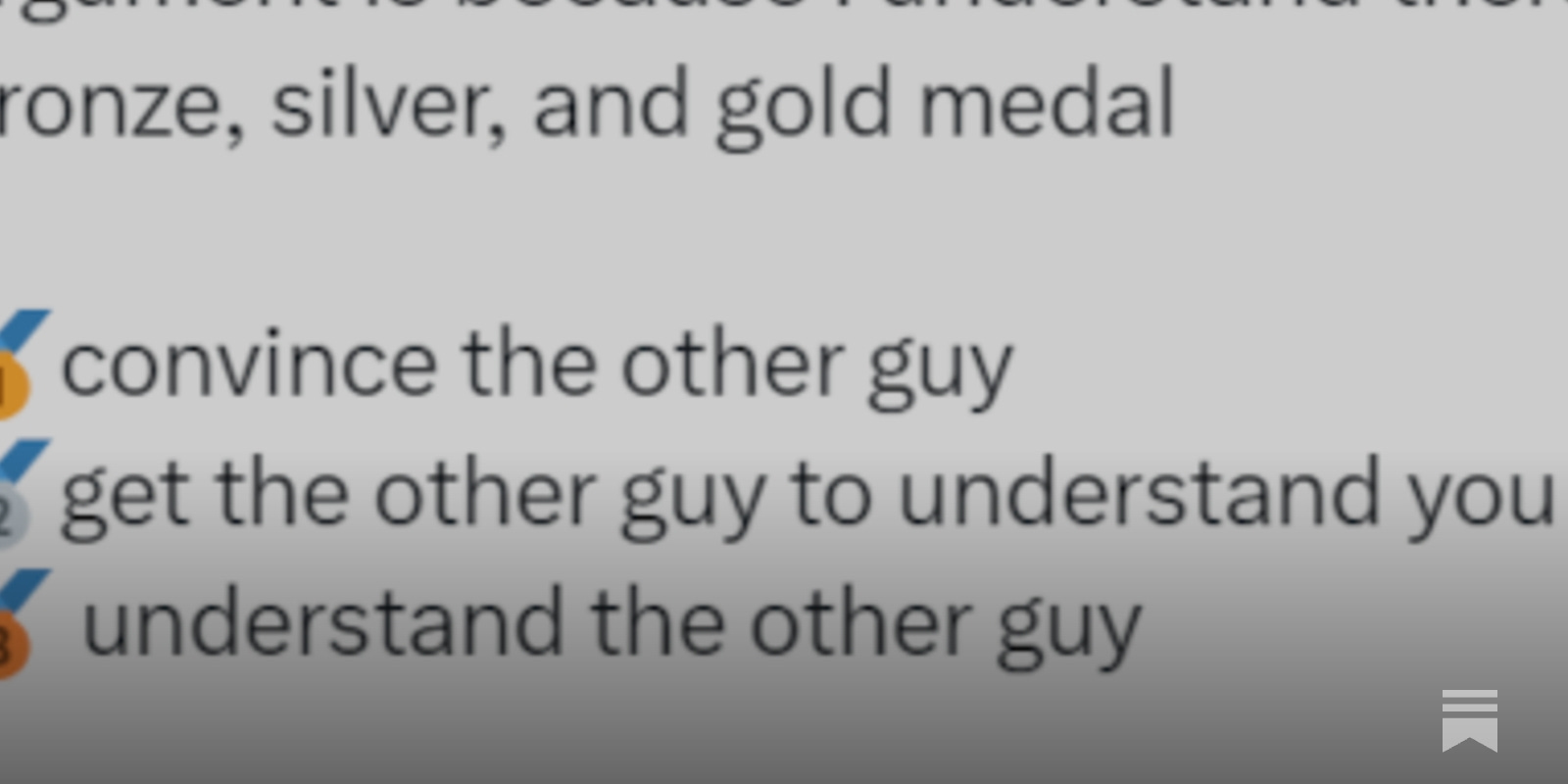
Social media is a gnarly coordination problem we need to decompose - a warm space
matt.evil.gay/secretsky
Private microblogging for mutual follows, built on ATProto Spaces.
matt.evil.gay/secretsky
Private microblogging for mutual follows, built on ATProto Spaces.
X's Algorithm Feeds Off Ragebait and Impacts Democrats More, Study Finds
X is driving engagement by making users fight in the replies.
The Noisy Room
Only 3% of social media users post toxic content — but Americans estimate 43%. An interactive essay.
AI-generated ‘slop’ is slowly killing the internet, so why is nobody trying to stop it? | Arwa Mahdawi
Low-quality ‘slop’ generated by AI is crowding out genuine humans across the internet, but instead of regulating it, platforms such as Facebook are positively encouraging it. Where does this end, asks Arwa Mahdawi

A space to converse and connect.
An X/Twitter Spaces alternative for Bluesky and the open web. Creating good vibes in the friendly skies.

Rewilding the internet with ATProto
So far, many of the projects in the ATProtocol ecosystem have focused on bringing parity—making projects that replicate our existing tools and platforms, but with the affordances of the protocol instead. That's cool and we need to do that, but I think we can go much farther, and take this opportunity to challenge some of the biggest assumptions of what the modern internet is for, who builds it, and how we interact with it. This talk is in conversation with several of the talks from last year, and in I'll argue that we'll never get away from skeuomorphism until we've fundamentally changed the definition of what "the social internet" means in the first place.
Shifts in U.S. Social Media Use, 2020–2024: Decline, Fragmentation, and Enduring Polarization
The social media ecosystem appears to be in flux. Twitter’s rebranding to X has come to symbolize a broader reorganization of online publics – political reshuffling, user attrition, and uncertainty over the role of legacy platforms. Simultaneously, the shift from text-based, networked feeds toward algorithmically curated, short-form video has accelerated, with TikTok setting the pace for the wider ecosystem [18, 14, 16]. At the same time, everyday communication increasingly migrates from large, open networks to semi-private spaces such as group chats and messaging apps. Commentators describe a digital public sphere in transition: smaller, more fragmented, less dominated by traditional social networking sites, and rise of more broadcast-oriented forms of media – with some even suggesting that we are seeing the beginning of the end of the social media era.
Choosing to Stay Human
If you go to your favorite social media site, you will find it full of posts that start to look suspiciously similar to each other:
communicating open social networks to normies - SPACEGIRL transmissions
(or, how communication is hard, most people aren't berry-tasters, and we are really bad at naming things)
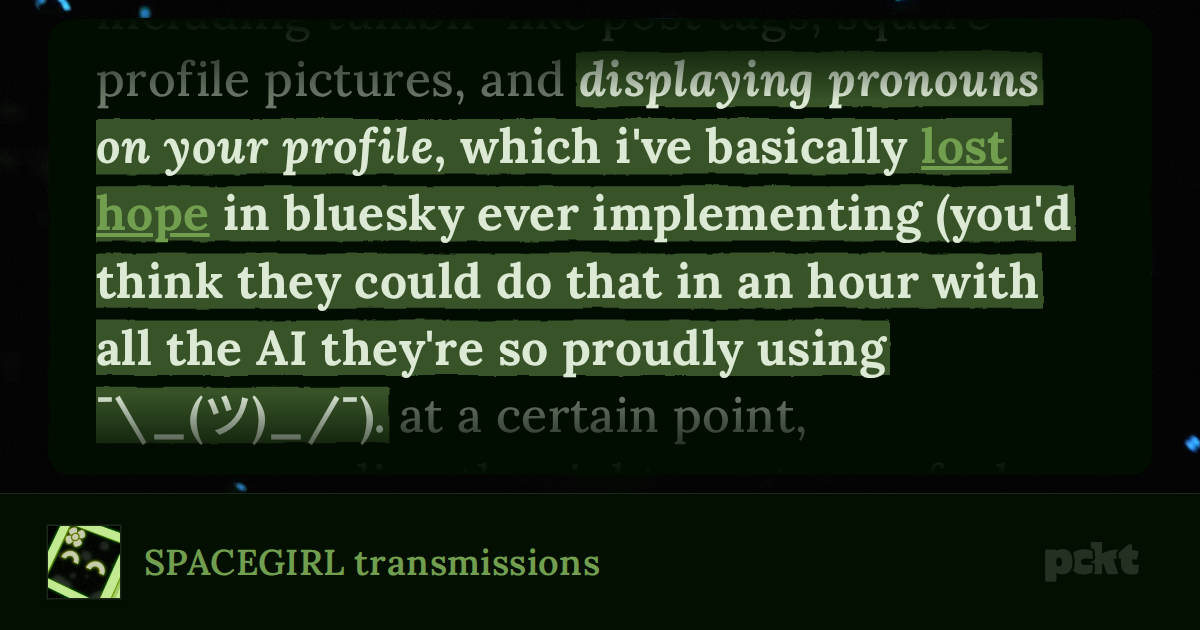
I increasingly believe that most replies in big-room social spaces are really semantic tagging: "this post is that kind of thing!" "this post has a keyword I don't like!" Sometimes you get canned responses that people deliver in response to the tagging/sorting they've done. "I have a meme!"
Quit X

I mostly still call them Twitter but am open to calling them “X” in clearly pejorative contexts. See also everything related to Grok, DOGE (especially what they did to USAID and the consequences thereof), and Elon Musk. AI-related: semble.so/profile/aiueo.ooo/collections…

Ryan Mac 🙃 (@rmac.bsky.social)

When a Social Media Mob Came for Cornell’s Jane Doe

Elon Musk and Peter Thiel: The billionaires fomenting a global race war

Las denuncias de sesgo contra plataformas digitales se multiplican en las elecciones de Brasil

since we’re doing this discourse again here’s why im no longer on twitter

The Major Social Media Platforms Are All Rejecting Paid Ads for Alex Gibney’s ‘Musk’ (Exclusive)
