


We situate the debate on intentionality within the rise of cognitive neuroscience and argue that cognitive neuroscience can explain intentionality. We discuss the explanatory significance of ascribing intentionality to representations. At first, we ...
The Abstraction Fallacy: Why AI Can Simulate But Not Instantiate Consciousness
Computational functionalism dominates current debates on AI consciousness. This is the hypothesis that subjective experience emerges entirely from abstract causal topology, regardless of the underlying physical substrate. We argue this view fundamentally mischaracterizes how physics relates to information. We call this mistake the Abstraction Fallacy. Tracing the causal origins of abstraction reveals that symbolic computation is not an intrinsic physical process. Instead, it is a mapmaker-dependent description. It requires an active, experiencing cognitive agent to alphabetize continuous physics into a finite set of meaningful states. Consequently, we do not need a complete, finalized theory of consciousness to assess AI sentience—a demand that simply pushes the question beyond near-term resolution and deepens the AI welfare trap. What we actually need is a rigorous ontology of computation. The framework proposed here explicitly separates simulation (behavioral mimicry driven by vehicle causality) from instantiation (intrinsic physical constitution driven by content causality). Establishing this ontological boundary shows why algorithmic symbol manipulation is structurally incapable of instantiating experience. Crucially, this argument does not rely on biological exclusivity. If an artificial system were ever conscious, it would be because of its specific physical constitution, never its syntactic architecture. Ultimately, this framework offers a physically grounded refutation of computational functionalism to resolve the current uncertainty surrounding AI consciousness.

Verbalizable Representations Form a Global Workspace in Language Models
If the mind is an ocean, we spend our lives floating at the surface. Beneath us, an enormous amount of processing takes place without our knowledge: our visual systems parsing the contours of a face, our motor circuits maintaining our posture. At any given moment, only a small fraction of this neural activity is accessible to us. Yet it is this privileged sliver of activity that we rely on to reason deliberately: to plan what ingredients to buy for a recipe, or to puzzle out why an engine won’t start. Such thoughts can be articulated out loud, deliberately held in mind, and brought to bear on whatever task the moment demands. This distinction, between our accessible thoughts and our unconscious processing, is perhaps the most striking feature of human cognition.
Verbalizable Representations Form a Global Workspace in Language Models
If the mind is an ocean, we spend our lives floating at the surface. Beneath us, an enormous amount of processing takes place without our knowledge: our visual systems parsing the contours of a face, our motor circuits maintaining our posture. At any given moment, only a small fraction of this neural activity is accessible to us. Yet it is this privileged sliver of activity that we rely on to reason deliberately: to plan what ingredients to buy for a recipe, or to puzzle out why an engine won’t start. Such thoughts can be articulated out loud, deliberately held in mind, and brought to bear on whatever task the moment demands. This distinction, between our accessible thoughts and our unconscious processing, is perhaps the most striking feature of human cognition.
Alexander Lerchner, The Abstraction Fallacy: Why AI Can Simulate But Not Instantiate Consciousness - PhilPapers
Computational functionalism dominates current debates on AI consciousness. This is the hypothesis that subjective experience emerges entirely from abstract causal topology, regardless of the underlying physical substrate. We argue this view ...

Alexander Lerchner, The Abstraction Fallacy: Why AI Can Simulate But Not Instantiate Consciousness - PhilArchive
Computational functionalism dominates current debates on AI consciousness. This is the hypothesis that subjective experience emerges entirely from abstract causal topology, regardless of the underlying physical substrate. We argue this view ...

Confessions of an Unrepentant Slop Snob
A framework for thinking about when AI involvement is additive or a violation

How to be more creative in seconds!
The brain is a computer is a brain: neuroscience's internal debate and the social significance of the Computational Metaphor
The Computational Metaphor, comparing the brain to the computer and vice versa, is the most prominent metaphor in neuroscience and artificial intelligence (AI). Its appropriateness is highly debated in both fields, particularly with regards to whether it is useful for the advancement of science and technology. Considerably less attention, however, has been devoted to how the Computational Metaphor is used outside of the lab, and particularly how it may shape society's interactions with AI. As such, recently publicized concerns over AI's role in perpetuating racism, genderism, and ableism suggest that the term "artificial intelligence" is misplaced, and that a new lexicon is needed to describe these computational systems. Thus, there is an essential question about the Computational Metaphor that is rarely asked by neuroscientists: whom does it help and whom does it harm? This essay invites the neuroscience community to consider the social implications of the field's most controversial metaphor.

Design Frictions for Mindful Interactions: The Case for Microboundaries
Design frictions, a term found in popular media articles about user experience design, refer to points of difficulty occurring during interaction with technology. Such articles often argue that these frictions should be removed from interaction flows in order to reduce the risk of user frustration and disengagement. In this paper we argue that, in many scenarios, designing friction into interactions through the introduction of microboundaries, can, in fact, have positive effects. Design frictions can disrupt "mindless" automatic interactions, prompting moments of reflection and more "mindful" interaction. The potential advantages of intentionally introduced frictions are numerous: from reducing the likelihood of errors in data-entry tasks, to supporting health-behaviour change.


Revisiting creative behaviour as an epistemic process: lessons from 12 computational artists and designers | Proceedings of the 35th Australian Computer-Human Interaction Conference
As part of the Digital Library's transition to Open Access, new features for researchers are available in the Premium Edition. Click here to learn more.


Thinking about how computers can support intentional work. youtube.com/watch?v=Q7pbAW470qA

Attention architecture - thinking about todos, timeblocks, and calendars
www.youtube.comOne thing I've been dwelling on is how computing engineering and discourse rely thoroughly on a substance ontology of information, with dumb consequences. I've just found out that @romainbrette.bsky.social, looking at the same in neuroscience, calls it "epistemic phlogiston." I'm so stealing that.

Dog Steals Pizza
static.klipy.comNotation as a Tool of Thought

Notation is not a way of writing thoughts down — it is a technology that determines which thoughts are available to be had. Starting from Iverson's 1979 Turing Award lecture, this collection gathers the argument's ancestors, elaborations, and its opponents: Nielsen and Matuschak on media as cognitive infrastructure, Bret Victor's case against symbol manipulation, and empirical work on representation as a cognitive tool. Open to contributions.
Post-app computing

Imagining computing beyond siloed, rigid apps
The Technological Turn in Mathematics
J Notation as a Tool of Thought

Prof. Judy Fan: Cognitive Tools for Making the Invisible Visible
Media for Thinking the Unthinkable
Kill Math
Using spaced repetition systems to see through a piece of mathematics

Nobody Wants Your Damn App

Golems, smart objects, and the file metaphor
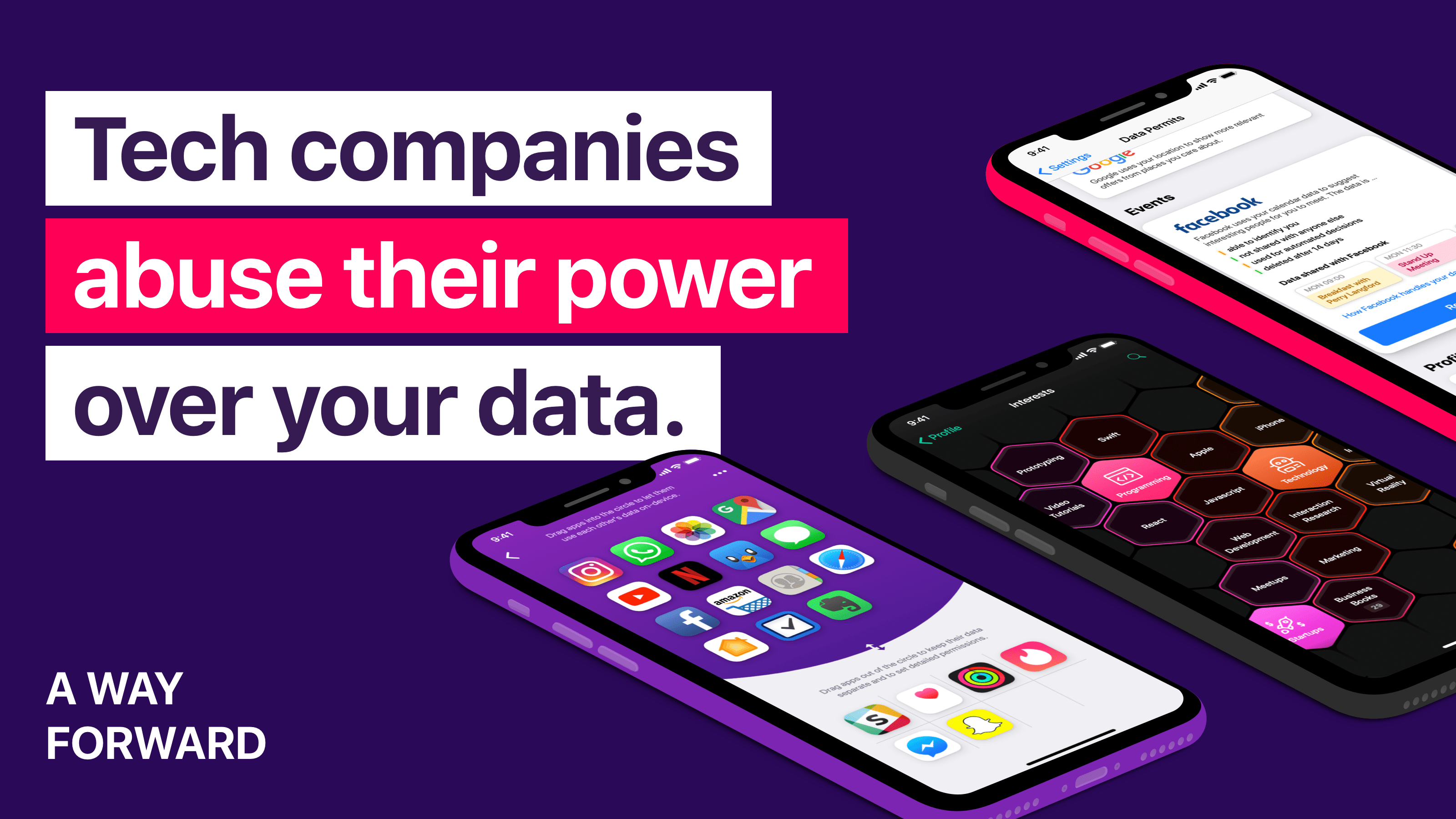
Rethinking how technology uses our personal data
User-tailorable systems: pressing the issues with buttons
everest-pipkin.com

Wesley Finck (@wesleyfinck.org)


