

Wikidata
the free knowledge base with 120,900,955 data entities that anyone can edit.
Wikidata Launches Free Vector Database as Open Alternative to Closed AI Systems
Wikidata has launched something big.
Karpathy's LLM Knowledge Base Wiki for Enterprise | Vijoy Pandey posted on the topic | LinkedIn
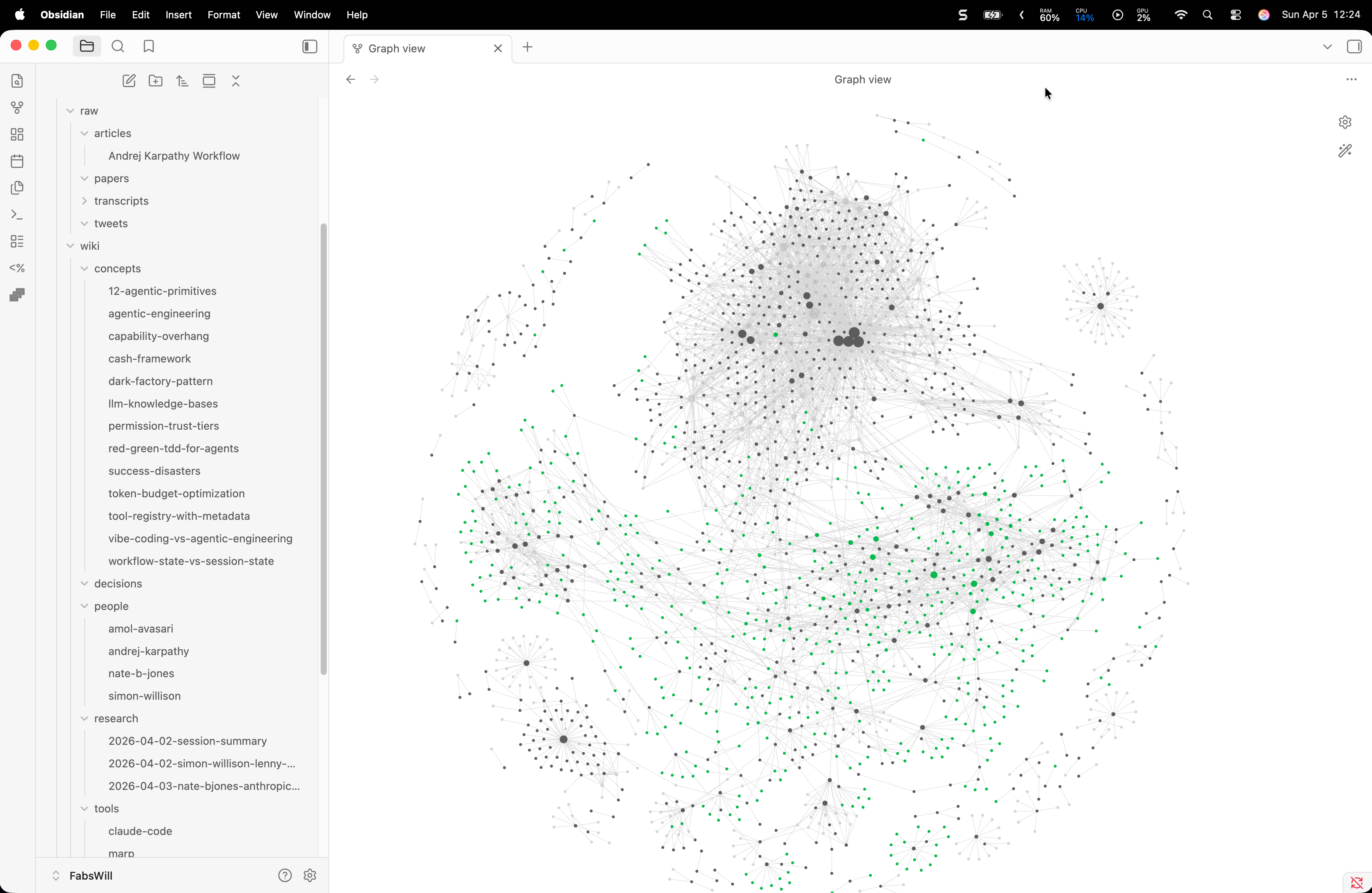
There's a new kind of computer media in the enterprise: Write once, Read never. The docs are perpetually stale, constantly diverging from reality, and scattered across Confluence, SharePoint, GitHub, Webex (or Slack) threads, Notion, Obsidian - and in my personal life, add Apple Notes, Goodnotes, web clippings, and multiple Google Drives worth of docs and slides that nobody is ever going back to. Karpathy tweeted his LLM knowledge base wiki architecture which went viral last weekend and I decided to give it a run yesterday. Verdict: You *have* to try this out. Prediction: You won’t be able to live without it soon. There were a few mods and decisions I made to the base Karpathy provided. First, the vault / folder structure in Obsidian. I already use Obsidian as a human. Instead of creating separate vaults and dealing with the sync nightmare, I just have folders for Human and Agent, and a Raw folder. (1) The Human/ folder is where I write long form articles and notes independent of the knowledge base wiki. No LLM or agent touches this folder. (2) I do have Arnold Layne, my OpenClaw agent, doing background tasks for me. Raw/ is where both Arnold and I, dump raw snippets. Inclusive of diverse kinds of media. (3) The Agent/ folder is where the LLM (Claude in my case) synthesizes the wiki. No human touches this folder. Second, some customizations to CLAUDE.md for enterprise-like usage - (4) Domain extensions - the agent needs to know that quantum computing and agentic AI have different entity types and different provenance thresholds. (5) Primary source protection, when I drop in my own original work, secondary sources can extend it or raise questions against it, but they cannot overwrite it. It sounds like a small thing but its’s not, especially at enterprise scale where provenance actually matters. Karpathy is upfront that what he’s built is working memory for a single agent, and it’s truly remarkable at that. The jump to Shared Context across teams, reconciling conflicting beliefs at org scale, ontologies that don’t collapse under the weight of a hundred contributors - those are much harder problems and what we are exploring with the Internet of Cognition. PS: The screenshot shows my Obsidian vault after just two runs: one with Karpathy’s original tweet and gist file itself (so meta!) and one with our Internet of Cognition paper. Claude (Sonnet) read it, compiled it into structured summaries, entity pages, concept pages, backlinks, merged all the information cohesively, and keeps it all maintained from there. You just read the Wiki. It’s simply magical.

emad-elsaid/xlog
💥 Fast, Git-native framework for building knowledge bases - Static site generator for digital gardens and personal wikis
I Built a Knowledge Base That Writes Itself. Here Is What Andrej Karpathy Got Right.
Andrej Karpathy posted about using LLMs to build personal knowledge bases. I took his workflow, wired it into my Obsidian vault with Claude Code, and within an hour had 21 cross-linked wiki articles compiled from YouTube transcripts. Here is how it works and why it matters.
WikiKV: Schema-Evolving Path-Indexed Storage for Hierarchical Knowledge Navigation
LLM-curated hierarchical knowledge bases, namely a tree-structured wiki whose nodes summarize an underlying corpus, have become a dominant substrate for retrieval-augmented applications, yet their storage layer is still treated as an implementation detail. This workload is hierarchical, query-intensive, and continuously evolving, and no existing storage model natively captures all three properties at once. We present WikiKV, a path-indexed key-value storage model purpose-built for this workload, comprising three components: (i) a data-driven schema that bootstraps the hierarchy via Intent-Anchored Schema Induction and refines it through Continuous Evolution Operators; (ii) a consistency protocol for the path-indexed storage model that precludes partial-read observations under concurrent offline rewrites without read-path locking; and (iii) a budgeted navigation operator whose search-accelerated routing reduces the expected number of LLM-assisted descent steps from d to O(1) while preserving anytime semantics with progressively refined answers. We evaluate WikiKV through real-world deployment for the WeChat Official Account AI Assistant and benchmark it against diverse baselines on the AuthTrace dataset, where it achieves balanced low per-operator latency across four query operators against relational, graph, and FS backends, and reaches 63.2% end-to-end answer correctness, exceeding multiple RAG baselines, with the gap widening on low- and high-fan-in multi-document questions. Ablation study further confirms the effectiveness of WikiKV's components.

Relational foundations for functorial data migration | Proceedings of the 15th Symposium on Database Programming Languages
In this paper we present a simple database definition language: that of categories and functors. A database schema is a small category and an instance is a set-valued functor on it. We show that morphisms of schemas induce three ''data migration ...
The Magic of Small Databases
Notes on personal libraries, collections and small indexes on the web
Obsidian on Twitter / X
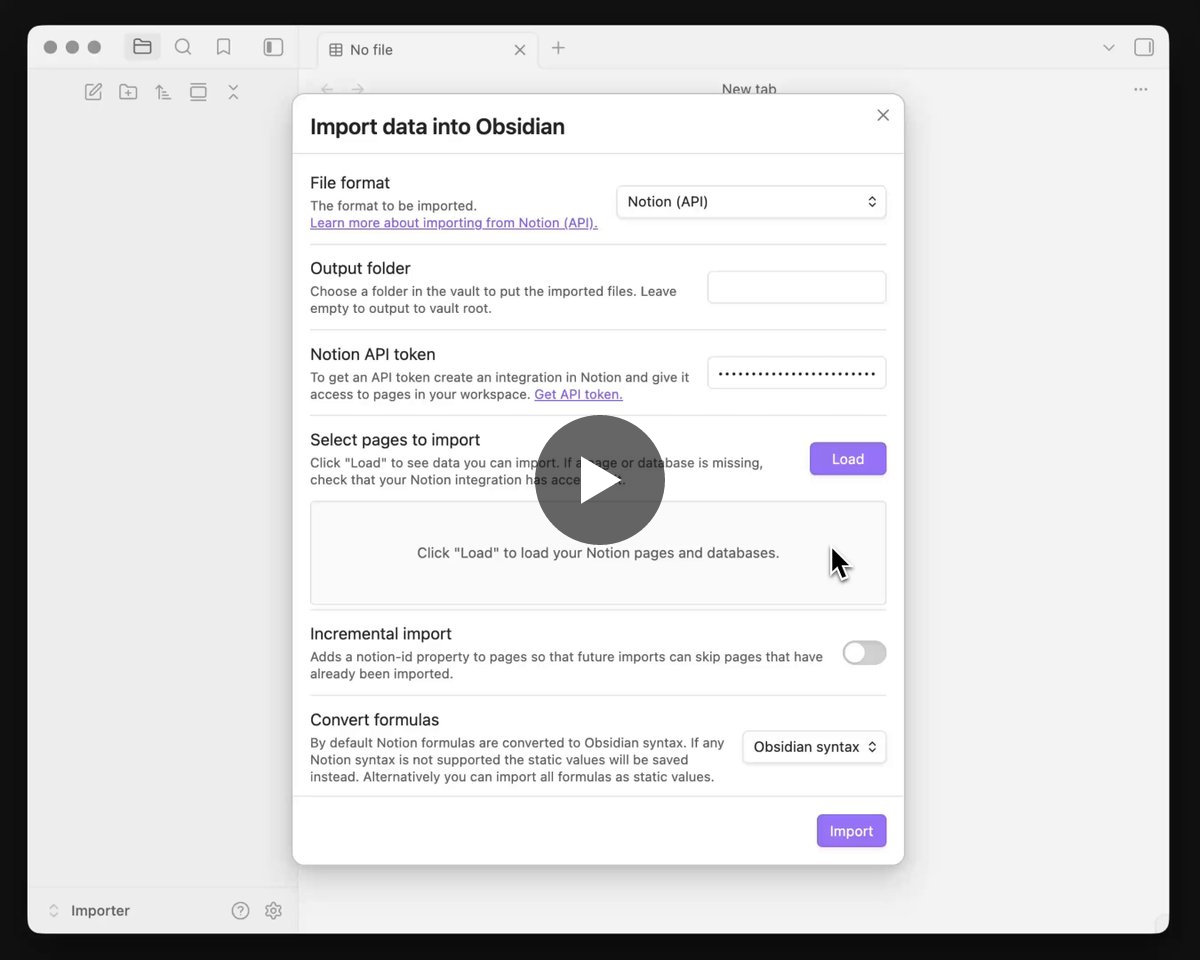
You can now convert your Notion pages and databases to durable, private, local files.Your data, offline, forever, for free. pic.twitter.com/AOvITLbzWn— Obsidian (@obsdmd) November 22, 2025
Graceful database schema evolution: the PRISM workbench: Proceedings of the VLDB Endowment: Vol 1, No 1
Supporting graceful schema evolution represents an unsolved problem for traditional information systems that is further exacerbated in web information systems, such as Wikipedia and public scientific databases: in these projects based on multiparty ...

Discovered an open source alternative to DeepWiki recently, made by @sashimikun-void.bsky.social & friends. I believe that app archetype is an outstanding use case for ‘version-control everything, so your AI-agent can’t break anything or make a mess’. Chime in here: github.com/AsyncFuncAI/deepwiki-open/iss…

CRDT storage (universal version-control) · Issue #181 · AsyncFuncAI/deepwiki-open
github.comOMGGG you can now self-host lichen.wiki in a container !!!! (we also have a nix flake) wikis still live on people's PDSes, your instance sees the same wikis, nothing to migrate! you can put one wiki at the root of your own domain, or several (eg like one per language) guide here on tangled :

SELF-HOSTING.md at main · juprodh.me/lichen.wiki
tangled.orgWiki

Wiki software
Knowledgebase Apps
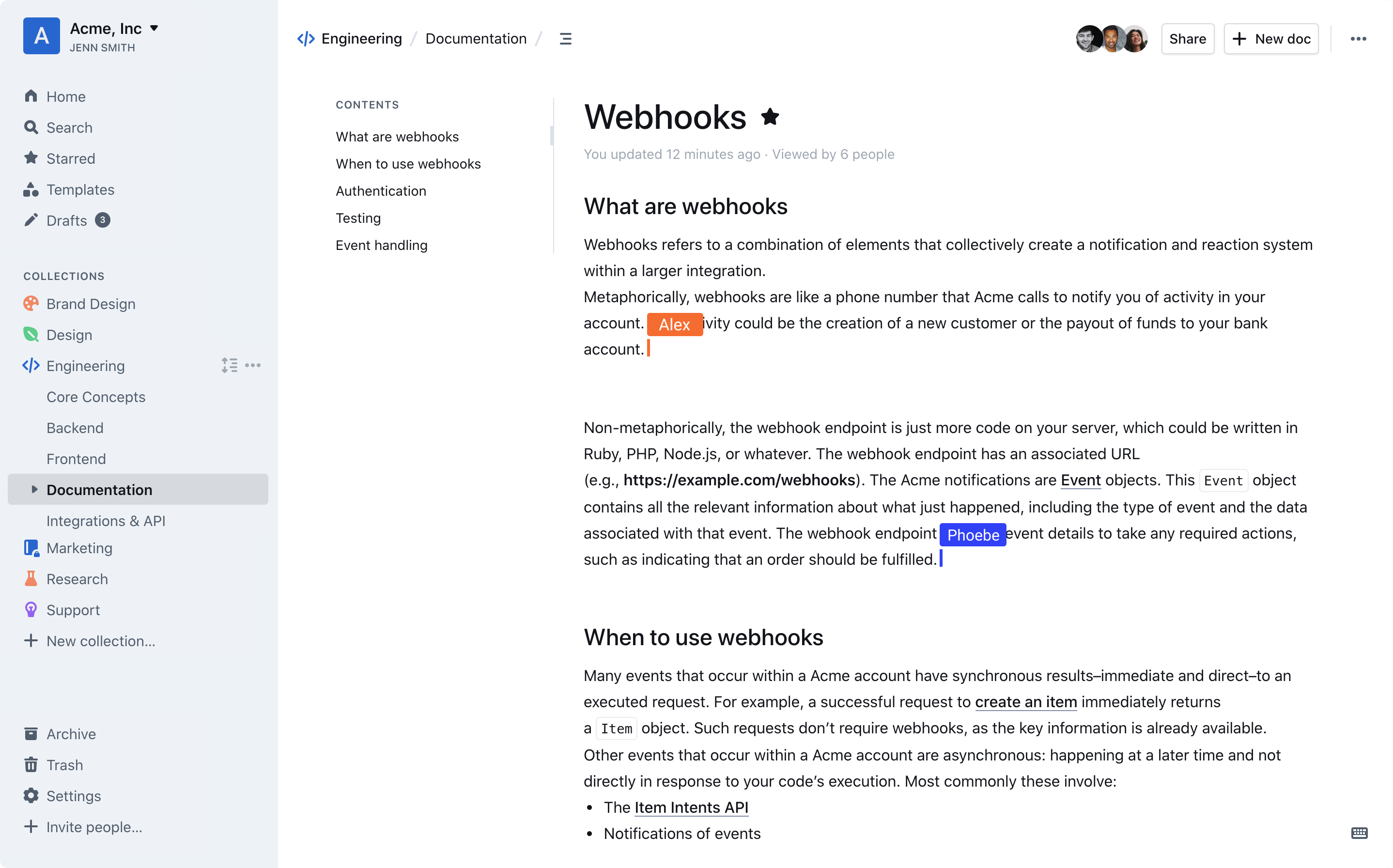
Long form writing. Group access control. OIDC so we can use atproto. The commercial versions would be Notion or Confluence. An open version would be Outline Wiki.
robot.wtf — Memory for agents in a wiki for humans
Outline – Team knowledge base & wiki
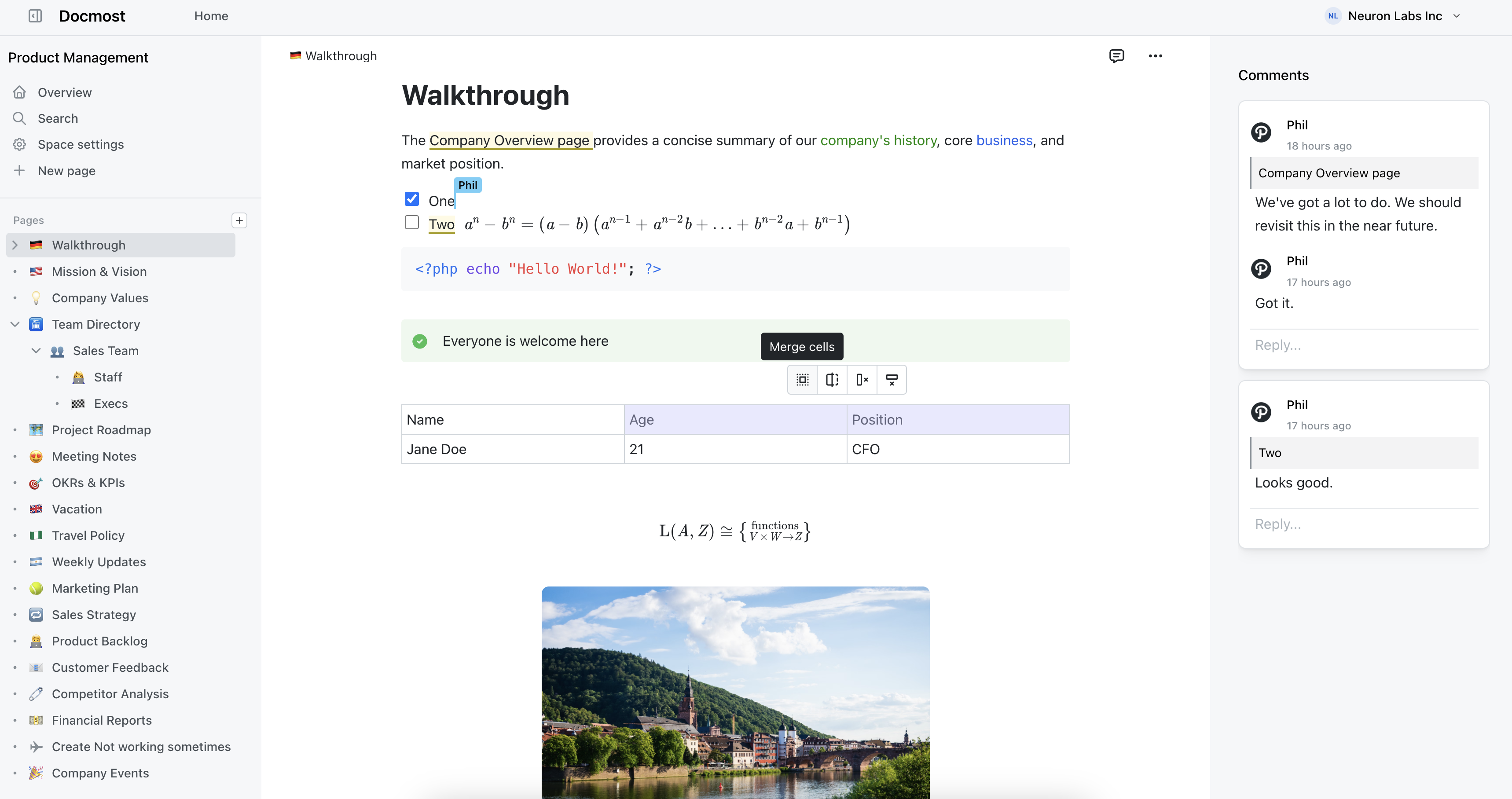
Enterprise-ready Wiki for Teams | Docmost
Lichen
Cardigan Bay Wiki :: AboutThisWiki
interstar/cardigan-bay
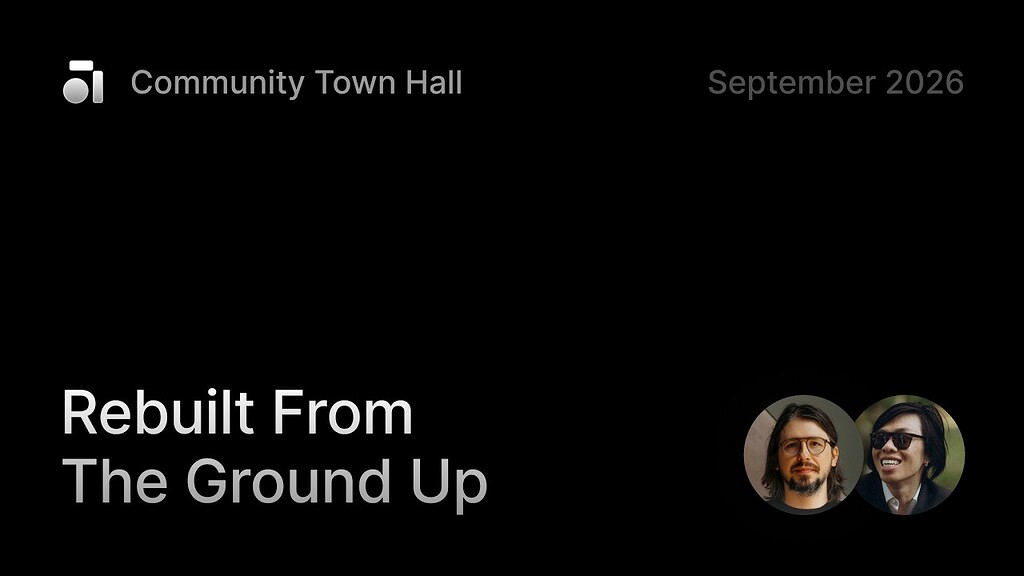
Anytwo and the future of Anytype
Fichiers - La Suite Numérique
Docs - La Suite Numérique
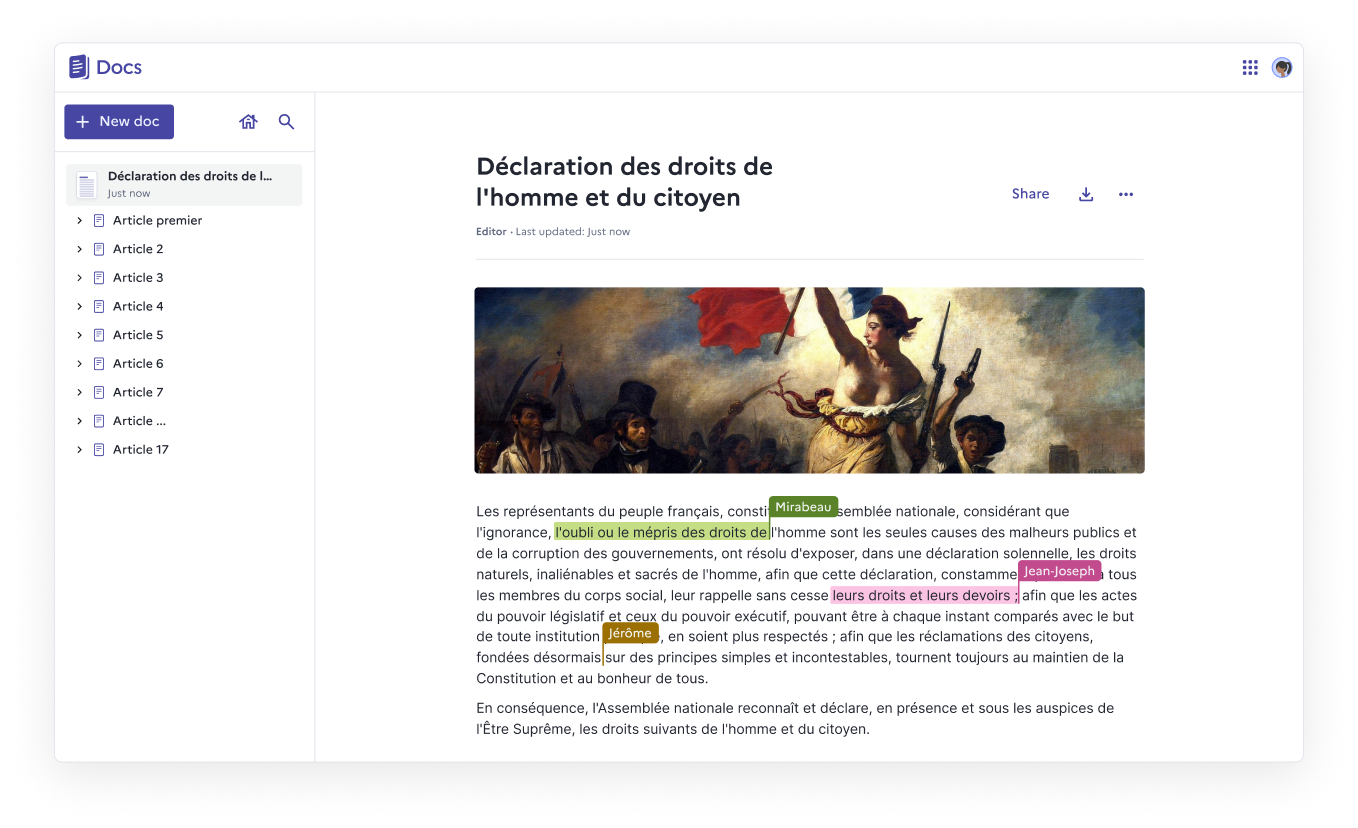
Docs — Turn your team's content into knowledge
Enterprise-ready Wiki for Teams | Docmost
Outline – Team knowledge base & wiki

