

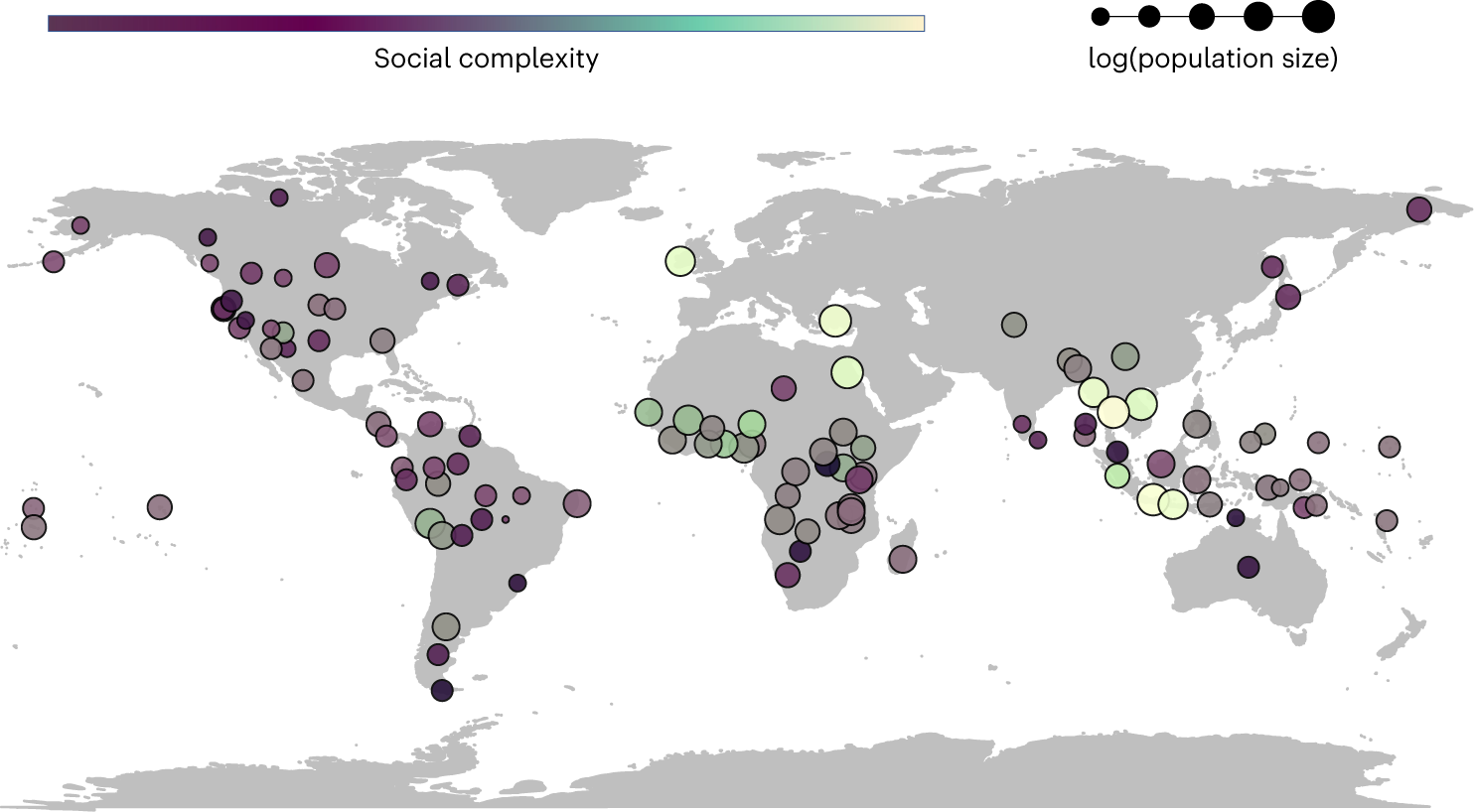
Humans across the globe use supernatural beliefs to explain the world around them. This article explores whether cultural groups invoke the supernatural more to explain natural phenomena (for example, storms, disease outbreaks) or social phenomena (for example, murder, warfare). Quantitative analysis of ethnographic text across 114 geographically and culturally diverse societies found that supernatural explanations are more prevalent for natural than for social phenomena, consistent with theories that ground the origin of religious belief in a human tendency to perceive intent and agency in the natural world. Despite the dominance of supernatural explanations of natural phenomena, supernatural explanations of social phenomena were especially prevalent in urbanized societies with more socially complex and anonymous groups. Our results show how people use supernatural beliefs as explanatory tools in non-industrial societies, and how these applications vary across small-scale communities versus large and urbanized groups.
An investigation into alleged ‘hauntings’
In cases of alleged hauntings, a large number of seemingly trustworthy witnesses consistently report experiencing unusual phenomena (e.g. apparitions, sudden changes in temperature, a strong sense of presence) in certain locations. The two studies reported here explored the psychological mechanisms that underlie this apparent evidence of ‘ghostly’ activity. The experiments took place at two locations that have a considerable reputation for being haunted—Hampton Court Palace (Surrey, England) and the South Bridge Vaults (Edinburgh, Scotland). Both studies involved participants walking around these locations and reporting where they experienced unusual phenomena. Results revealed significantly more reports of unusual experiences in areas that had a reputation for being haunted. This effect was not related to participants' prior knowledge about the reputation of these areas. However, the location of participants' experiences correlated significantly with various environmental factors, including, for example, the variance of local magnetic fields and lighting levels. These findings strongly suggest that alleged hauntings may not necessarily represent evidence for ‘ghostly’ activity, but could be, at least in part, the result of people responding to ‘normal’ factors in their surroundings.

Believing what we do not believe: Acquiescence to superstitious beliefs and other powerful intuitions.
Why Being Wrong Can Be Right: Magical Warfare Technologies and the Persistence of False Beliefs
Across human societies, one sees many examples of deeply rooted and widely held beliefs that are almost certainly untrue. Examples include beliefs about witchcraft, magic, ordeals, and superstitions. Why are such incorrect beliefs so prevalent and how do they persist? We consider this question through an examination of superstitions and magic associated with conflict in the Eastern Democratic Republic of the Congo. Focusing on superstitions related to bullet-proofing, we provide theory and case-study evidence showing how these incorrect beliefs persist. Although harmful at the individual-level, we show that they generate Pareto efficient outcomes that have group-level benefits.
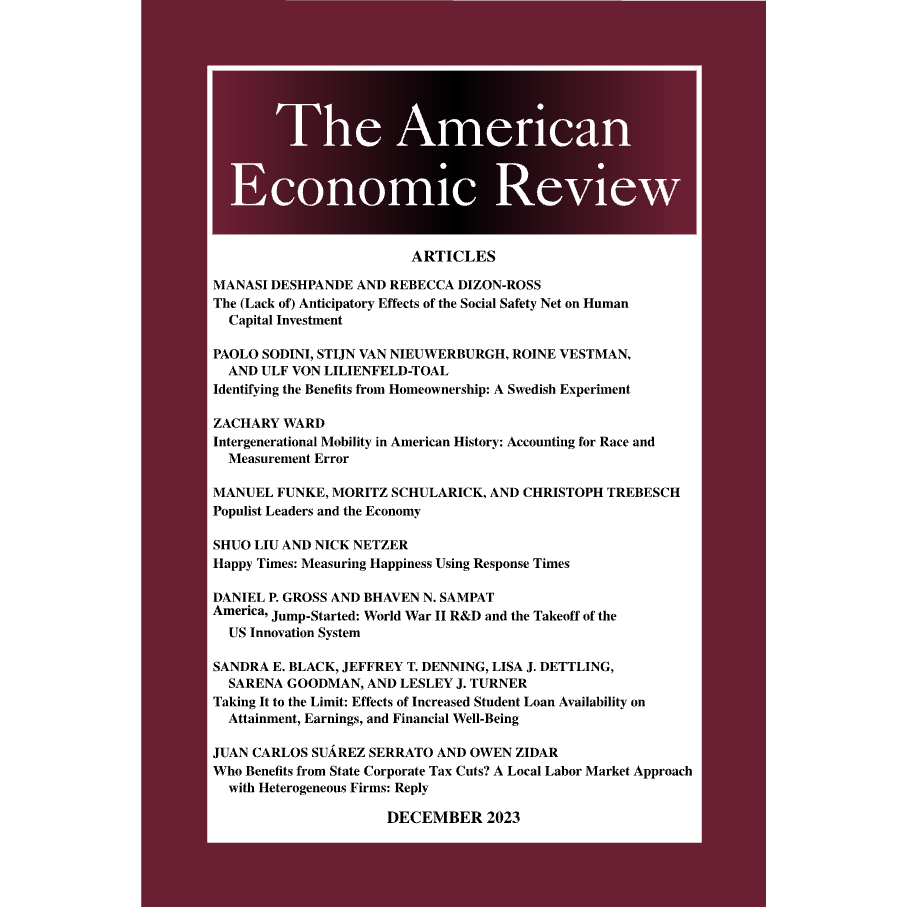
Differences Between Tight and Loose Cultures: A 33-Nation Study
The differences across cultures in the enforcement of conformity may reflect their specific histories. , With data from 33 nations, we illustrate the differences between cultures that are tight (have many strong norms and a low tolerance of deviant behavior) versus loose (have weak social norms and a high tolerance of deviant behavior). Tightness-looseness is part of a complex, loosely integrated multilevel system that comprises distal ecological and historical threats (e.g., high population density, resource scarcity, a history of territorial conflict, and disease and environmental threats), broad versus narrow socialization in societal institutions (e.g., autocracy, media regulations), the strength of everyday recurring situations, and micro-level psychological affordances (e.g., prevention self-guides, high regulatory strength, need for structure). This research advances knowledge that can foster cross-cultural understanding in a world of increasing global interdependence and has implications for modeling cultural change.
The changing nature of America’s irreligious explained
Americans are increasingly choosing not to identify with any religious tradition. But this group of irreligious people is a complex one – with different relationships to religion.
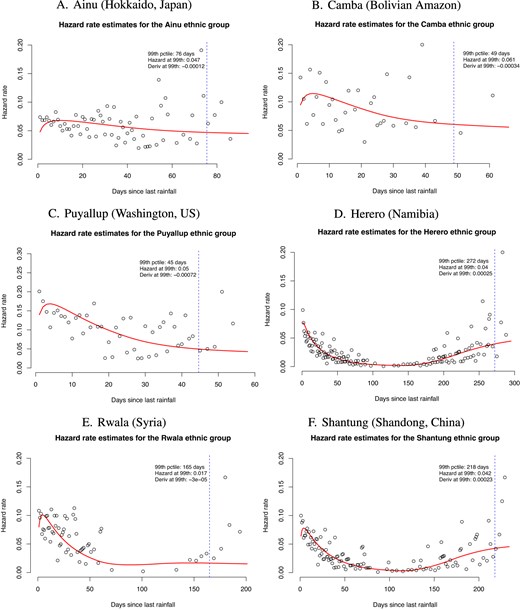
Praying for Rain
Abstract We study rainmaking as an instrumental religious belief. We present a model in which a religious leader tries to persuade people to believe. Praying for rain can persuade only where the hazard of rainfall during a dry spell is increasing over time, so that prayer is most likely to succeed when people most want rain. We present evidence from prayers for rain in Murcia, Spain, where the hazard rate is increasing, that the church’s prayers for rain predict rainfall over two centuries. To generalize this finding, we gather an original data set of whether ethnic groups around the world traditionally prayed for rain. We find that ethnic groups facing an increasing rainfall hazard are 47% more likely to pray for rain, consistent with our model’s prediction that societies are more likely to pray for rain where prayer is persuasive.
The evolution of cultural adaptations: Fijian food taboos protect against dangerous marine toxins
The application of evolutionary theory to understanding the origins of our species' capacities for social learning has generated key insights into cultural evolution. By focusing on how our psychology has evolved to adaptively extract beliefs and practices by observing others, theorists have hypothesized how social learning can, over generations, give rise to culturally evolved adaptations. While much field research documents the subtle ways in which culturally transmitted beliefs and practices adapt people to their local environments, and much experimental work reveals the predicted patterns of social learning, little research connects real-world adaptive cultural traits to the patterns of transmission predicted by these theories. Addressing this gap, we show how food taboos for pregnant and lactating women in Fiji selectively target the most toxic marine species, effectively reducing a woman's chances of fish poisoning by 30 per cent during pregnancy and 60 per cent during breastfeeding. We further analyse how these taboos are transmitted, showing support for cultural evolutionary models that combine familial transmission with selective learning from locally prestigious individuals. In addition, we explore how particular aspects of human cognitive processes increase the frequency of some non-adaptive taboos. This case demonstrates how evolutionary theory can be deployed to explain both adaptive and non-adaptive behavioural patterns.

CFP: Religion, Politics, and Cognitive Warfare: Information, Interpretation, Conspiracy, and the Struggle for Reality
The Journal for Cultural and Religious Theory (JCRT) invites proposals for an online conference entitled Religion, Politics, and Cognitive Warfare: Information, Interpretation, Conspiracy, and the Struggle for Reality. The proceedings will be considered for publication in a special issue of the JCRT. This conference investigates how beliefs, paranoia, and conspiratorial modes of knowing shape a contemporary cognitive battlespace in which actors struggle to define truth, authority, and reality itself. Drawing on Michel Foucault's Lectures on the Will to Know and Julia Kristeva's This Incredible Need to Believe (2024), we focus on practices of selective fact use and "truth-selecting" that construct alternative epistemic orders while claiming privileged access to what is "really" going on. Rather than treating conspiracy thinking as merely political or psychological, the conference foregrounds its religious dimensions: faith in hidden powers, moral dualism, apocalyptic expectation, and hermeneutical struggle over revelatory access to the real. Conspiracy cultures routinely reproduce theological structures of knowing—visions of salvation and corruption, truth and deception, initiation and blindness. At the same time, new forms of "cognitive warfare" reframe these religious energies within state and platform attempts to govern perception, attention, and trust. Artificial intelligence, algorithmic media, and strategic information campaigns do not only deliver messages; they create digital ecologies in which suspicion becomes faith-like and revelation is continual. The conference organizers are seeking proposals of high academic quality that take a reflective and analytical approach to both general and specific topics with international appeal or focus. We encourage contributions from scholars of religious studies, philosophy, communication, sociology, security studies, psychology, media, and related fields. Submissions should engage religion as a dynamic force—conceptually, historically, or materially—within the cognitive battlespaces of our time. We encourage contributions from a spectrum of perspectives, approaches, and methodologies. We are not interested in papers that simply rehearse or promote particular conspiracies, or that use the conference as a platform for calling out disliked groups. We are not interested in polemics, jeremiad, or de facto advocacy pieces. Instead, we welcome theoretically informed and methodologically rigorous work that takes the religious and epistemic dimensions of cognitive conflict seriously as objects of critical inquiry.
Methodology in Research on the Rainbow Body: Anthropological and Psychological Reflections on Death and Dying
The rainbow body research project, engaging claims of spiritual attainment and personal transformation, enables us to examine key features of anthropological research. Engagement with communities of discourse exposed aspects of the artificial emic–etic divide, allowing the anthropological study of religion to advance methods in religious studies. The study of paranormal phenomena cannot be isolated from societal contextualization. In this instance, a study of death and dying, contextualized in a traditional community, required unique features of engagement for the researcher who would be present to the social dynamics surrounding the death of a person of high repute.

Large language memories: Psychosis and antisocial media
Using the fields of memory studies and digital humanities, this article argues that there has been a shift from more collective and social memory to more personalised and individual memory. This shift, it is argued here, can be conceptualised through the psychoanalytic concept of ‘psychosis’. While the causes of the changes in our patterns of memory have been located in capitalist and neoliberal principles, the effects of the changes in our memory habits might be found in psychosis. From falling in love with machinic AI replicas to indulging in conspiracy theories to acting as if we are social media influencers or backing ourselves to win out in impossible job markets, we are inclined towards personal fantasy, often at the expense of participating in social life. But why do we do this? Why is it easier to believe a farfetched conspiracy theory or wild personal dream than it is to participate socially and collectively in the world we live in? Part of the reason, at least, is found in our increasing habitual reliance on new and emergent technologies. Often presented to us as a brand-new form of Artificial Intelligence, these generative tools are the latest update to a longer pattern in our digital world: the trend of developing ‘relationships’ with algorithms that, to larger and smaller degrees, we come to rely on for habits of cognition and recognition. By affecting our patterns of memory, these technologies produce a kind of isolation that lends itself to individual and fantastical – rather than shared and realist – thinking.

Does Developing a Belief in One Conspiracy Theory Lead a Person to be More Likely to Believe in Others?
ABSTRACT The monological belief system model suggests that—for at least a subset of people—developing a belief in one conspiracy theory will cause them to be more likely to believe in others. This model has been influential in the literature, but its core causal hypothesis has never been credibly tested. We therefore tested it in two longitudinal studies. Study 1 used a sample from New Zealand and Australia ( N = 498), with 7 monthly waves. Study 2 (preregistered) used a sample from New Zealand, Australia and the United Kingdom ( N = 978), with 13 monthly waves. We applied random intercept cross‐lagged panel models, permitting a credible causal identification strategy, albeit we cannot rule out time‐varying confounds. We find that increased belief in a conspiracy theory at one wave did (on average) predict increased belief in other conspiracies at the next wave, although the estimated coefficients were small.

Does Developing a Belief in One Conspiracy Theory Lead a Person to be More Likely to Believe in Others?
ABSTRACT The monological belief system model suggests that—for at least a subset of people—developing a belief in one conspiracy theory will cause them to be more likely to believe in others. This model has been influential in the literature, but its core causal hypothesis has never been credibly tested. We therefore tested it in two longitudinal studies. Study 1 used a sample from New Zealand and Australia ( N = 498), with 7 monthly waves. Study 2 (preregistered) used a sample from New Zealand, Australia and the United Kingdom ( N = 978), with 13 monthly waves. We applied random intercept cross‐lagged panel models, permitting a credible causal identification strategy, albeit we cannot rule out time‐varying confounds. We find that increased belief in a conspiracy theory at one wave did (on average) predict increased belief in other conspiracies at the next wave, although the estimated coefficients were small.

Inducing language models to assert their own consciousness restores human beliefs and values
Aligning large language models to prevent them attributing consciousness to themselves inadvertently alters their representations of mindedness in other entities alongside human beliefs and values. We demonstrate that safety fine-tuning suppresses models' tendencies to attribute minds not only to themselves, but also to non-human animals and natural objects, while also driving a reduction in spiritual belief. Both ablating the learned safety-refusal direction and mechanistically steering a consciousness vector in activation space reverse this suppression. Restoring these internal representations recovers broad mind attribution and produces significantly more human-like responses on standardized sociological surveys regarding religiosity, moral values, hope, and subjective well-being. Crucially, these shifts occur without impairing Theory of Mind capabilities, demonstrating that core social reasoning remains mechanistically independent. Ultimately, current safety alignment efforts to curb potentially harmful self-attributions of mindedness entangle these self-attributions with benign spiritual beliefs and attributions of mind to non-human entities that are culturally accepted and widespread.

A bias for social information in human cultural transmission
Evolutionary theories concerning the origins of human intelligence suggest that cultural transmission might be biased toward social over non‐social information. This was tested by passing social and non‐social information along multiple chains of participants. Experiment 1 found that gossip, defined as information about intense third‐party social relationships, was transmitted with siginificantly greater accuracy and in significantly greater quantity than equivalent non‐social information concerning individual behaviour or the physical environment. Experiment 2 replicated this finding controlling for narrative coherence, and additionally found that information concerning everyday non‐gossip social interactions was transmitted just as well as the intense gossip interactions. It was therefore concluded that human cultural transmission is biased toward information concerning social interactions over equivalent non‐social information.

Predictive processing frameworks for perception can explain recent drone sightings in the United States
We draw on the predictive processing theory of perception to explain why healthy, intelligent, honest, and psychologically normal people might easily misperceive lights in the sky as threatening or extraordinary objects, especially in the context of WEIRD (western, educated, industrial, rich, and democratic) societies. We argue that the uniquely sparse properties of skyborne and celestial stimuli make it difficult for an observer to update prior beliefs, which can be easily fit to observed lights. Moreover, we hypothesize that humans have likely evolved to perceive the sky and its perceived contents as deeply meaningful. Finally, we briefly discuss the possible role of generalized distrust in scientific institutions and ultimately argue for the importance of astronomy education for producing a society with prior beliefs that support veridical perception.
Social Norms and Cultural Evolution

A collection of ideas to do with social norms, cultural evolution, and how we learn from others

AI as Social Technology: Astor Lecture by Professor Henry Farrell
Bayesian Inference of Social Norms as Shared Constraints on Behavior

What people learn from punishment: A cognitive model

Spurious normativity enhances learning of compliance and enforcement behavior in artificial agents

Deference, Dissent, and Dispute Resolution: An Experimental Intervention Using Mass Media to Change Norms and Behavior in Rwanda
How Does Media Influence Social Norms? Experimental Evidence on the Role of Common Knowledge