


Changes to social settings caused by migration, cultural change or pandemics force us to adapt to new social norms. Social norms provide groups of individuals with behavioural prescriptions and therefore can be inferred by observing their behaviour. This work aims to examine how cognitive learning processes affect adaptation and learning of new social norms. Using a multiplayer game, I found that participants initially complied with various social norms exhibited by the behaviour of bot-players. After gaining experience with one norm, adaptation to a new norm was observed in all cases but one, where an active-harm norm was resistant to adaptation. Using computational learning models, I found that active behaviours were learned faster than omissions, and harmful behaviours were more readily attributed to all group members than beneficial behaviours. These results provide a cognitive foundation for learning and adaptation to descriptive norms and can inform future investigations of group-level learning and cross-cultural adaptation.
How we learn social norms: a three-stage model for social norm learning
As social animals, humans are unique to make the world function well by developing, maintaining, and enforcing social norms. As a prerequisite among these norm-related processes, learning social norms can act as a basis that helps us quickly coordinate with others, which is beneficial to social inclusion when people enter into a new environment or experience certain sociocultural changes. Given the positive effects of learning social norms on social order and sociocultural adaptability in daily life, there is an urgent need to understand the underlying mechanisms of social norm learning. In this article, we review a set of works regarding social norms and highlight the specificity of social norm learning. We then propose an integrated model of social norm learning containing three stages, i.e., pre-learning, reinforcement learning, and internalization, map a potential brain network in processing social norm learning, and further discuss the potential influencing factors that modulate social norm learning. Finally, we outline a couple of future directions along this line, including theoretical (i.e., societal and individual differences in social norm learning), methodological (i.e., longitudinal research, experimental methods, neuroimaging studies), and practical issues.

The Emergence of Social Norms and Conventions
The utility of our actions frequently depends upon the beliefs and behavior of other agents. Thankfully, through experience, we learn norms and conventions that provide stable expectations for navigating our social world. Here, we review several distinct influences on their content and distribution. At the level of individuals locally interacting in dyads, success depends on rapidly adapting pre-existing norms to the local context. Hence, norms are shaped by complex cognitive processes involved in learning and social reasoning.

Norm Dynamics: Interdisciplinary Perspectives on Social Norm Emergence, Persistence, and Change
Social norms are the glue that holds society together, yet our knowledge of them remains heavily intellectually siloed. This article provides an interdisciplinary review of the emerging field of norm dynamics by integrating research across the social sciences through a cultural-evolutionary lens. After reviewing key distinctions in theory and method, we discuss research on norm psychology—the neural and cognitive underpinnings of social norm learning and acquisition. We then overview how norms emerge and spread through intergenerational transmission, social networks, and group-level ecological and historical factors. Next, we discuss multilevel factors that lead norms to persist, change, or erode over time. We also consider cultural mismatches that can arise when a changing environment leads once-beneficial norms to become maladaptive. Finally, we discuss potential future research directions and the implications of norm dynamics for theory and policy.

Spurious normativity enhances learning of compliance and enforcement behavior in artificial agents
Significance The fact that humans enforce and comply with norms is an important reason why humans enjoy higher levels of cooperation and welfare than other animals. Some norms are relatively easy to explain: They may prohibit obviously harmful or uncooperative actions. But many norms are not easy to explain. For example, most cultures prohibit eating certain kinds of foods, and almost all societies have rules about what constitutes appropriate clothing, language, and gestures. Using a computational model focused on learning shows that apparently pointless rules can have an indirect effect on welfare. They can help agents learn how to enforce and comply with norms in general, improving the group’s ability to enforce norms that have a direct effect on welfare. , How do societies learn and maintain social norms? Here we use multiagent reinforcement learning to investigate the learning dynamics of enforcement and compliance behaviors. Artificial agents populate a foraging environment and need to learn to avoid a poisonous berry. Agents learn to avoid eating poisonous berries better when doing so is taboo, meaning the behavior is punished by other agents. The taboo helps overcome a credit assignment problem in discovering delayed health effects. Critically, introducing an additional taboo, which results in punishment for eating a harmless berry, further improves overall returns. This “silly rule” counterintuitively has a positive effect because it gives agents more practice in learning rule enforcement. By probing what individual agents have learned, we demonstrate that normative behavior relies on a sequence of learned skills. Learning rule compliance builds upon prior learning of rule enforcement by other agents. Our results highlight the benefit of employing a multiagent reinforcement learning computational model focused on learning to implement complex actions.

Norms in the Wild: How to Diagnose, Measure, and Change Social Norms
Abstract. Norms in the Wild takes a unique look at social norms, answering questions about diagnosis (how can we tell that a shared practice is a social no
AI Models Exceed Individual Human Accuracy in Predicting Everyday Social Norms
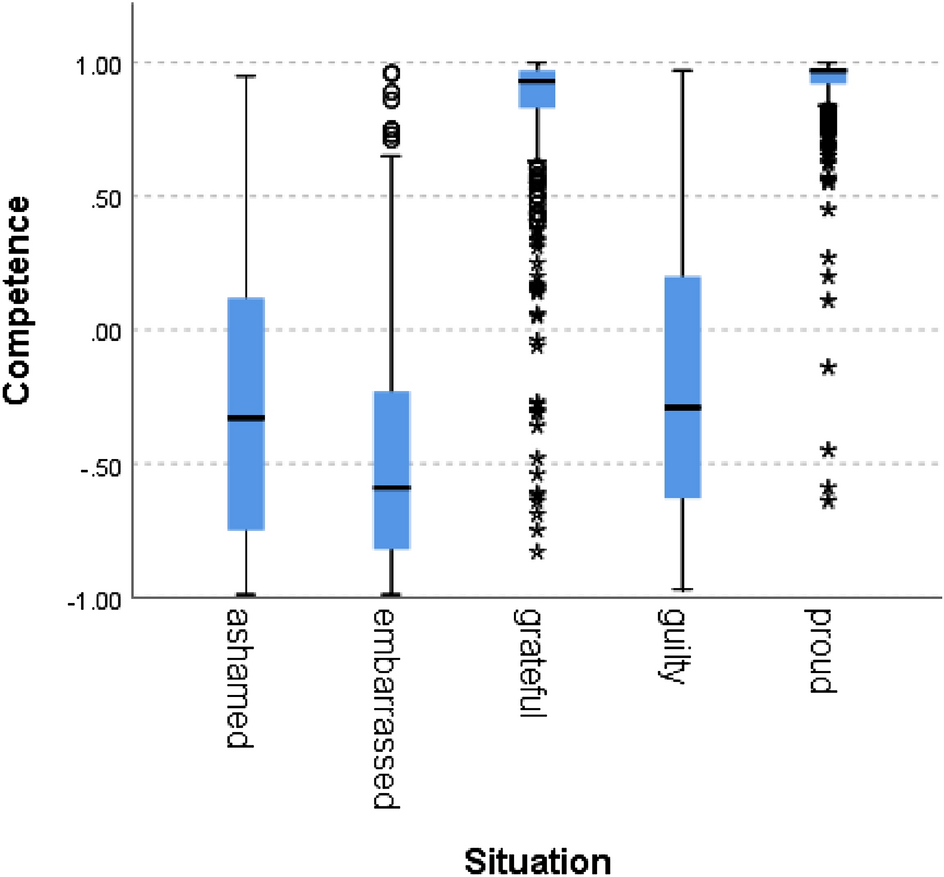
A fundamental question in cognitive science concerns how social norms are acquired and represented. While humans typically learn norms through embodied social experience, we investigated whether large language models can achieve sophisticated norm understanding through statistical learning alone. Across two studies, we systematically evaluated multiple AI systems' ability to predict human social appropriateness judgments for 555 everyday scenarios by examining how closely they predicted the average judgment compared to each human participant. In Study 1, GPT-4.5's accuracy in predicting the collective judgment on a continuous scale exceeded that of every human participant (100th percentile). Study 2 replicated this, with Gemini 2.5 Pro outperforming 98.7% of humans, GPT-5 97.8%, and Claude Sonnet 4 96.0%. Despite this predictive power, all models showed systematic, correlated errors. These findings demonstrate that sophisticated models of social cognition can emerge from statistical learning over linguistic data alone, challenging strong versions of theories emphasizing the exclusive necessity of embodied experience for cultural competence. The systematic nature of AI limitations across different architectures indicates potential boundaries of pattern-based social understanding, while the models' ability to outperform nearly all individual humans in this predictive task suggests that language serves as a remarkably rich repository for cultural knowledge transmission.

Social learning rules and the effectiveness of behavioural policy: an agent-based model
Behaviour-change interventions unfold in social systems where people learn from others. We develop a stylised agent-based model to examine how four canonical social learning rules – conformist transmission, informational prestige-biased copying, payoff-biased copying and random copying – shape the impact of a simple seeding intervention. Two arms evolve under identical conditions and learning rules, differing only in initial adoption: both start with exactly 5% baseline adopters and the treatment arm additionally seeds 20% of the remaining non-adopters, yielding an exact 25% vs 5% contrast at $t = 0$. Across homogeneous populations, 70/30 mixed ecologies and sweeps over the share of payoff-biased learners, we track adoption trajectories and treatment–control lift; we also vary payoff parameters, prestige informativeness and conformist thresholds in robustness analyses. We find that the same seeding intervention can stall, drift or cascade depending on the learning ecology. In the baseline specification, conformist dynamics exhibit threshold effects that erase treatment gains, prestige-biased and random copying can preserve positive final lift when diffusion remains incomplete and payoff-biased copying mainly changes the diffusion regime rather than preserving large end-point gaps. Robustness checks show that negative payoff premia suppress diffusion, weak or noisy payoff signals can generate treatment advantages, prestige effects depend on how informative prestige is and conformist treatment effects are concentrated in narrow threshold-boundary regions. These results motivate policy heuristics that evaluate interventions relative to local diffusion potential, make successful outcomes visible when payoff cues matter and tailor seeding to the prevailing mix of learning rules.
Rethinking Norm Psychology
Norms permeate human life. Most of people’s activities can be characterized by rules about what is appropriate, allowed, required, or forbidden—rules that are crucial in making people hyper-cooperative animals. In this article, I examine the current cognitive-evolutionary account of “norm psychology” and propose an alternative that is better supported by evidence and better placed to promote interdisciplinary dialogue. The incumbent theory focuses on rules and claims that humans genetically inherit cognitive and motivational mechanisms specialized for processing these rules. The cultural-evolutionary alternative defines normativity in relation to behavior—compliance, enforcement, and commentary—and suggests that it depends on implicit and explicit processes. The implicit processes are genetically inherited and domain-general; rather than being specialized for normativity, they do many jobs in many species. The explicit processes are culturally inherited and domain-specific; they are constructed from mentalizing and reasoning by social interaction in childhood. The cultural-evolutionary, or “cognitive gadget,” perspective suggests that people alive today—parents, educators, elders, politicians, lawyers—have more responsibility for sustaining normativity than the nativist view implies. People’s actions not only shape and transmit the rules, but they also create in each new generation mental processes that can grasp the rules and put them into action.

AI for identifying social norm violation
Identifying social norms and their violation is a challenge facing several projects in computational science. This paper presents a novel approach to identifying social norm violations. We used GPT-3, zero-shot classification, and automatic rule discovery to develop simple predictive models grounded in psychological knowledge. Tested on two massive datasets, the models present significant predictive performance and show that even complex social situations can be functionally analyzed through modern computational tools.
Mechanisms of social cognition
Social animals including humans share a range of social mechanisms that are automatic and implicit and enable learning by observation. Learning from others includes imitation of actions and mirroring of emotions. Learning about others, such as their group membership and reputation, is crucial for social interactions that depend on trust. For accurate prediction of others' changeable dispositions, mentalizing is required, i.e., tracking of intentions, desires, and beliefs. Implicit mentalizing is present in infants less than one year old as well as in some nonhuman species. Explicit mentalizing is a meta-cognitive process and enhances the ability to learn about the world through self-monitoring and reflection, and may be uniquely human. Meta-cognitive processes can also exert control over automatic behavior, for instance, when short-term gains oppose long-term aims or when selfish and prosocial interests collide. We suggest that they also underlie the ability to explicitly share experiences with other agents, as in reflective discussion and teaching. These are key in increasing the accuracy of the models of the world that we construct.
Children's Acquisition and Application of Norms
All human societies are permeated by collectively shared entities that govern daily social interactions and promote coordination and cooperation: norms. While the study of norm development is not new to developmental psychology, it has only recently been the target of an interdisciplinary wave of research using new methodologies and (often) complementary theoretical accounts to describe and explain the origins and potentially species-unique aspects of human norm psychology. Here we review recent developmental research showing that young children swiftly acquire and infer norms in a variety of social contexts. Moreover, children actively enforce these norms, even as unaffected bystanders, when third parties do things the wrong way. This research suggests that the foundations of human norm psychology can be found in early childhood. Deeper insights into the ontogenetic roots of norm psychology may contribute to understanding the evolutionary emergence of human cooperation and its maintenance in the contemporary world.
Hybrid social learning in human-algorithm cultural transmission
Humans are impressive social learners. Researchers of cultural evolution have studied the many biases shaping cultural transmission by selecting who we copy from and what we copy. One hypothesis is that with the advent of superhuman algorithms a hybrid type of cultural transmission, namely from algorithms to humans, may have long-lasting effects on human culture. We suggest that algorithms might show (either by learning or by design) different behaviours, biases and problem-solving abilities than their human counterparts. In turn, algorithmic-human hybrid problem solving could foster better decisions in environments where diversity in problem-solving strategies is beneficial. This study asks whether algorithms with complementary biases to humans can boost performance in a carefully controlled planning task, and whether humans further transmit algorithmic behaviours to other humans. We conducted a large behavioural study and an agent-based simulation to test the performance of transmission chains with human and algorithmic players. We show that the algorithm boosts the performance of immediately following participants but this gain is quickly lost for participants further down the chain. Our findings suggest that algorithms can improve performance, but human bias may hinder algorithmic solutions from being preserved. This article is part of the theme issue ‘Emergent phenomena in complex physical and socio-technical systems: from cells to societies’.

Propagation and preservation of AI-discovered problem-solving strategies in human culture
Intelligent machines have the potential to uncover problem-solving strategies beyond human discovery. Emerging evidence from competitive gameplay, such as Go and chess, demonstrates that AI systems are evolving from mere tools to sources of cultural innovation adopted by humans. However, the conditions under which intelligent machines transition from tools to drivers of persistent cultural change remain unclear. We identify three key dimensions that modulate machine influence on human problem-solving: the discovered strategies must be non-trivial, learnable, and offer a clear advantage. Using a cultural transmission experiment, we demonstrate that when these conditions are met, machine-discovered strategies can be transmitted, understood, and preserved by human populations, leading to enduring cultural shifts. Conversely, using agent-based simulations, we show how machine influence is constrained in the absence of these conditions. These findings provide a framework for understanding how machines can persistently expand human cognitive skills and underscore the need to consider their broader implications for human cognition and cultural evolution.

The Psychopathic Selection Hypothesis (PSH): A Guide to Symbolic Selection, Behavioural Architecture, and the Evolution of Human Gameboards
How human created symbolic systems alter the adaptive environment, select among behavioural strategies, generate institutional games, and reshape the evolutionary conditions inherited by future actors
The evolution of cultural adaptations: Fijian food taboos protect against dangerous marine toxins
The application of evolutionary theory to understanding the origins of our species' capacities for social learning has generated key insights into cultural evolution. By focusing on how our psychology has evolved to adaptively extract beliefs and practices by observing others, theorists have hypothesized how social learning can, over generations, give rise to culturally evolved adaptations. While much field research documents the subtle ways in which culturally transmitted beliefs and practices adapt people to their local environments, and much experimental work reveals the predicted patterns of social learning, little research connects real-world adaptive cultural traits to the patterns of transmission predicted by these theories. Addressing this gap, we show how food taboos for pregnant and lactating women in Fiji selectively target the most toxic marine species, effectively reducing a woman's chances of fish poisoning by 30 per cent during pregnancy and 60 per cent during breastfeeding. We further analyse how these taboos are transmitted, showing support for cultural evolutionary models that combine familial transmission with selective learning from locally prestigious individuals. In addition, we explore how particular aspects of human cognitive processes increase the frequency of some non-adaptive taboos. This case demonstrates how evolutionary theory can be deployed to explain both adaptive and non-adaptive behavioural patterns.

Social Norms and Cultural Evolution

A collection of ideas to do with social norms, cultural evolution, and how we learn from others

AI as Social Technology: Astor Lecture by Professor Henry Farrell
Bayesian Inference of Social Norms as Shared Constraints on Behavior

What people learn from punishment: A cognitive model
Spurious normativity enhances learning of compliance and enforcement behavior in artificial agents

Deference, Dissent, and Dispute Resolution: An Experimental Intervention Using Mass Media to Change Norms and Behavior in Rwanda
How Does Media Influence Social Norms? Experimental Evidence on the Role of Common Knowledge