

Abstract Since the 1990s, there have been heated debates about how evidence should be used to guide teaching practice and education policy, and how educational research can generate robust and trustworthy evidence. This paper reviews existing debates on evidence-based education and research on the impacts of AI in education and suggests a new conceptualisation of evidence aligned with an emerging learning-oriented model of science-for-policy, which we call S4P 3.0. Existing empirical evidence on AIED suggests some positive effects, but a closer look reveals methodological and conceptual problems and leads to the conclusion that existing evidence should not be used to guide policy or practice. AI is a new type of technology that interacts with human cognition, communication, and social knowledge infrastructures, and it requires rethinking what we mean by “learning outcomes” and policy and practice-relevant evidence. A common belief that AI-supported personalisation will “revolutionise” education is historically rooted in a methodological confusion that we call the Bloomian paradox in AIED, and based on a limited view on the social functions of education.
What counts as evidence in AI & ED: Towards Science-for-Policy 3.0
Abstract Since the 1990s, there have been heated debates about how evidence should be used to guide teaching practice and education policy, and how educational research can generate robust and trustworthy evidence. This paper reviews existing debates on evidence-based education and research on the impacts of AI in education and suggests a new conceptualisation of evidence aligned with an emerging learning-oriented model of science-for-policy, which we call S4P 3.0. Existing empirical evidence on AIED suggests some positive effects, but a closer look reveals methodological and conceptual problems and leads to the conclusion that existing evidence should not be used to guide policy or practice. AI is a new type of technology that interacts with human cognition, communication, and social knowledge infrastructures, and it requires rethinking what we mean by “learning outcomes” and policy and practice-relevant evidence. A common belief that AI-supported personalisation will “revolutionise” education is historically rooted in a methodological confusion that we call the Bloomian paradox in AIED, and based on a limited view on the social functions of education.
Artificial intelligence, cognitive offloading and implications for education
This report investigates a profound new challenge driven by rapidly expanding use of artificial intelligence (AI) in schooling: the risk that students will outsource too much of the cognitive work that is crucial to establishing the knowledge, skill and ‘thinking infrastructure’ that enables both schooling success and lifelong capacity for ongoing learning and understanding.There is a growing body of evidence that using AI can short-circuit the cognitive effort required for sustainable, deep learning, with potentially long-term consequences. This cognitive offloading from human to AI is especially risky for school students (‘novice’ learners who are building foundational knowledge and skills) when they turn to AI as a tempting substitute, not an amplifier, increase their dependency on the tool and lose access to deeper learning and critical thinking capabilities. It also introduces extra equity risks for disadvantaged students.The report reviews the cognitive science behind this concerning shift and the growing evidence of its impact. It also outlines how these harmful effects can be counteracted through specific teaching and learning strategies and effective design of AI education technology, anchored on bolstering the central role of teachers. It includes specific recommendations for policy and teaching and learning strategies.

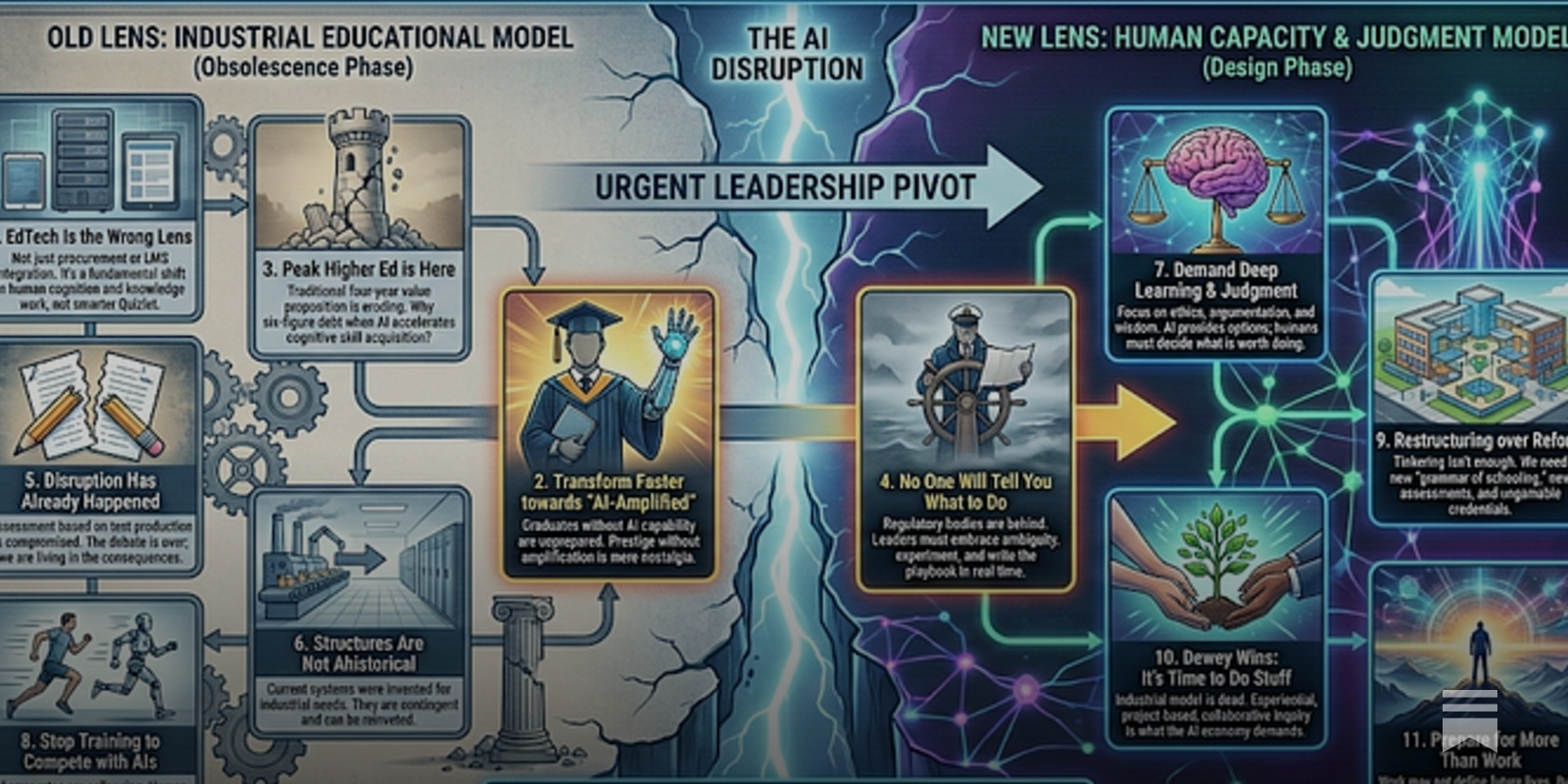
Eleven Things I Wish Educators Understood About AI and What it Means for "Education"
Thank you to all the supporters of this Substack.
Welcome to Learning Policy Institute
The Learning Policy Institute conducts and communicates independent, high-quality research to improve education policy and practice.
Artificial intelligence in mathematics education: The good, the bad, and the ugly
Integrating Artificial Intelligence [AI] into mathematics education offers promising advancements and potential pitfalls. Striking a balance between AI-driven developments and preserving core pedagogical principles is critical in the teaching and learning environment. AI has emerged as a transformative force in various fields, including education. In the realm of mathematics education, AI technologies offer a spectrum of potential benefits (including personalize instruction, adaptive assessment, interactive learning environments, and real-time feedback, among others) and challenges (such as lack of creativity and problem-solving skills, inability to explain reasoning, bias in data and algorithms, absence of emotional intelligence and data privacy and security concern etc). This conceptual study used autoethnography as the methodology and qualitative content approach to analyze data. The study discussed historical background of AI and considered ethical issues around AI. It was concluded that the journey to harness the full potential of AI in mathematics education requires careful navigation of the good, the bad, and the ugly aspects inherent in this technological evolution.
Alex Veremeyenko on Twitter / X
MIT published a brutally honest report on what AI is doing to students.A committee of professors and students spent five months studying how AI changed learning on campus, and the findings read like a warning to every university on the planet.Study groups are disappearing.… pic.twitter.com/kSxKk4h06o— Alex Veremeyenko (@alex_verem) September 12, 2026
Artificial intelligence tools expand scientists’ impact but contract science’s focus
Developments in artificial intelligence (AI) have accelerated scientific discovery1. Alongside recent AI-oriented Nobel prizes2–9, these trends establish the role of AI tools in science10. This advancement raises questions about the influence of AI tools on scientists and science as a whole, and highlights a potential conflict between individual and collective benefits11. To evaluate these questions, we used a pretrained language model to identify AI-augmented research, with an F1-score of 0.875 in validation against expert-labelled data. Using a dataset of 41.3 million research papers across the natural sciences and covering distinct eras of AI, here we show an accelerated adoption of AI tools among scientists and consistent professional advantages associated with AI usage, but a collective narrowing of scientific focus. Scientists who engage in AI-augmented research publish 3.02 times more papers, receive 4.84 times more citations and become research project leaders 1.37 years earlier than those who do not. By contrast, AI adoption shrinks the collective volume of scientific topics studied by 4.63% and decreases scientists’ engagement with one another by 22%. By consequence, adoption of AI in science presents what seems to be a paradox: an expansion of individual scientists’ impact but a contraction in collective science’s reach, as AI-augmented work moves collectively towards areas richest in data. With reduced follow-on engagement, AI tools seem to automate established fields rather than explore new ones, highlighting a tension between personal advancement and collective scientific progress.

Artificial intelligence, cognitive offloading and implications for education
This report investigates the challenge driven by the rapidly expanding use of artificial intelligence (AI) in schooling: the risk that students will outsource too much of the cognitive work that is crucial to establishing knowledge, skill and ‘thinking infrastructure’. The report includes specific recommendations for policy and teaching and learning strategies.
The Ed. Dept. Wants to Steer Grant Money to AI. What That Means for Schools
The Education Department is proposing to make advancing AI in education one of its grantmaking priorities.
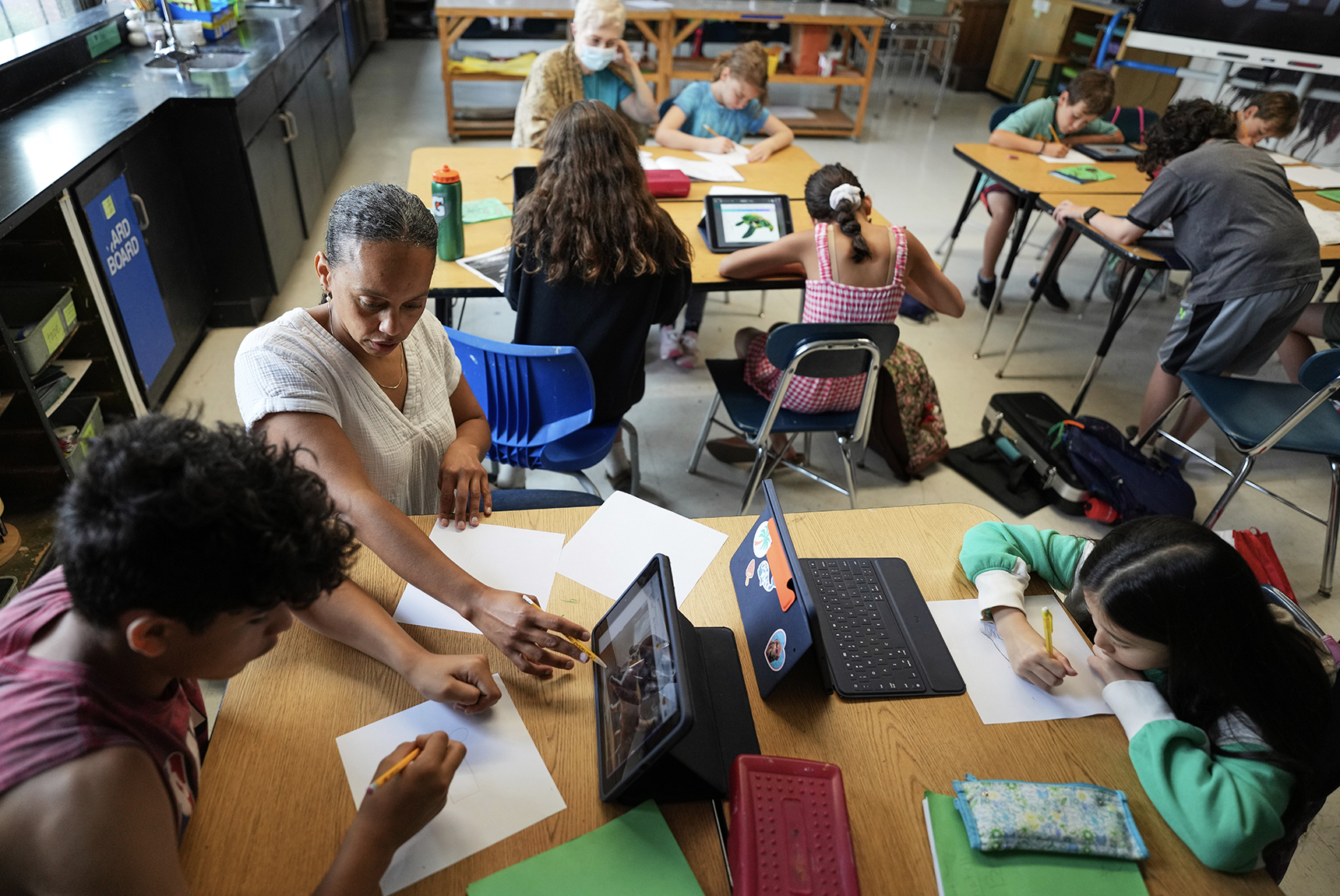
Does AI stop children from learning?
New data show the peril and promise of the technology

Your Favorite Science YouTubers Are Wrong About AI, (e.g. SciShow, Kurzgesagt, and Kyle Hill )
Report
MIT’s Ad Hoc Committee on AI Use in Teaching, Learning, and Research Training
AI.Gov | President Trump's AI Strategy and Action Plan
Explore President Trump’s AI initiatives focused on innovation, infrastructure, international engagement, and youth education in artificial intelligence.
How public involvement can improve the science of AI
As AI systems from decision-making algorithms to generative AI are deployed more widely, computer scientists and social scientists alike are being called on to provide trustworthy quantitative evaluations of AI safety and reliability. These calls have included demands from affected parties to be given a seat at the table of AI evaluation. What, if anything, can public involvement add to the science of AI? In this perspective, we summarize the sociotechnical challenge of evaluating AI systems, which often adapt to multiple layers of social context that shape their outcomes. We then offer guidance for improving the science of AI by engaging lived-experience experts in the design, data collection, and interpretation of scientific evaluations. This article reviews common models of public engagement in AI research alongside common concerns about participatory methods, including questions about generalizable knowledge, subjectivity, reliability, and practical logistics. To address these questions, we summarize the literature on participatory science, discuss case studies from AI in healthcare, and share our own experience evaluating AI in areas from policing systems to social media algorithms. Overall, we describe five parts of any quantitative evaluation where public participation can improve the science of AI: equipoise, explanation, measurement, inference, and interpretation. We conclude with reflections on the role that participatory science can play in trustworthy AI by supporting trustworthy science.

AI* and education

* I’m neither “pro-AI” nor “anti-AI.” I’ve been blocked for being perceived as both. —Actually, I’m honestly more anti-AI than pro-AI thus far, aside from specialized models and specific use cases, but I’m willing to consider information that’s new to me
Waldo Jaquith (@waldo.net)

LAUSD students barred from AI use, in a surprise to school board and parents
In the US, Caution Rules on AI Ahead of K-12 School Year

Mamdani Issues AI Moratorium In NYC Schools
CSU AI Survey Report | CSU

This big university system is embracing AI. Students and faculty aren't all on board